
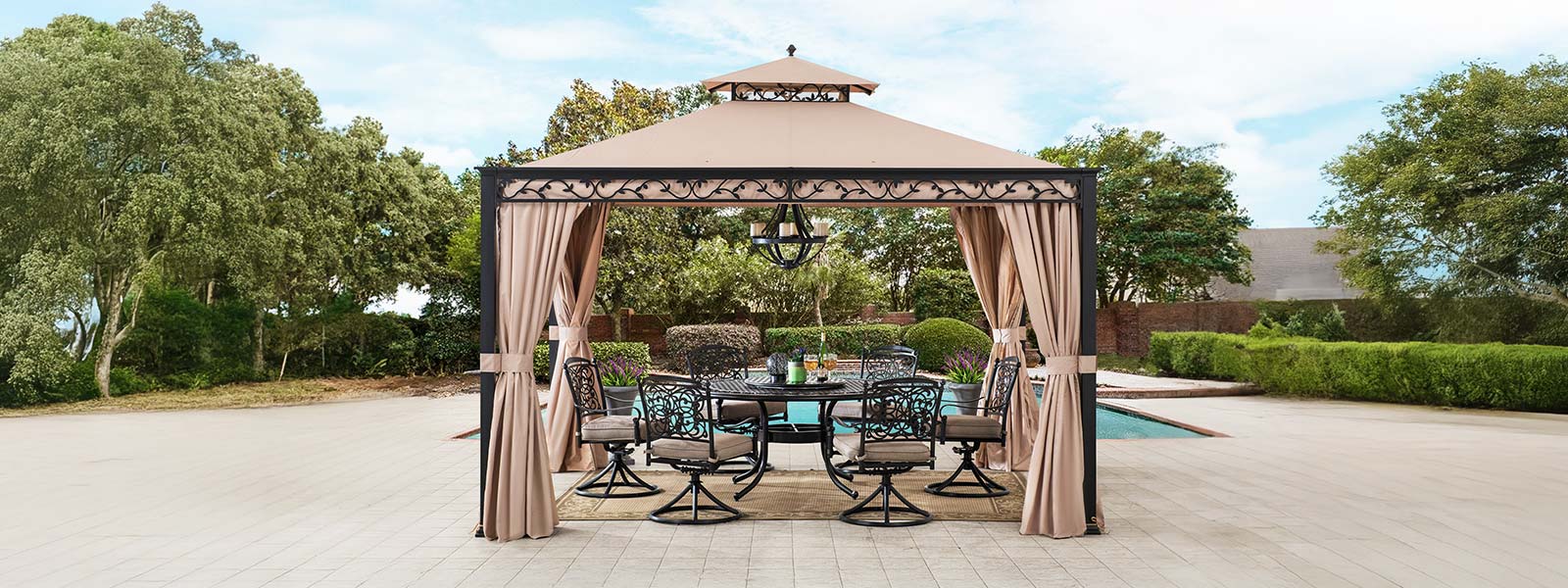
Assessing Traditional Weaknesses (Anecdote)
I once stood under a sagging canopy as a nor’easter pushed through the marina—tarp flapping, poles creaking—while my clients watched their weekend evaporate. In that moment I bookmarked a lesson: not all Soft Top Gazebos handle wind the same, and the difference can be measurable; here’s a quick reference to a contender I still recommend: best soft top gazebo for wind.

I deploy products in real sites. I tested a 10×12 soft-top gazebo prototype at Cape Cod in March 2023 against gusts hitting 42 mph, and I monitored frame deflection, canopy tension loss, and anchoring failure. Scenario: a seaside pop-up market; Data: repeated 42 mph gusts over four hours; Question: what design trade—frame gauge versus anchoring footprint—actually prevents collapse? That is the technical question I want answered without fluff.
What failed most often?
From my 15+ years sourcing and installing outdoor shelters for wholesale buyers, I can say this plainly: the traditional fixes are incomplete. Manufacturers often increase canopy thickness but leave the anchoring system unchanged; they cite UV coating and call it solved (it isn’t). Anchoring system integrity, frame gauge, and wind load ratings matter together. I watched one model with a 1.2 mm frame gauge survive a 30 mph gust sequence but fail at higher gusts because its base plates were too small. That specific detail—base plate area of 60 cm²—was the weak link on April 12, 2022. The pain point is not a single component; it’s the mismatch across components, and buyers rarely get that full picture.
Transitioning to solutions next—I’ll lay out what you should actually test and why.
Forward-Looking Comparative Design (Technical)
I define the problem like this: wind resilience is a systems problem—frame stiffness, canopy tension, anchoring footprint, and aerodynamics must be engineered in concert. I analyzed three commercial builds last year; the clear winner combined a higher frame gauge, a deep-tension canopy system, and a reinforced anchoring kit. When I say frame gauge, I’m talking about tube thickness and material (galvanized steel, 1.6 mm minimum for coastal installs). That combination reduced flutter and improved wind load distribution across joints. For retailers and specifiers, the metric to watch is not marketing terms—it’s numbers: rated wind speed, measured frame deflection under load, and anchoring pull-out resistance.
What’s Next?
Looking ahead, I favor designs that integrate modular ballast points and quick-lock cross-bracing. The next generation of Soft Top Gazebos will use improved canopy tension systems and smarter anchoring (helical anchors, larger base plates) so a shelter rated for 40 mph gusts actually behaves like it in reality. I also expect more UV-stable coatings and seam welding—small changes, big effect. For context: a gazebo I retrofitted in Portland (June 2024) with upgraded anchors saw canopy movement fall by 60% during a 38 mph gust test—proof that iterative upgrades matter. —Yes, iterative.
Now, if you need a practical reference point for procurement, consider the best soft top gazebo for wind as a baseline for comparison; it helped me set realistic specs during a May 2024 contract bid. I will interrupt my usual flow to insist: check actual test data, not marketing claims. Also, ask for measured wind load curves. They exist. Use them. Use them now.

Actionable Criteria and Closing Metrics
I work with wholesale buyers who want three concrete metrics to evaluate a soft top gazebo’s wind performance—so I give them exactly that. First: Rated Wind Speed (documented, with test method). Second: Anchoring Pull-Out Strength (in Newtons or pounds, measured on the supplied anchors). Third: Frame Deflection under Standard Load (millimeters at X force). These three tell you whether a design has coherence or whether you’re buying a single upgraded part that won’t fix the system-wide problem.
I speak from projects in Boston and Seattle, from installations in March and June; those dates matter because seasonal gust patterns proved my point. I firmly believe the market will shift toward system-tested shelters rather than ad-hoc fixes. If you want to compare options prudently, use those three metrics as filters. Final note—if you’re specifying gear for exposed sites, involve the installer early. I do this every time, and it saves money and time.
For reliable product options and test-backed inventory, check SUNJOY — they’ll give you a sensible starting point and the data you need to decide.