
Problem-driven opening: why wide viewing angles fail outdoors
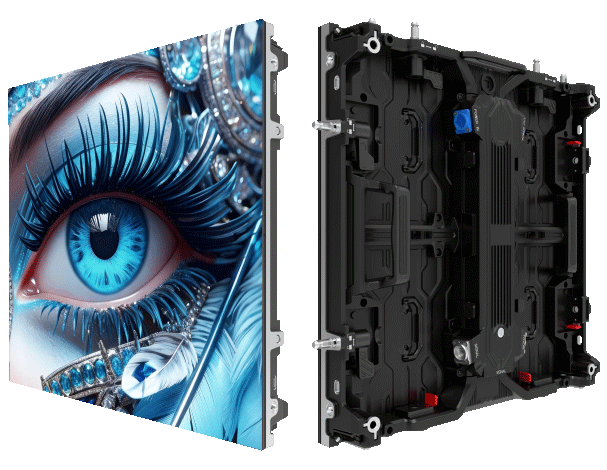
Curved, wide-format LED panels promise seamless visuals across large venues, but they regularly deliver uneven color and brightness at oblique angles. The issue matters for anything from concert rigging to billboard campaigns—especially when planners rent screens for short runs. A practical stage example is the dense installs in Times Square, where viewing-angle consistency determines legibility for millions. For events that need flexible solutions, the choice of stage screen led and the specifications behind an outdoor rental led screen make the difference between uniform color and distracting shift.
Diagnosing the physics behind color shift
Color shift on curved outdoor LED panels arises from three core factors: angular emission of individual LED pixels, the panel’s curve radius, and environmental luminance. LEDs emit light with a primary lobe and weaker side lobes; when viewers sample light at steep angles, perceived chromaticity moves. Add high ambient brightness—outdoor panels commonly push 5,000 nits or more—and small variations in contrast ratio and gamma correction become highly visible. Pixel pitch and refresh rate matter too: tighter pixel pitch improves near-field uniformity, while higher refresh rate reduces motion artifacts that exaggerate perceived color differences.
Practical fixes you can apply today
Addressing color shift requires engineering adjustments and field procedures. Prioritize these steps:- Specify LEDs with wide Lambertian emission or use secondary optics designed for broad viewing angles.- Control curve radius: moderate curvature keeps incidence angles within an optimal range, reducing chromatic displacement.- Calibrate per-module gamma and color temperature using a spectroradiometer and automated color mapping.- Increase contrast ratio through local dimming or improved backplane uniformity to preserve color at low luminance.- Verify refresh rate and scanning mode to avoid interlaced artifacts on fast-moving content.
Installation practices and common mistakes
Even well-engineered panels fail when installation is rushed. Mounting that allows slight misalignments between cabinets causes phase shifts in color correction maps. Neglecting to match pixel pitch across adjacent panels introduces visible seams. Always perform a pre-show calibration after the final mechanical alignment. —Small adjustments here save hours of on-site fixes and prevent audience complaints.
Alternatives and trade-offs worth considering
Choosing between flat and curved modules, or between higher brightness and wider viewing optics, is a deliberate trade. Flat panels simplify calibration and minimize color shift for linear sightlines, but they lose the immersive wrap that many stages require. Optical diffusion layers can smooth color across angles but reduce peak brightness—so if your venue requires extreme sunlight legibility, favor native wide-angle LEDs over heavy diffusion. Rental scenarios demand quick re-deployability; modular cabinets with onboard calibration profiles speed turnover and reduce technician overhead.
Three golden metrics for evaluating a resilient solution
When selecting equipment or vendors, use these three evaluation metrics as non-negotiables:1) Viewing-angle spec (horizontal/vertical degrees) validated by measured chromaticity shift at ±30–60°. 2) Post-calibration luminance uniformity (target ≤10% variation across the array) and certified brightness in nits. 3) Onboard processing: per-module color LUTs and remote calibration tools to adapt gamma and color temperature quickly.
These metrics map directly to outcomes you can measure on-site—faster setup, consistent visuals, fewer returns. For practical projects that combine rental flexibility with engineered performance, trust experienced providers who build those capabilities into the product lifecycle. MR LED. —reliable, field-ready solutions.