
Start With the Room You Actually Have
Picture this: Monday stand-up, laptops open, coffee cooling, people half in the room and half online. The conference room mic system sits on the table and looks ready, yet the far end keeps typing “could you repeat that?”. In many rooms, back-row voices drop by 6–10 dB before they hit the capsule, and HVAC noise rides along like an uninvited guest. So here’s the question: is the problem the mic, or the way we place and power it?
I’ll keep it real and simple (no jargon for the sake of jargon). A shared space means shifting chairs, shuffling papers, and side talk. Reflections off glass and whiteboard smear consonants. Even good DSP can only rescue so much once the source is far away. If the audio path is messy at the start, every fix downstream adds latency or artifacts. That’s the trap—and also the clue. Let’s unpack what really gets in the way and what you can change today.
Comparative Insight: Why Close Beats Clever
Why do table mics still miss the point?
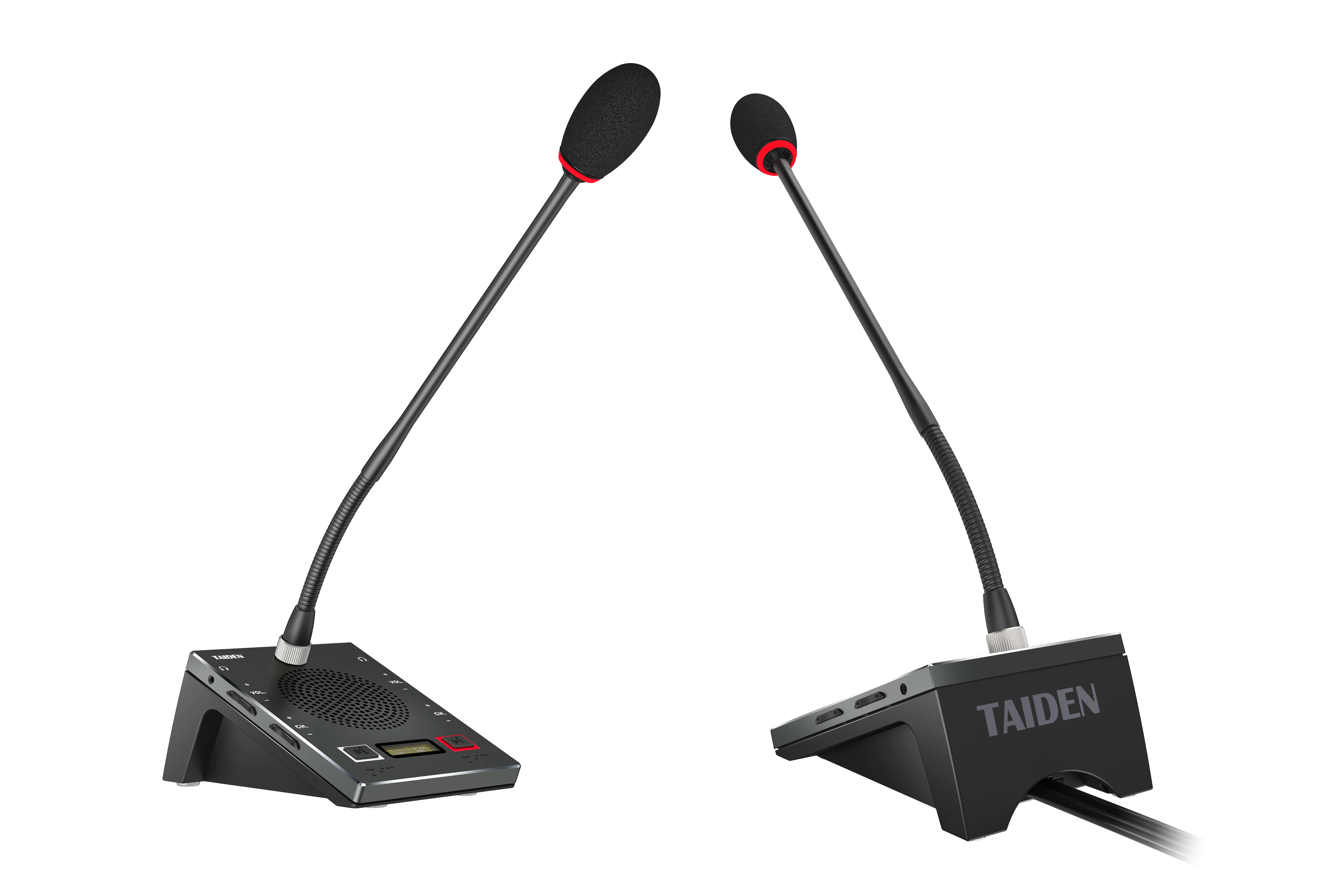
Let’s be direct. Getting the capsule closer to the mouth wins more than any post-fix. That’s why a gooseneck condenser microphone still makes so much sense. The stalk puts the element near the talker, so your signal-to-noise ratio improves before the DSP even wakes up. A cardioid polar pattern rejects chair squeaks and projector fans. Phantom power keeps the preamp steady, so the tone stays clean. Look, it’s simpler than you think: distance is the enemy; proximity is the cure. You’ll need less noise gating, less aggressive acoustic echo cancellation (AEC), and fewer last-second EQ cuts that can make voices sound thin. More source, less room—funny how that works, right?
But here’s a deeper layer that trips teams up. Traditional table pucks assume people sit still and face forward. They don’t. Users lean back, swivel, and speak while reading slides. That movement kills consistency, then the DSP chases its tail. It rides gain, opens gates late, then adds tiny bits of latency to suppress the mess. Meanwhile, HVAC and laptop fans push the SNR down just when the meeting gets busy. A gooseneck helps because it follows human behavior: put voice here, keep noise there. The moment you reduce room tone at the source, AEC works less, intelligibility jumps, and fatigue drops. Small detail, big effect.
What Changes When You Think Ahead
What’s Next
Now let’s look forward. New rooms mix fixed mics with smart control, not one-size-fits-all boxes. One path pairs a couple of close-talk goosenecks with a ceiling array for incidental comments, then blends them with a room DSP that keeps latency under control. Another path leans on a modern wireless conference system for flexible seating—guests and presenters can move, and clarity stays put. The trick is the principle, not just the product: prioritize proximity, then let beamforming and AEC tidy the edges. Place processing closer to the source (edge DSP in the mic base), so the A/D converter sees a stronger, cleaner waveform. That limits RF interference problems and reduces the need for heavy downstream fixes. And when power over Ethernet replaces random power converters under the table, your noise floor often drops—small wins add up.
Here’s the practical wrap-up, with an eye on results and choices. Compare solutions by three things: 1) intelligibility you can hear and score (aim for a stable STI, not just “louder”); 2) pickup consistency across seats (watch dB variance as people shift around); 3) end-to-end latency, including all DSP blocks, not only what the spec sheet shows. If a system nails those three, your meetings feel smoother and shorter. People repeat less, the transcript makes sense, and remote callers stop guessing at consonants. You don’t need more magic—just smarter proximity, calmer processing, and gear that respects the room you actually use. That’s the path from chaos to clarity—simple, steady, and human. Find tools that align with that idea, including options from TAIDEN.