
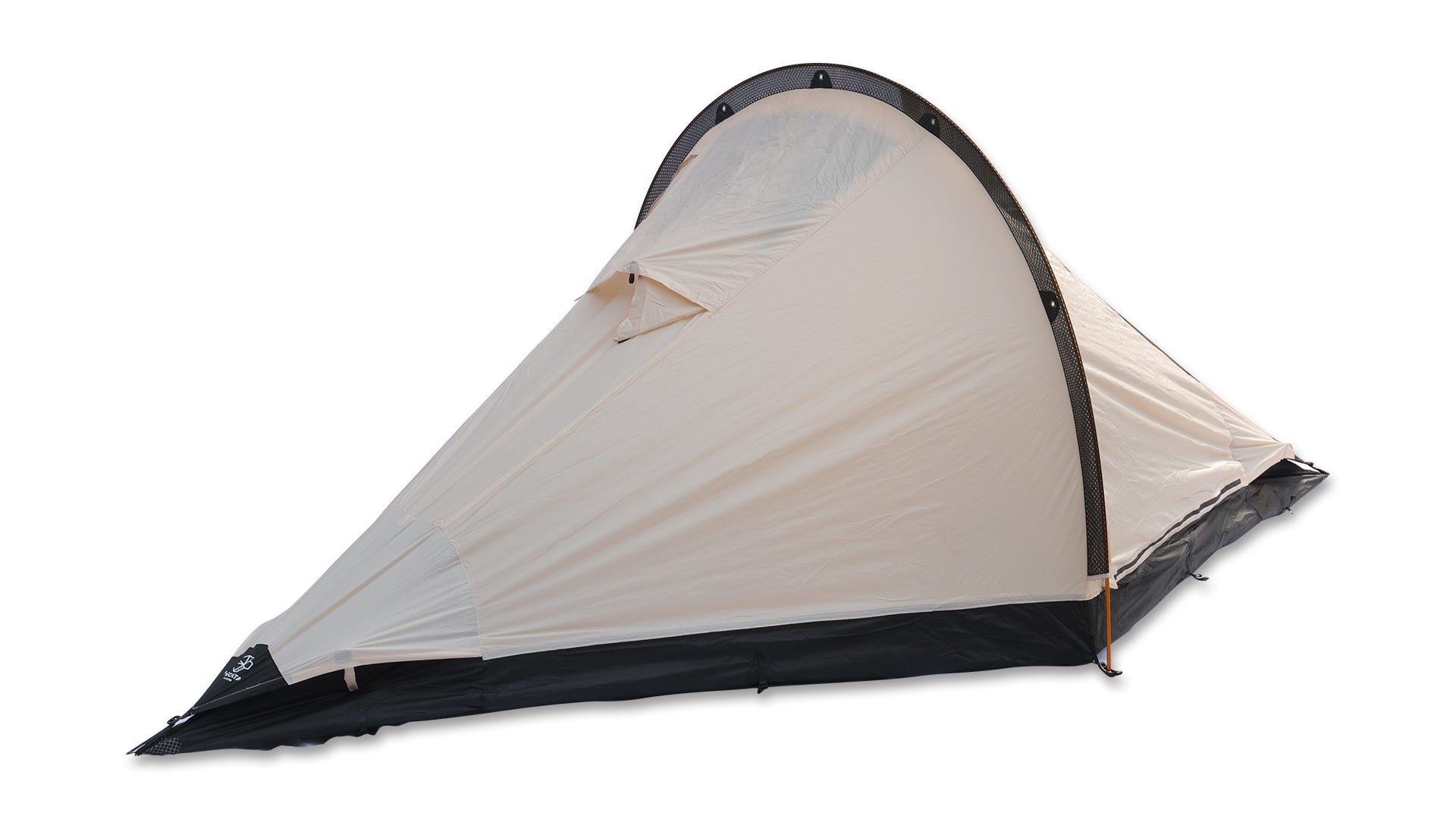
Problem: Wind as the Primary Failure Mode
Wind tops the risk register for any premium glamping stay — it tears seams, uproots stakes, and turns a luxury night into an emergency teardown. I’ve approached this problem with an investor-style focus on risk mitigation and runway-tested engineering: field trials with thecatal outdoor and an outdoor glamping tent under sustained gusts at Joshua Tree National Park clarified what actually fails and why. The objective is simple: reduce exposure, harden attachments, and choose sites where predictable gains in stability exceed the incremental setup cost.

Diagnose the Failure Modes
Identify how wind damages tents: uplift along the canopy, lateral shear against the wall, abrasion where fabric rubs structures, and concentrated loading at attachment points. Each mode has a distinct technical fix. Treat uplift like a tensile-engineering problem, shear like a bending problem, and abrasion as a materials wear issue. Decisions follow from that diagnosis.

Site Selection Principles
Select sites that proactively neutralize the largest forces. Prefer lee of a solid windbreak — dense scrub, rock outcrop, or a berm — rather than soft trees that flex. Favor gradual slope facing away from prevailing gusts; avoid narrow saddles and ridgelines. Prioritize firm ground that lets you sink anchors deeply; loose sand or heavy duff increases the capital cost of anchor hardware and doubles failure probability.
Orientation and Anchor Strategy
Orient the tent with its smallest cross-section toward the dominant wind and align the door away from prevailing gusts. Use a hybrid anchor approach: primary ground stakes at optimized angles, secondary deadman anchors for uplift, and tension-limited guylines to prevent load spikes. Set guyline angles at approximately 30–45 degrees from the ground for peak holding power; reduce angle only if soil depth is constrained. Where possible, distribute anchors to share loads rather than relying on single-point attachments.
Rigging and Hardware Checklist
Choose hardware to match the diagnosed loads: heavy-duty steel stakes or screw anchors for compact soils, helix anchors for sand, and stainless steel fittings where corrosion risks exist. Use low-stretch, UV-rated guyline with adjustable tensioners; add chafe sleeves at contact points. Reinforce seams around attachment tabs and use backup lashings on critical nodes. Pack a compact load-distribution plate to spread point loads when anchors are near soft topsoil.
Common Mistakes That Compound Risk
Under-tensioning guylines, placing stakes too shallow, and orienting the broad side of the tent to wind are the most frequent errors. Over-relying on vegetation for anchoring is risky: living roots can fail or the plant can shear. Ignoring seasonal wind patterns — assuming calm conditions because the current weather is mild — multiplies exposure. Fix the simplest errors first: correct tension, deeper anchors, and a 15–30 degree orientation tweak often yield immediate stability gains.
Alternatives and Trade-offs
If site exposure is unavoidable, consider lower-profile shelters or rigid-frame yurts and domes that reject uplift through geometry and mass. These alternatives cost more and raise transport complexity but lower wind-risk materially. For short-term stays, use ballast systems (water or sand bags) with redundancy; for repeated high-wind deployments, invest in engineered anchoring kits — they accelerate setup and reduce the chance of catastrophic failure.
Synthesis
Address the wind problem by diagnosing failure modes, selecting a defensible site, and matching anchors and hardware to expected loads. The process is decisive: eliminate the biggest exposures first, harden attachment points, and accept the trade-offs where necessary. That practical, engineered approach is what differentiates a temporary shelter from reliable glamping infrastructure, and it’s the same reasoning that underpins THECATAL’s product and field guidance.