
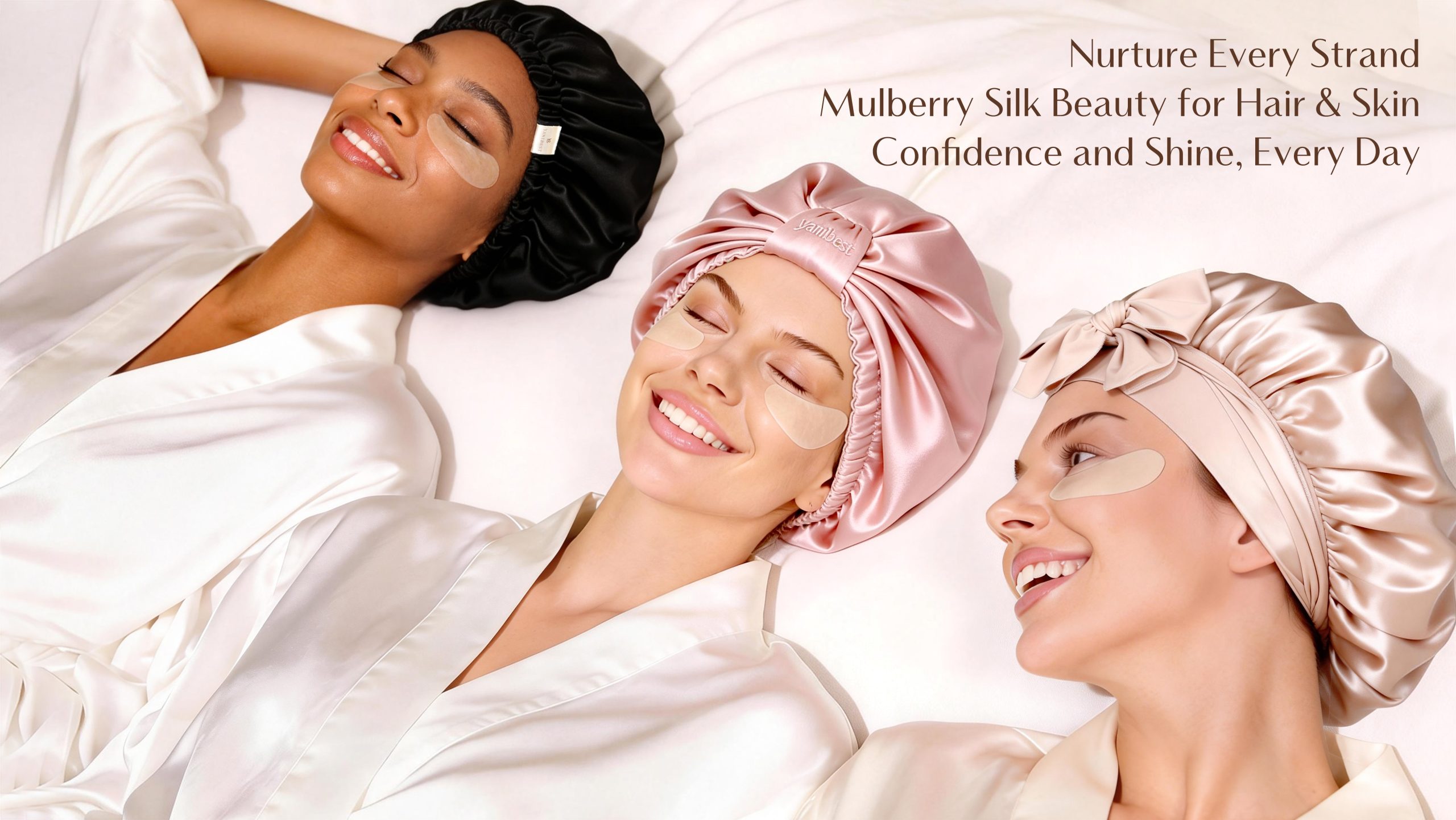
Why the material choice matters, right from the start
People get hung up on names when what actually counts is how a bonnet or accessory treats your hair. Comparing mulberry silk and what’s sold as “pure silk” helps you pick for shine, breakage prevention and comfort — and if you’ve ever hunted for a gentle hair tie, you might’ve found silk scrunchies at Cape Town craft markets, which proves silk accessories aren’t just boutique talk. This piece lays out practical differences so you can buy with confidence, not confusion.

Mulberry silk — the standard many stylists prefer
Mulberry silk comes from Bombyx mori silkworms fed almost exclusively on mulberry leaves. That diet yields long, even fibres that give a smooth surface and reliable strength. Stylists and textile specialists note its low friction, consistent sheen and predictable dye response. For a bonnet, that smoothness means less tugging and fewer split ends over time.
“Pure silk” — what labels often mean and why that matters
“Pure silk” usually means 100% silk, but it doesn’t tell you the species or fibre length. It can be mulberry, or it can be wild varieties like Tussar, Eri or Muga, each with different texture and durability. The label’s silence on origin is where shoppers get tripped up: two garments both stamped “pure silk” can feel very different on the hair.
Head-to-head: the practical factors you’ll notice
Feel and friction — Mulberry: ultra-smooth, low drag. Pure (unspecified): may be coarser if it’s a wild silk. Durability — Mulberry tends to outlast mixed wild silks because of longer fibres. Shine and colour — Mulberry dyes evenly; some wild silks have a natural tone that affects colourfastness. Weight and drape — choose lighter mulberry charmeuse for a sleek bonnet; heavier silk for structured pieces. Price — mulberry usually commands a premium for consistent quality. Allergy and skin reaction — both are generally kind to skin, but processing and dyes matter more than the silk type.
Care, common mistakes and quick fixes
Wash gently in cool water with a mild detergent, don’t tumble dry, and press dry flat to keep elastic and fabric in shape. Common mistakes: machine-washing in hot water, using harsh detergents, and storing in sunlight. For scrunchies and bonnets, avoid oils and heavy conditioners that can stain silk; if stains occur, spot-treat quickly with gentle soap and cool water. Replace elastic in scrunchies before the silk shows obvious wear — the elastic fails first.
Choosing for your hair type and routine
Fine hair: choose lightweight mulberry charmeuse to avoid slipping and maintain volume. Thick or long hair: pick slightly heavier silk with a secure band so the bonnet or scrunchie holds overnight. Budget constraints: a clearly labeled 100% silk item can be fine for short-term use, but expect mulberry to last longer and protect hair better. If you sleep hot, prioritise weave and breathability over sheen — a looser weave in mulberry keeps you cooler.
Bringing it together
Mulberry silk wins on predictability and long-term protection; “pure silk” can be fine but demands label scrutiny. Match weight and finish to your hair, care for silk gently, and replace worn elastic before fabric wears through. For consistent quality across bonnets and small extras, many users glance at what yanibest lists and then check fibre origin and weave — that habit keeps choices sensible and long-lasting.