
Introduction
Have we always assumed that bigger names mean better parts? I often wonder—did the market simply equate brand size with precision, or was that a habit born of convenience? For decades machinists and engineers have debated the merits of DMG Mori, Mazak, Haas, Makino, and Okuma (and yes, each of them has earned its place on factory floors worldwide). Recent industry reports show adoption rates shifting toward flexible, automated cells with higher spindle speeds and smarter toolchanger management—so what does that mean when you actually need a machine that holds tolerances on complex 5-axis parts?

I want to set the stage with a clear scenario: you must reduce lead time on aerospace brackets while keeping surface finish and angular accuracy tight. You’ve narrowed vendors to a short list—but how do you judge them beyond brochures and specs? I’ll walk through common missteps I see in procurement, backed by data points and hands-on experience, so you don’t repeat the same mistakes. Now, let’s move into where the real trouble begins—the hidden flaws that rarely appear in glossy spec sheets.
Why Traditional Solutions Fall Short
multi spindle cnc machining center — that term sounds like the answer to throughput problems, but it masks complexities that matter on day two of production. I’ll break down the core weaknesses I’ve seen: rigidity assumptions, underestimated thermal drift, and overreliance on nominal spindle speed. When you read a spec that boasts “high rpm,” ask how that number holds up under sustained cutting with heavy radial loads. Tool life, surface integrity, and repeatability are where vendors’ promises meet reality.
Technically, the issue often sits at the interface of hardware and process: linear guideways may be rated for fine accuracy, but if CNC servo tuning and power converters aren’t harmonized, you’ll get chatter and lost steps. Look, it’s simpler than you think—many shops skip a full validation cut because they trust vendor demos. That’s risky. I recommend a short, practical test sequence: heat the machine with a realistic cycle, then measure positional drift and finish at multiple fixture locations. You’ll quickly see whether a solution is robust or merely well-packaged.
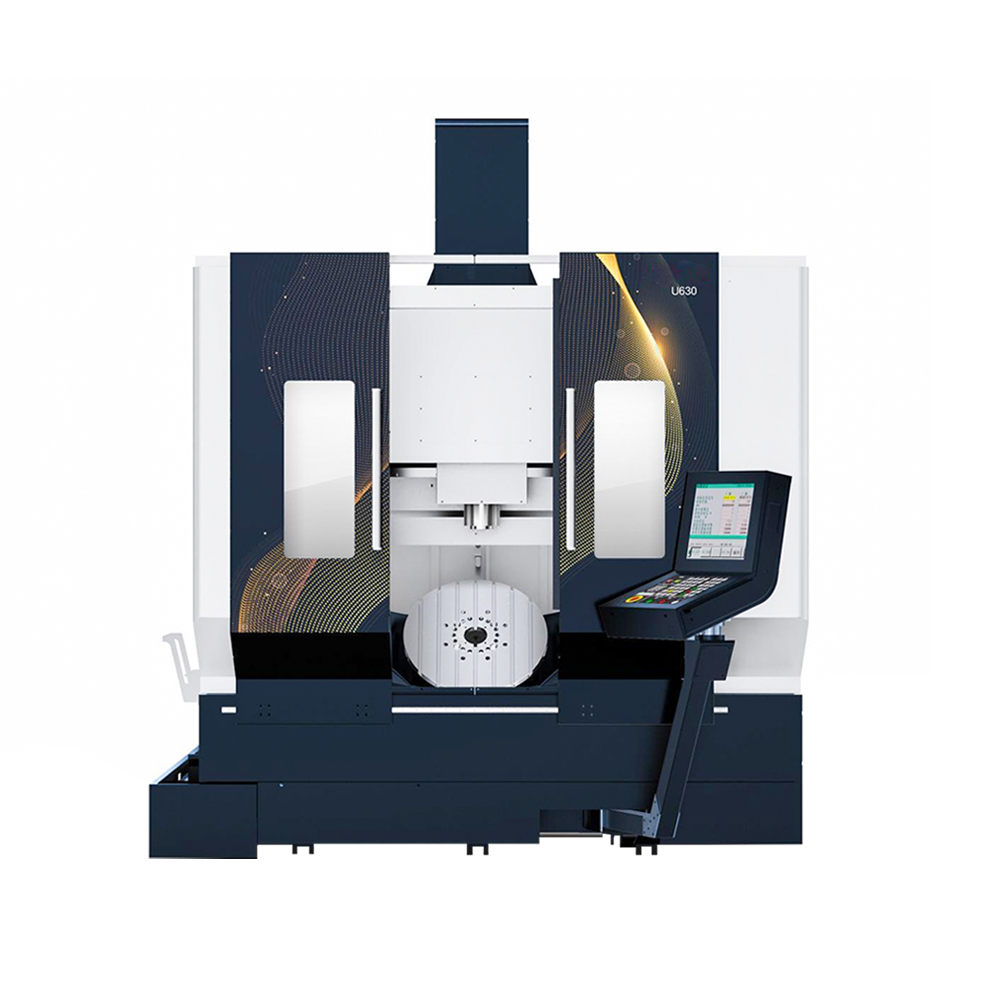
So what usually goes wrong?
Most failures stem from assumptions: assuming standard cooldown times, assuming a single toolchanger strategy suits all jobs, assuming spindle speed scales linearly with feed. Those assumptions collapse under complex 5-axis kinematics when simultaneous rotation causes variable cutting vectors. In plain words—I’ve watched parts come out good one day and scrap the next because thermal growth wasn’t accounted for. That’s a human problem as much as a machine one. We can fix it if we test properly and ask the right questions up front.
New Principles and a Forward-Looking Approach
Moving forward, I lean on two avenues: principled machine design and smarter process indexing. For design, the trend is clear—integrate active thermal compensation and make drivetrain components (like spindles and toolchanger clutches) serviceable without tearing down the whole headstock. For process, adopt digital validation: a short digital twin run that validates CAM paths against measured backlash and spindle torque. This is where multi spindle cnc machining services can help bridge the gap—by providing test cycles and data early, not after you buy.
Real-world impact? Consider a shop that switched from a buffet of single-spindle cells to an integrated multi-spindle workflow with standardized fixturing. They cut lead times by a third and reduced manual setup errors—funny how that works, right? But the real win was predictable quality. To get there, you must consider not only the machine spec but the service package, control software updates, and spare parts flow. I prefer vendors who offer on-site validation and clear KPIs for vibration, thermal drift, and cycle stability.
What’s Next for Buyers
I’ll be blunt: the future is not about a single “perfect” machine. It’s about predictable systems and transparent validation. You should look for machines built with controllable stiffness, easy thermal access, and modern control features like adaptive feed and edge computing nodes for local monitoring. Don’t ignore the human side—operator training and standardized setup procedures cut scrap more than a marginally faster spindle ever will.
To help you evaluate, here are three metrics I use personally when comparing vendors: 1) Measured repeatability after a 4-hour heat soak (not the vendor’s one-minute demo); 2) Mean time to repair for key subassemblies (spindle, toolchanger, servo); 3) Quality of vendor-provided validation—do they supply test cycles, measured data, and spare parts lists? Use these to rank candidates. I’ll say again: test early, measure honestly, and choose partners who accept accountability.
In closing, I’ve seen too many teams chase headline specs and later regret missing the small engineering details. If you want predictable, high-volume five-axis production, focus on system validation, maintenance access, and honest KPIs. Make the call with those in hand—and if you want a practical partner that helps validate performance before purchase, check Leichman.