
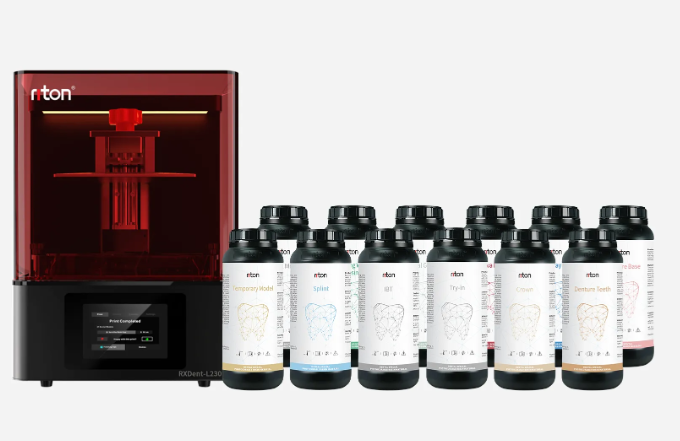
Have you ever watched a clean dental lab at 2 a.m. and felt the quiet press like a warning? A community clinic in 2019 adopted photocurable resin, slashed model turnaround from 72 hours to 18 hours (no kidding) — what happens when demand outstrips the materials pipeline and who pays the cost? As a dental resin manufacturer, I have seen that rush up close; the supply-side choices we make now shape clinics for months.
What breaks first?
I’ve spent over 18 years moving batches and samples across factories and dental practices, and I can pinpoint where systems crack: traditional acrylic and gypsum workflows assume slow, steady demand and tolerate manual touchpoints. I vividly recall a December 2017 run at our Belfast facility where a TN-Series try-in batch failed a biocompatibility check after inconsistent curing—rework ate 35% of production hours that week. That kind of loss is not a theory; it’s an actual drain on labor, inventory, and trust. Photopolymer control, curing time variance, and poor support structure removal are the usual culprits. I’ll be blunt: hidden pain often lives in post-processing — sanding, washing, secondary curing — and buyers rarely price that labor into bids. We learned to track cycle time per model (minutes), reject rate (%), and material conversion after UV cure; those metrics saved us one winter.
We keep the lights on by watching this closely — and that leads us to compare what comes next.
Comparative Insight: Where Photocurable Resin Wins and Stumbles
What’s Next?
Now I shift gears and look forward. Photocurable resin changes the rules of additive manufacturing: resolution improves, but so does sensitivity to process variation. I compare three axes when I advise wholesale buyers — dimensional fidelity (microns), curing throughput (minutes per batch), and certified biocompatibility. A well-formulated photocurable resin can deliver 30–50 µm detail and reduce finishing time, yet it demands consistent exposure settings and reliable post-cure ovens — otherwise you swap speed for variability. In my experience with clinics in Manchester and a lab pilot in 2020, a switch to proper photopolymer controls cut patient fit adjustments by 22% and reduced remakes over three months. But beware: cheaper resins mask problems (short-term savings; long-term rework) — the resin’s mechanical profile and ISO-class certifications matter. I recommend testing batches under real conditions: run 50 parts through your typical workflow and measure flexural strength, fit tolerance, and post-cure hardness. Short interruption — yes, testing is tedious — yet it filters out vendors who under-spec. For wholesale buyers, the comparison is straightforward: materials that minimize total touch time (print + wash + cure + finish) win contracts. Consider additive manufacturing realities: support designs, peeling stresses, and compatibility with your printer platform; I’ve had resin batches that matched spec sheets but shredded under peeling loads. Final thought — balance speed against reproducible outcomes. (We chose reproducibility.)
Three practical evaluation metrics I use when vetting suppliers: 1) dimensional fidelity measured in microns across a validated geometry; 2) verified biocompatibility certifications and documented post-cure conversion rates; 3) end-to-end cycle time including post-processing (minutes per part) and historical reject percentage. Test these. Compare them. Measure cost per successful model, not per kilo of material. I keep a short checklist for buyers — and I still return to it before every large order. Riton