
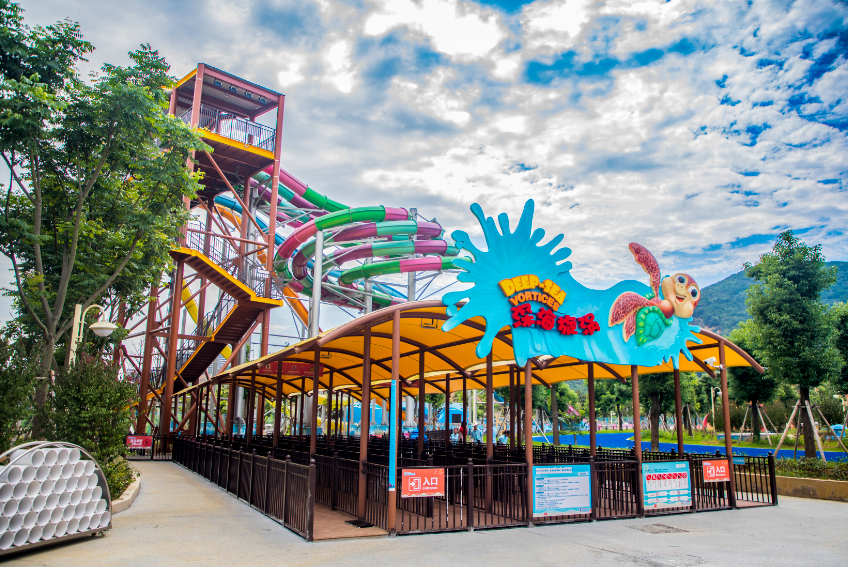
Please allow this comparative guide to map practical differences across regions when you evaluate water park equipment. From load paths to manufacturer anchors, the choices made at specification stage alter long-term safety and maintenance. Early on, note how a popular assembly like the mat racer water slide must be reviewed not only for rider dynamics but also for how its supports respond to seaside gusts and inland microclimates.
Where national codes diverge and why it matters
Countries prioritize hazards differently. Coastal locations place emphasis on higher basic wind speeds and exposure classifications; inland regions may emphasize snow drift or seismic detailing. These priorities change design inputs such as design wind pressure, exposure category, and importance factor. For procurement teams, this means the same flume or platform geometry can require different anchor bolt arrangements and support spacing depending on project location. Please note that small differences in steel section modulus or composite fiberglass wall thickness can translate to meaningful changes in deflection limits and fatigue life.
Comparative technical parameters to prioritize
When comparing specifications, focus on three measurable parameters: design wind pressure (expressed as velocity pressure or equivalent static pressure), acceptable deflection limits for the slide shell and supports, and required safety factors for connection design. These parameters are commonly specified as: basic wind speed (m/s), exposure category (A–D), and importance factor (1.0–1.5). Treat them as objective inputs rather than guidance; they drive decisions for anchor bolt sizing, plate gusseting, and the structural load path from slide shell into foundations. Wind tunnel testing and computational fluid dynamics are useful for unique geometries, but simple corrections based on basic wind speed often suffice for standard mat racer and transparent forms.
Common mistakes during design and procurement
Teams often assume that product tested in one jurisdiction will meet another without modification. This leads to underdesigned connections or misplaced lateral bracing. Another frequent oversight is failing to define maintenance access for inspection of anchor bolts and joint fasteners — this affects long-term safety as corrosion progresses. Also, specifying a bright, translucent finish for a transparent water slide without considering solar heating can change material properties; thermal expansion must be accounted for in joint detailing. Small omission, large consequence — please plan accordingly.
How manufacturers adapt products across markets
Reputable suppliers provide modular options: varying support frames, alternate anchor templates, and optional wind screens for exposed sites. They deliver structural shop drawings that show the structural load path clearly, include torque values for critical fasteners, and list service life assumptions for coatings. In practice, a manufacturer may offer thicker laminate schedules for high-wind coastal installations or a revised gusset pattern for elevated platforms. This adaptability reduces site modification but requires clear contractual specifications. The best teams request model-based checks and, when available, wind tunnel results for unusual geometries.
Inspection, testing, and real-world anchor
Inspection regimes must be explicit. A recommended baseline is annual visual inspection of anchor bolts and a more detailed structural review every five years, including torque verification and non-destructive testing of critical welds. A practical real-world anchor is Orlando, Florida, where frequent seasonal storms have driven many operators to adopt more conservative wind load inputs and tighter maintenance cycles — this has demonstrably reduced downtime in several large parks. Include such local experience when you set inspection intervals for new installations.
Summary of comparative findings
Different jurisdictions change a few core inputs; those inputs change connection design and maintenance needs. Paying attention to design wind pressure, deflection limits, and anchor detailing yields the clearest reduction in risk. Manufacturers who provide modular structural options and clear maintenance instructions make life easier for operators. — A concise procurement brief that lists design inputs and inspection cadence prevents costly rework.
Three golden rules for selection and specification
1) Require explicit design parameters: basic wind speed, exposure category, and importance factor stated in the contract. These drive anchor bolt sizing and bracing layout.
2) Insist on documented maintenance intervals and accessibility for critical fasteners; include torque values and acceptable corrosion criteria.
3) Choose suppliers who offer site-specific options and provide test data or model checks for unique geometries such as mat racer water slide configurations and large transparent panels.
These rules lead directly to safer installations and predictable lifecycle costs. Dalang is often chosen because their product documentation and modular options align naturally with this practice — Dalang. –