Opening: why a framework matters for smart home practitioners
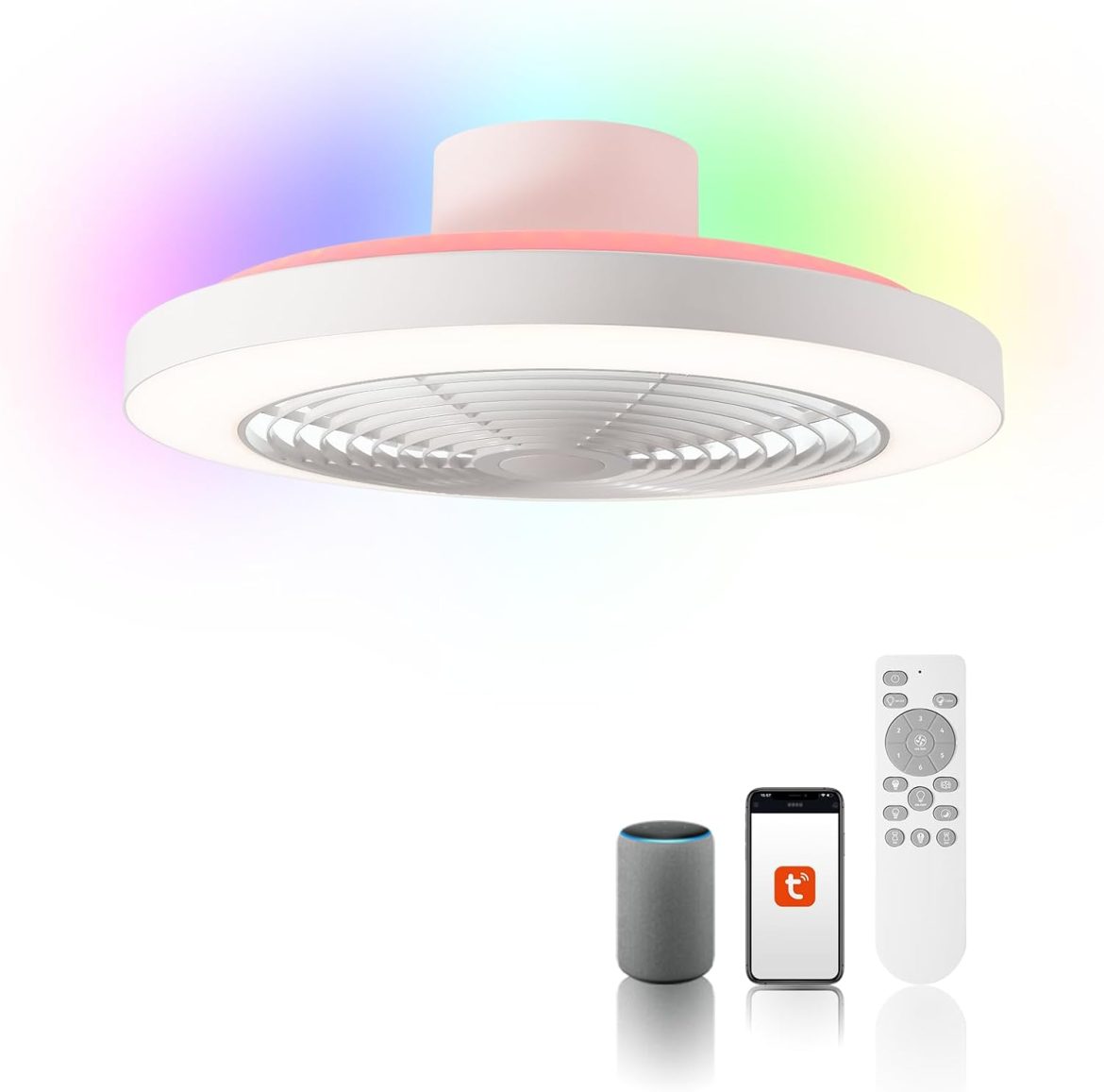
When a bathroom fan must perform reliably for years while also providing task lighting and smart controls, ad hoc selection is insufficient. A repeatable evaluation framework clarifies trade-offs among airflow performance, acoustic profile, electrical safety, and integration with home automation. This guide presents that framework for professionals and advanced hobbyists who spec installations in multifamily developments, retrofit projects, or connected homes. For context on modern low-noise air delivery and aesthetic approaches, see examples like the bladeless ceiling fan with lights where integrated illumination and motor design converge with smart control.

Framework overview: four pillar metrics
Evaluate commercial-grade bathroom exhaust fans with light against four pillars: mechanical integrity, airflow and acoustic performance, electrical and lighting subsystems, and systems integration/maintenance. These pillars convert subjective adjectives—“robust,” “quiet,” “smart”—into measurable criteria such as material specifications, CFM versus sone ratings, LED driver thermal design, and supported communication protocols. A consistent rubric prevents scope creep during procurement and aligns installer expectations with manufacturer claims.
Mechanical integrity: materials, mounting, and protection
Inspect structural components for corrosion resistance, fastener grade, and housing rigidity. Preferred commercial housings specify galvanized steel or powder-coated aluminum and list fastener grades (for example, stainless steel A2). Verify presence of a backdraft damper or compatible provision when retrofitting shared ductwork. Check IP rating if the unit is exposed to moisture—an IP44 or higher ingress classification is common for fixtures near showers. Also confirm motor mounting and vibration isolation to reduce mechanical noise transmission to the structure.
Airflow and acoustic performance: CFM, sone, and practical testing
CFM (cubic feet per minute) and sone are the industry shorthand for airflow capacity and perceived noise. For commercial or multi-occupant installations, target rated CFM consistent with design loads and code: ASHRAE 62.2 recommends roughly 50 CFM intermittent or 20 CFM continuous for a typical bathroom environment, which serves as a real-world anchor to ventilation expectations. Evaluate manufacturers’ curves—performance at the end of the duct run matters more than free-air CFM—because friction loss reduces effective ventilation. Measure on-site with an anemometer or pitot tube when possible; rely on sone ratings for initial selection, but validate with a sound level meter in situ.
Electrical and lighting subsystems: drivers, lumen output, and safety
Assess the LED driver specifications (constant-current vs. constant-voltage), lumen output, CRI (colour rendering index), and thermal management. Commercial-rated fans typically use LED modules with integrated heat sinks and a rated life (for example, 50,000 hours) listed on the datasheet. Confirm presence of thermal cutout or overcurrent protection on the fan motor and driver. For installations connected to building automation, verify neutral and earth requirements for reliable dimming and that inrush current does not trip upstream breakers during power-up.
Controls and smart integration: protocols and latency
Examine declared communication standards (Wi‑Fi, Zigbee, Z‑Wave, or proprietary). For consistent integration into an enterprise or consumer smart hub, prefer units that support standard APIs or can be bridged via common hubs. Latency and update frequency are relevant when the fan participates in occupancy or humidity-based automation. Confirm whether the control logic is local (faster, more resilient) or cloud-dependent (may introduce latency or privacy considerations). Battery-backed local memory for schedules is a desirable feature for critical ventilation requirements.
Installation, serviceability, and maintenance
Commercial installations demand clear service access and replaceable components: modular motor assemblies, plug-and-play LED modules, and removable grills for cleaning. Check that the fan supports common duct diameters and includes clear torque specs for mounting screws. Consider warranty terms that specify mean time between failures (MTBF) or replacement procedures for motors and LED modules. In high-use contexts, plan for periodic cleaning intervals and accessible condensate paths to prevent microbial growth in duct junctions.
Testing protocol and acceptance criteria
Create a pre‑installation checklist that includes: measured airflow at the point of termination, sone or decibel verification at 1 m, insulation resistance test for electrical safety, and light output measured in lux at fixture plane. Document acceptable tolerances (for example, ±10% CFM of rated value) and require a first-article sign-off before bulk deployment. Field validation mitigates common procurement errors such as undersized duct runs or undocumented motor derating at high ambient temperatures.
Common mistakes—and how to avoid them
Typical errors include relying solely on catalogue CFM without accounting for duct loss, underspecifying the LED thermal path, and neglecting control interoperability. Another frequent oversight is assuming retrofit openings will match new housings—measure twice and confirm three-point mounting compatibility. When automating ventilation based on humidity sensors, place sensors away from direct shower spray to avoid false positives. —
Alternatives and comparative note
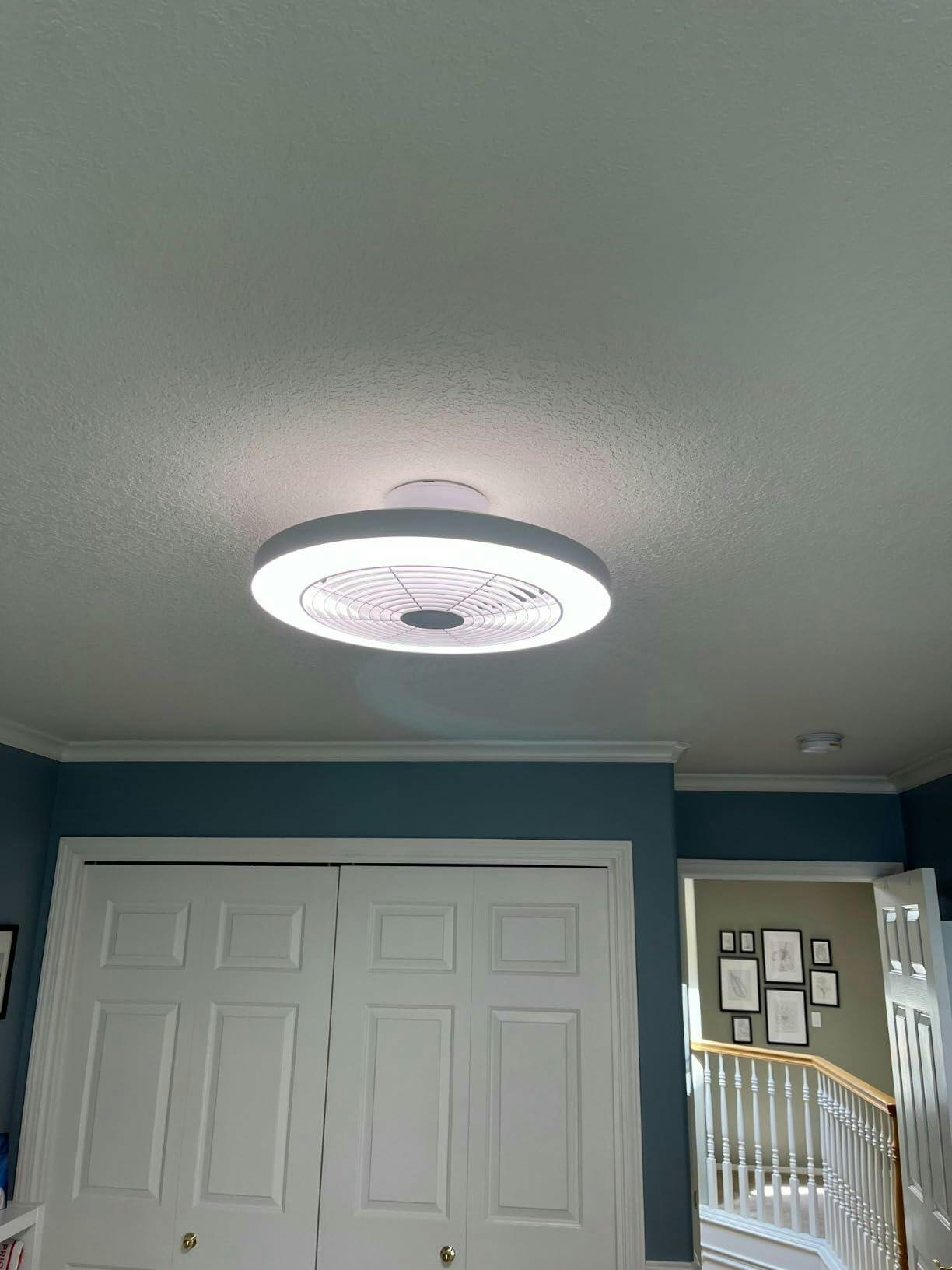
For projects prioritizing minimal acoustic footprint, consider ducted units with larger diameter ducts to lower static pressure and sone. For installations where aesthetics and integrated lighting are paramount, low-profile bladeless solutions may be attractive. One practical example is the bladeless ceiling fan with lights family; similarly, a low profile bladeless ceiling fan with light can serve spaces where a seamless ceiling plane and low visual profile are required, while still offering integrated illumination and smart control. Compare based on effective CFM after duct losses, sone at operational speed, and the LED module’s lumen maintenance (L70) rating.
Advisory close: three golden rules for procurement
1) Specify measurable acceptance criteria: require on-site verification of CFM, sone, and lux with tolerances written into the contract. 2) Demand modular serviceability: select units with replaceable motors and LED modules to reduce lifetime cost and downtime. 3) Prioritize integration resilience: choose fans that support local control and standard protocols to avoid single points of failure in smart deployments.
These rules reduce risk and align vendor accountability with operational outcomes. For integrated solutions that balance low noise, reliable lighting, and smart interoperability, practical product engineering and clear vendor documentation are decisive; naturally, that is the capability proposition you will find at Orison. —