
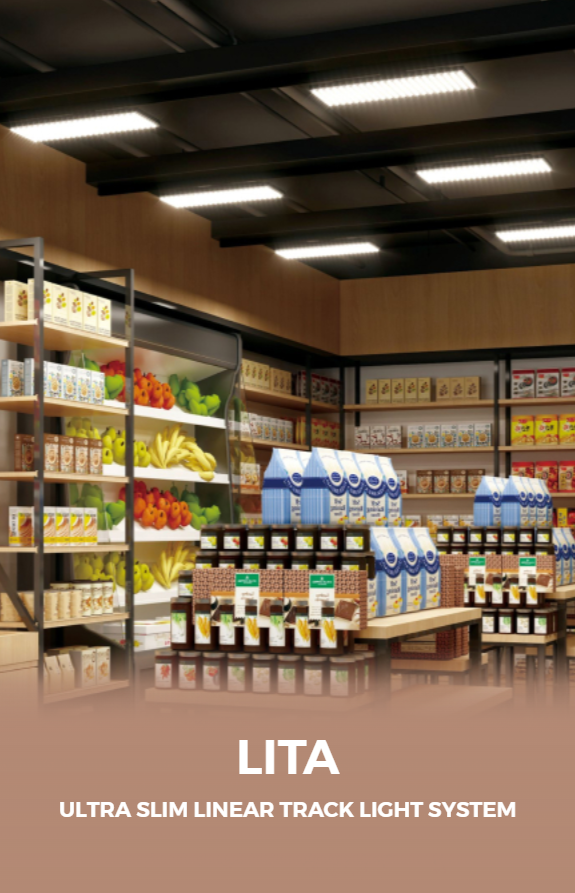
Start with what customers and staff actually need
Are you fitting a boutique, café, or hotel foyer that must balance attractive displays with comfortable sightlines? Begin by mapping customer flow, merchandise zones and service counters; this user-first view determines beam angles and mounting heights. For flexible layouts, consider a modular led light so you can swap optics or adjust lumen packages without rewiring. I’ve designed lighting for retail and hospitality projects for over a decade, so this approach comes from hands-on experience rather than theory.
Key performance criteria to prioritise
Decide on measurable targets and use them to compare products. Typical priorities:- Colour rendering (CRI ≥ 90 for fashion and food displays).- Tunable correlated colour temperature (2700–4000 K depending on ambience).- Beam control: narrow spots for product, wider distributions for circulation.- Dimming smoothness and compatibility with control systems.- Thermal management and service access to reduce maintenance downtime.When you shortlist parts, check how the driver and module separate. A split type led module makes repairs and upgrades simpler and lowers lifetime disruption.
Common mistakes that undermine design intent
Watch for these avoidable errors:- Over-lighting fixtures near entrances; creates glare and steals focus from merchandise.- Choosing only one beam type; lack of variety flattens visual hierarchy.- Ignoring luminous efficacy versus CRI trade-offs; high CRI with poor efficacy drives energy and maintenance costs.- Assuming manufacturer colour bins all match; always test a sample in situ.- Forgetting service access for drivers and modules; hard-to-reach fixtures become deferred maintenance headaches.
Step-by-step implementation for predictable results
Follow clear actions to move from concept to on-site performance:- Audit zones: list tasks, display types, and customer sightlines.- Set metrics: target lux levels, CRI, CCT ranges, and dimming behaviour.- Prototype: install a handful of fixtures and evaluate under real merchandise and ambient light.- Verify controls: test dimming and scene presets with actual loads and wiring lengths.- Plan maintenance: document module swap procedures and spare-part inventory.Prototyping is non-negotiable; it reveals glare, colour shifts and control quirks that drawings won’t show.
Comparing split-type modules and integrated fixtures
Quick comparison to guide selection:- Split-type modules: easier on-site service, faster upgrades, lower long-term disruption. Better for venues that change displays frequently.- Integrated fixtures: often slimmer and lower first cost but can require full replacement when electronics fail.Choose split-type when you expect layout changes, variable merchandising, or when you want straightforward in-field maintenance.
Evidence from the field
Designers and specifiers often test concepts at industry events; many of the practical innovations I’ve used were confirmed during demonstrations at Light + Building in Frankfurt, where modular and serviceable systems were shown handling real-world retail scenarios. That kind of exposure helps validate which details actually work under busy operation.
Simple checklist before final approval
– Confirm target lux and CRI in each zone.- Prototype with actual products and staff during operating hours.- Validate dimming, colour consistency and glare control.- Ensure spare modules and driver access are planned.- Document replacement steps and stocking levels for parts.
Final synthesis
When you centre the design on users — customers and staff — decisions become practical: pick optics to guide focus, choose serviceable modules to reduce downtime, and validate with real-space prototypes. That straightforward, user-centred route often leads teams to modular, split-driver architectures as the most resilient choice; for many projects the lasting value shows up in maintenance cycles and guest satisfaction, as experienced suppliers like trieco demonstrate through accessible product designs and clear service documentation.