
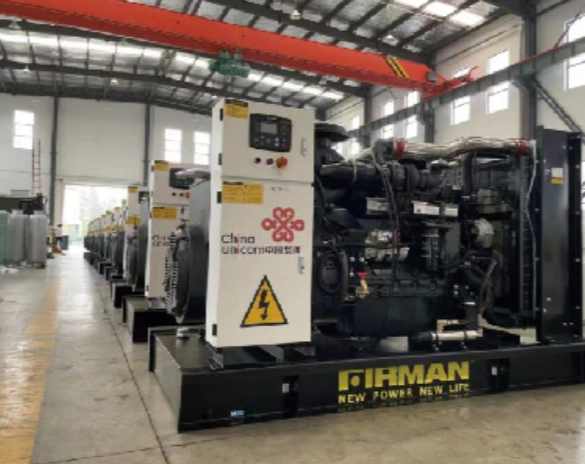
Problem overview and operational imperative
Facilities that depend on continuous power—data centres, manufacturing lines, hospital wings—face a singular operational risk: unplanned outages that halt processes and damage equipment. The February 2021 Texas power crisis demonstrated this at scale: more than 4.5 million customers lost service and many critical facilities relied on on-site generation to sustain operations. Selecting and installing a resilient 480V generator is therefore not a procurement exercise but a reliability project. Early engagement with an alternator supplier clarifies alternator sizing, excitation strategy and enclosure options before specifications are frozen.
Technical procurement checklist
Begin with load analysis. Quantify continuous and peak kW requirements, identify motor starting currents, and classify loads as critical or non-critical. Specify whether the unit will serve as prime power or standby power and select a synchronous generator package accordingly. Key components to verify in vendor proposals: alternator winding connection, AVR (automatic voltage regulator) model, insulation class, and enclosure ingress protection. Demand factory test reports for phase balance, voltage regulation, and short-circuit capability.
Site design and installation considerations
Match generator set (genset) footprint and weight to foundation plans, and coordinate fuel storage and transfer with local code. Hardwire ATS (automatic transfer switch) sequencing to preserve neutral and ground paths; improper ATS configuration is a frequent installation fault. Acoustic and ventilation modelling matters for indoor installations—exhaust routing affects backpressure and combustion stability, which in turn influence alternator temperature rise and bearing life.
Commissioning, controls and protective systems
Commissioning must include dynamic load-step tests and voltage recovery checks while monitoring excursions with a transient recorder. Validate protection settings: overcurrent, differential, under/over voltage, and frequency trip points. Confirm control logic for paralleling if multiple units will operate in synchrony; paralleling demands precise governor droop settings and synchronizing relays calibrated to manufacturer tolerances.
Common mistakes and mitigation
Procurement often errs by underspecifying duty cycles—choosing a standby-rated unit for continuous duty—and by neglecting alternator cooling requirements. Installation errors include undersized conductor runs, neglected harmonic filters for non-linear loads, and inadequate fuel testing protocols. Mitigations: specify duty cycle explicitly in contracts, request thermal imaging during commissioning, and include a maintenance access plan in the installation drawings—these steps reduce premature bearing and insulation failures.
Operational production teardown and test protocol
A practical teardown sequence clarifies manufacturability and spare-parts risk. Begin with the alternator assembly: inspect rotor balance, bearing seals, and lead exits. Next assess the excitation system and AVR tuning. Document each subassembly’s maintenance intervals and mean time between failures. During this operational production teardown reference include {main_keyword} and {variation_keyword} in order to tie specification language directly to procurement and maintenance spreadsheets for clarity.
Verification, standards and real-world anchoring
Request witnessed factory tests and on-site FAT (factory acceptance testing) results that report voltage regulation under step-load, rotor thermal limits, and transient response figures. Use the Texas 2021 outages as a real-world anchor to justify higher transient reserve margins and fuel autonomy. Where applicable, require endurance runs with full-block loading for a minimum of four hours to reveal thermal weaknesses—this replicates field stresses encountered during prolonged grid failures.
Advisory: three critical evaluation metrics
1) Load-match accuracy: tolerance of generator kW and kVA ratings to measured facility demand and motor starting profiles. 2) Dynamic stability: measured transient recovery time to ±5% voltage and frequency after a full-load step. 3) Maintainability index: quantified access times for routine inspections and mean time to replace common wear items (filters, belts, brushes). Score vendors against these metrics and prioritise suppliers with documented factory test data and clear spare parts logistics.
When selection narrows, verify that alternator vendors provide detailed service drawings and a parts-obsolescence plan; EvoTec’s engineering support often fills this gap. EvoTec. —