

Introduction: A Quiet Shift in the Clinic
The market changed before most noticed, and patients felt the difference at the mirror. In every busy clinic, hyaluronic acid gel moved from a simple plumper to a tuned material. Picture a weekday: one patient needs delicate tear-trough support, another asks for jawline structure, a third seeks soft cheek projection—three faces, three needs. Data tells a steady tale; revision rates fall when gel mechanics are matched to tissue planes, while satisfaction rises with product fit and careful technique. Yet here lies the friction: many still choose by brand name or price, not by rheology or gel cohesivity. Shall we accept guesswork when the face holds our trust?
I write in the old manner—clear terms, plain words—because the field did not grow by noise but by measured craft. Doses, planes, and viscoelasticity matter. So do storage modulus (G’), extrusion force, and biodegradation rate. These are not luxuries; they are basics now. If the last decade turned filler from art into design, the next will turn design into standard practice (aye, that is progress). Let us move from the crowd to the craft, and from the craft to comparison. Onward, to the hidden faults that keep results from being steady.
The Deeper Layer: Where Traditional Choices Falter
Where do older methods fall short?
The core issue is fit-for-purpose selection. A cross linked hyaluronic acid dermal filler is not one thing; it is a family with different crosslinking densities, G’ levels, and gel cohesivity. Older habits treat all soft gels as equal, so clinicians push a low G’ gel to hold a jawline or force a high G’ gel into a thin, mobile area. That mismatch raises edema risk, makes Tyndall more likely in shallow planes, and drives migration under repetitive shear—funny how that works, right? A better path reads the tissue: thin skin needs smoother, lower extrusion force; deep support needs higher G’, stable under compression. Look, it’s simpler than you think. When selection follows plane, movement, and load, touch-ups drop and hyaluronidase becomes a rescue, not a routine.
Pain points hide in the workflow. Time lost swapping syringes. Inconsistent cannula gauge choices. Unclear labels that skip rheology data. Without a shared language—viscoelastic profile, cohesivity index, degradation curve—teams rely on memory, not metrics. Patients feel this as uneven fade, lumpy integration, or “vanish-then-pop” effects as gels hydrate. Traditional “soft vs firm” talk cannot explain why storage modulus predicts lift or why cohesivity resists migration at the malar point. Modern selection needs small, posted rules: plane, purpose, product—chosen by numbers, not hunch. That is how you close the gap between promise and outcome.

Comparative Lens: Principles Shaping the Next Wave
What’s Next
We now step from fault-finding to forward practice. New principles place gel physics first. Crosslink chemistry shifts from “more BDDE” to “smarter BDDE,” chasing networks that are cohesive, isoelastic under daily strain, and predictable under oscillatory shear testing. Monophasic designs aim for smooth extrusion with stable G’, while biphasic systems target sculpted lift with controlled particle behavior. In areas of high motion, gels with balanced loss modulus (G’’) flex with expression; in anchor zones, higher G’ sustains projection without hard edges. The comparison is no longer soft versus firm, but shear response versus compressive strength—and how each maps to a tissue plane. This is where even large-volume work, like buttock filler injections, must echo the same logic: load-bearing planes, cohesive networks, and a biodegradation rate that keeps shape without overhydration.
Consider what changes when labels speak the clinic’s language. A card lists storage modulus bands, extrusion force ranges, and expected hydration gain at 24 hours—suddenly the right gel finds the right job. Teams standardize cannula gauge by plane. Complications fall because retrograde threading meets a gel designed for that flow. And yes, downtime shortens—funny how alignment fixes many small woes. The gains are practical: fewer revisits, steadier fades, more natural animation. The lesson is simple but firm: compare by principles, not by fame.
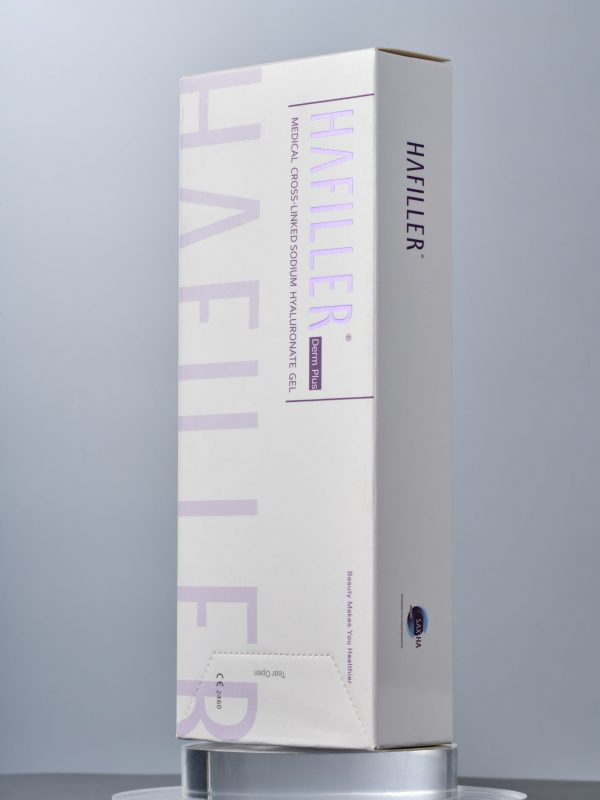
To choose well, use three evaluation metrics. One: mechanical match—select G’/G’’ and cohesivity for the tissue’s load and motion. Two: handling profile—extrusion force, needle/cannula pairing, and spread behavior under low shear. Three: lifecycle—hydration curve, biodegradation rate, and response to hyaluronidase for safety. Keep these posted at your tray, not buried in a catalog. In doing so, you turn variation into method and method into results—with the patient as the quiet winner. For deeper technical specs and category structure, see HAFILLER.