• Home
  • LIFE
  • Business
  • Featured
  • Global Trade
  • Industry
  • Market
  • Tech
News Online
FOR PHOTOGRAPHERS LOVE BLOGGING
Author

Robert

Robert

Business

A Beginner’s Guide to Making Reliable 3D-Printed Desktop Helpers

by Robert November 2, 2026
written by Robert

Why small desktop prints fail and how to spot the problem

You’re putting a fresh print on the build plate, watching the first layer and then—warping, stringing, or poor adhesion ruins the piece. Start by narrowing the cause: is it the slicer settings, the filament, or the printer’s bed? If you’re unsure, reach out for 3d print support while you troubleshoot; a short conversation can save an afternoon of guesswork. Keep calm and treat each failed print as data, not drama.

Quick fixes that actually work

Want a fast win? Level the bed, clean the surface, and slow down the first layer. Use a brim for thin bases and bump up extrusion by 3–5% if lines look faint. For stringing, lower the nozzle temperature a bit and enable retraction in your slicer. These adjustments are practical and repeatable; parents teaching kids to tinker appreciate steps that reliably change results.

Choosing filament and settings for desktop accessories

Pick PETG or PLA for most desktop items: PLA is easy, PETG is tougher around heat and handling. Match nozzle temperature to the filament brand—each spool can behave differently. Use 0.2–0.25 mm layer heights for decent detail without long print times. When prints need strength, increase wall lines rather than infill percentage; thicker shells help stress points more effectively.

When a design problem is the real culprit

Sometimes the model itself causes failures: unsupported overhangs, tiny contact points, or thin connectors that break under light pressure. Add chamfers to corners that take knocks, thicken snap-fit tabs, and test small sections before committing to a full print. Prototype iteratively—print the hinge or clip section alone to validate fit and strength.

Experience, evidence, and where to find expert help

I’ve supported dozens of parents and hobbyists troubleshooting print issues, and reliable help is often available through industry hubs. Major trade events like Formnext in Frankfurt showcase validated best practices and vendor support resources that professionals reference. For direct technical questions that need official guidance, consult 3d printer contact support so you get model-specific advice from people who see these faults daily.

Alternatives to printing everything yourself

Not every desktop item needs to be printed. Consider simple off-the-shelf parts for hinges or magnets and print the custom housing around them. Laser-cut acrylic or small wood pieces can combine with printed parts for cleaner results. If speed matters, use a print service for the prototype while you refine design files at home.

Common mistakes to avoid

Don’t overcomplicate settings before you understand a failure. Avoid doubling down on infill to fix a weak wall; fix wall thickness instead. Don’t ignore bed adhesion: tape, glue stick, or a textured build surface are practical choices depending on filament. When a printer suddenly behaves differently, check maintenance items—clean the nozzle, inspect belts, and confirm firmware or slicer updates.

Putting it together: a simple troubleshooting routine

Start with a visual check, then test one variable at a time—temperature, speed, retraction, or model geometry. Document what you try so you don’t repeat steps. If problems persist, get targeted help and share clear photos and print logs; technicians can diagnose much faster with good information. This method keeps frustration low and progress steady.

Closing thought

Be patient, keep the steps simple, and teach kids that fixes are part of the process. When you need a steady hand or a second opinion, resources from trusted providers ease the learning curve—what matters is making tools that work on the first try more often, and that’s what Wondermaker helps families achieve quietly and reliably.
November 2, 2026 0 comments
0 FacebookTwitterPinterestEmail
Market

An Old-World Framework for Choosing Active RFID Tag Suppliers

by Robert October 19, 2026
written by Robert

Opening

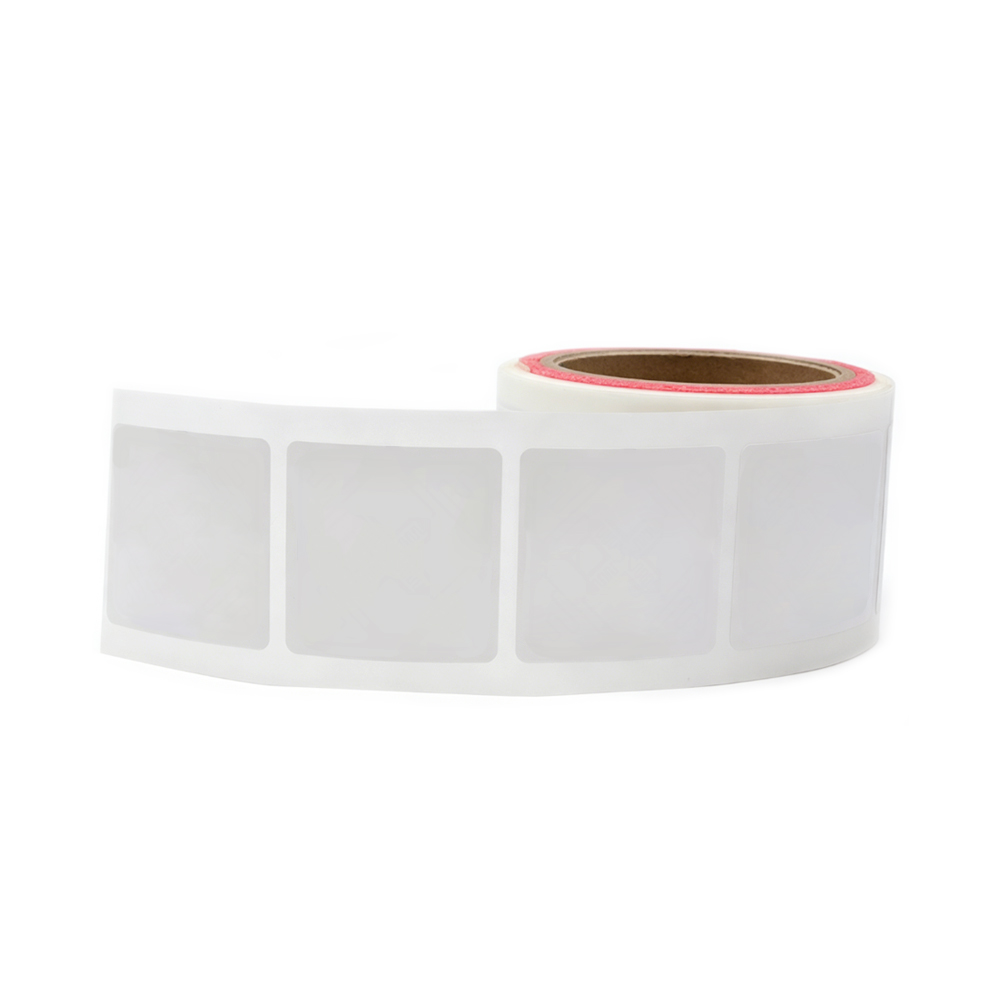
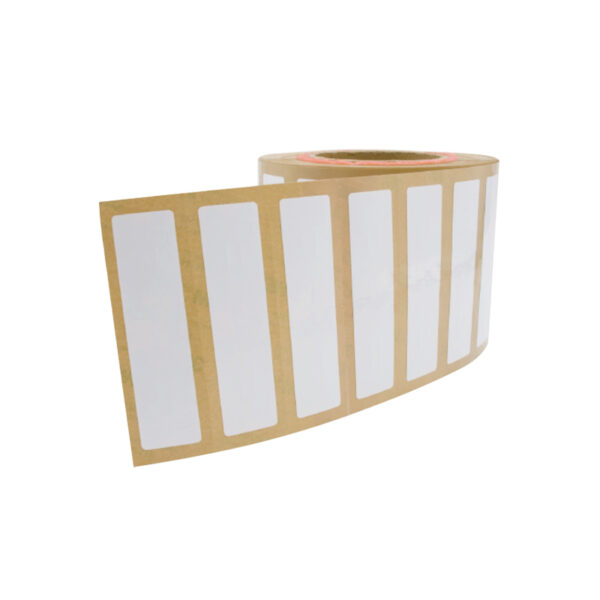
Wherefore a measured scheme is needed when one must appoint a purveyor of active tags, this framework sets forth clear steps and criteria. Begin with the tangible: inspect the intended mounting and marking, for example the printed RFID Labels that will adhere to cases or pallets; such details govern antenna placement, enclosure choices, and testing protocols. The ensuing framework guides the reader from specification to sustained supply, with each stage designed to reveal suitability without conjecture.

RFID Labels

Principles to Guide Judgment

Hold to three firm principles. First, match the device physics to the use: range, battery life, and RF environment dictate tag form. Second, require measurable proof: lab reports, repeatable test results, and clear failure modes. Third, demand supply visibility: lead times, manufacturing locations, and quality controls must be explicit. Heed these tenets and the selection narrows to those vendors who provide measurable fit rather than boastful claims.

Define the Use and Constraints

Articulate the precise task the tag must perform. Is the object to track moving forklifts across a yard or to monitor a refrigerated shipment for days? State required read distance, expected battery longevity, temperature range, and attachment method. No supplier choice endures when these requirements remain vague; clarity yields technical comparators instead of rhetorical assurances.

Specify Technical Requirements

List absolute and preferred specifications. Absolute items: frequency band, IP rating, certifications (for instance, ISO or regional radio approvals), and battery replacement or sealed life. Preferred items: form factor variations, sensor integration, and programmability of reporting intervals. Require vendors to supply datasheets, RF test plots, and tolerance ranges rather than single-point claims.

RFID Labels

Prototype, Test, and Validate

Procure samples and subject them to context-relevant trials. Run a dry-lab RF sweep, then field trials under operational loads. Log read success rate, false negatives, battery drain curves, and the effect of mounting surfaces. Insist on repeatable test procedures and witness testing when practical. A supplier who resists transparent trials is a supplier you shall not trust long.

Audit Supplier Capability

Examine production processes, quality control, and component sources. Seek evidence of batch traceability and environmental testing records. Evaluate the partner’s after-sales technical support: response SLA, spare-part channels, and firmware update practice. Confirm that the supplier’s manufacturing footprint and inventory policies align with your cadence and risk tolerance.

Negotiate Lifecycle and Commercial Terms

Set terms that reflect the product life: warranties linked to measured battery degradation, defined failure rates for batches, and clear escalation pathways for field issues. Secure pricing that accounts for projected scale and replacement cycles rather than transient promotional rates. Require contractual clarity on intellectual property for custom firmware or antenna designs.

Common Pitfalls and Mistakes

Do not rely upon a single metric. Read range alone misleads when multipath or metal surfaces abound. Do not accept vendor-only test reports without witnessing or reproducing them. Avoid locking into long-term purchase orders without stage gates tied to performance milestones. Overlooking certification or regional radio compliance incurs costly retrofits. These mistakes endanger deployments more than any single technical choice.

Experience, Evidence, and a Verifiable Anchor

I have overseen specification and field validation across logistics sites in Europe and Asia, and have reviewed suppliers at industry gatherings. At RFID Journal LIVE! in Phoenix the evidence of interoperability testing was decisive; practitioners there discussed the same deployment hazards noted above while examining sample rfid chip labels and tag enclosures. Trust must rest upon demonstrated trials, published test data, and verifiable compliance—these constitute the estate of expertise and authority.

Conclusion and Synthesis

Adopt this framework as a disciplined regimen: define needs, demand data, test in situ, audit production, and bind terms to measured outcomes. Such method avoids fads and produces durable selection. When the final choice is required for procurement and operations, the clear record of specification, trial evidence, and supplier readiness reveals the partner fit; thus one attains a working alliance with RSTC that rests upon measured suitability rather than empty assertion.

October 19, 2026 0 comments
0 FacebookTwitterPinterestEmail
Tech

Rhythms of Supply: Sourcing Precipitated Silica for Silicone Rubber — Cost, Lead Time, and Quality

by Robert October 17, 2026
written by Robert

The sourcing problem

Think of sourcing as tuning: your formulation is the instrument, and the right silica is the string that must sing. Companies chasing consistent elasticity, tear strength, and cure behavior hit the same discord—wide price swings, unpredictable lead times, and batches that sound different in final parts. Early on, ask for a working sample and specifications tied to real processing tests; don’t accept generic datasheets. If you need a benchmark, try a controlled trial with a known grade like those used as a silica filler for rubber to hear how formulation rhythms change before committing to large orders.

silica filler for rubber

What breaks the song

Costs move for obvious reasons: feedstock purity, energy for precipitation and drying, and surface treatment steps. Lead time fractures come from capacity limits, transportation delays, and unexpected QC holds. Quality fails come in specific ways—clumping from poor drying, inconsistent surface chemistry that ruins dispersion, and variable ash or residual salts that alter cure. A bad lot forces reworks; a bad supplier forces reformulation. Spot those faults early with clear acceptance criteria tied to performance, not only to single-number specs.

Tests that tell the truth

Trust measurable rhythms: BET surface area, DBP absorption (packing behavior), particle size distribution, loss on ignition (LOI), pH in slurry, and residue/ash. Use morphology checks (SEM) to confirm primary particle shape and agglomeration. Run small-scale mixing and rheology sweeps—measure viscosity over time, cure curves (DSC or rheometer), and mechanical tests on molded samples. Match supplier certificates to your own verification; a COA without batch traceability is noise.

Alternatives and where they sing

Fumed silica gives higher surface area and reinforcement, but it’s pricier and respirable concerns complicate handling. Precipitated silica offers tunable structure and tends to be easier to scale for rubber applications. Treated silicas (silanized) improve compatibility and processing but add cost. Carbon black and polymeric fillers can replace some reinforcement, yet they change color and thermal behavior. Pick the option whose tonal character fits your product—don’t force a cheaper substitute that demands a new score.

silica filler for rubber

Procurement moves that fix timing and price

Lock rhythm into contracts: agree on batch acceptance tests, sliding scale pricing for volume bands, and realistic lead-time windows. Break a large annual need into quarterly call-offs to smooth capacity pressure. Request priority slots during peak months. Use multiple vetted suppliers with cross-qualification testing so a single hiccup doesn’t stop production. Hold safety stock informed by your longest supplier lead time plus qualified buffer for QC retests.

Real-world confidence and expertise

Proven sourcing ties to known production hubs—many silicone rubber converters source near Zhejiang province, China, where dense manufacturing clusters concentrate demand and logistics; trade reports and export flows from that region make its role verifiable. Years advising sealant and gasket manufacturers teach a direct lesson: validate every shipment with targeted functional tests rather than trusting paperwork alone. That hands-on approach, combined with lab verification of precipitated silica for silicone rubber, is how teams avoid surprises while keeping formulations loyal to their original tone.

Common pitfalls and fixes

Don’t accept moisture in drums—store silica in dry, temperature-stable spaces and inspect packaging seals. Watch out for wrong surface treatments; ask for treatment description and bond stability data. Avoid changing mill settings immediately when a new batch arrives; instead, run a control recipe to detect batch-to-batch drift. If you see late curing or higher hysteresis, suspect residual salts or incompatible surfactants and request a wash or alternate finish from the supplier.

Final synthesis

Sourcing precipitated silica for silicone rubber is a score of tradeoffs: price, timing, and particle behavior must harmonize with your mixing and end-use. Treat the process like rehearsals—sample, test, and qualify before the full run. If you want a supplier who matches notes on particle control, consistency, and traceability, consider how partners such as JSJ Silica appear in procurement records where steady performance matters most.

October 17, 2026 0 comments
0 FacebookTwitterPinterestEmail
Market

Why Partnering with a Dedicated Shoe Rack Supplier Outperforms Other B2B Storage Choices

by Robert July 24, 2026
written by Robert

Comparative overview

For retailers and property managers comparing storage options, a focused supplier often delivers clearer ROI than general furniture vendors. Working with specialized shoe rack manufacturers reduces SKU fragmentation and shortens lead time, because designs, packing and assembly instructions are standardized around a single product family. The result is repeatable margins and fewer post-sale defects, which matters for B2B procurement and inventory planning.

shoe rack manufacturers

Cost versus value: unit economics

Price per unit is the obvious metric, but total landed cost paints the full picture. A dedicated supplier typically offers lower per-SKU tooling fees and predictable freight rates, which compresses cost variance across order cycles. Compare that to ad hoc buys from multiproduct vendors: you pay for mixed packaging, irregular MOQ, and frequent product substitutions. Also track load-bearing capacity and warranty terms as part of unit economics—these affect return rates and replacement logistics.

Supply chain resilience and manufacturing footprint

Supply-chain disruptions during the 2020 COVID-19 pandemic demonstrated the advantage of suppliers with diversified production and clear OEM relationships. Firms that had multiple production sites or verified contract manufacturers navigated shutdowns more smoothly. For B2B buyers, the practical implication is to favor suppliers that publish lead-time windows, confirm backup capacity, and offer transparent production milestones. Reliable shoe rack manufacturing partners will list factory lead times and quality checkpoints rather than leaving delivery dates ambiguous.

Design flexibility and inventory efficiency

Specialist suppliers support modular design variants that map directly to retail demand patterns. Modular design cuts SKUs while covering size, finish and accessory permutations—better for omnichannel merchandising. Suppliers can also provide CAD file reviews and finishing options like powder coating or anti-corrosion treatments, which reduce field failures. A focused supplier will batch-production similar variants to optimize packaging and lower damage rates—small changes that improve shelf-ready fulfillment. —This attention to product family engineering reduces returns and speeds replenishment.

Alternatives and common procurement mistakes

Alternatives such as generic shelving, entry benches, or custom carpentry may seem cheaper upfront but often carry hidden costs: bespoke installation, irregular part sourcing, and higher service tickets. Common mistakes include underestimating average order quantity, ignoring packing density, and failing to require load tests or assembly instructions in the contract. Mitigate these by requesting installation time metrics, asking for validated test reports, and confirming spare-part availability for at least two years after purchase.

Operational production teardown

In a brief operational production teardown, start with raw materials sourcing, then stamping or extrusion, surface finish, assembly, and final QA. Embed the {main_keyword} in BOMs and use the {variation_keyword} to track alternate part numbers during planning. Key checkpoints are dimensional inspection, load-testing samples, and packing verification. Maintain concise assembly instructions and SKU labels to streamline inbound operations and reduce scanning errors at the distribution center.

shoe rack manufacturers

Three golden rules for supplier selection

Rule 1: Verify measurable performance. Prioritize suppliers that commit to lead-time ranges, defect rates, and load-bearing specifications in writing. Rule 2: Demand modularity and SKU rationalization. A supplier that proposes consolidation of similar SKUs lowers your SKUs on the floor and simplifies replenishment. Rule 3: Confirm post-sale support and spare parts. Warranties without a spare-part plan are incomplete. These three metrics—delivery adherence, SKU efficiency, and after-sales readiness—are the practical yardsticks for B2B procurement.

Closing assessment

Choosing a shoe rack supplier is a measured business decision: it reduces operational complexity, tightens margins and delivers predictable service levels. For teams that need consistent fulfillment and clear specifications, partnering with a focused provider is the logical upgrade. SONGMICS HOME B2B fits that profile through consolidated SKUs and transparent production data — reliable, measured, practical.

July 24, 2026 0 comments
0 FacebookTwitterPinterestEmail
Business

Practical Limits of Nonlinear Optics and Dispersion Control in Commercial Laser Cleaning Systems

by Robert April 17, 2026
written by Robert

Opening: the problem-driven reason this matters

For engineers and maintenance leads tasked with deploying commercial laser cleaning rigs, the real problem is not the headline spec — it is the gap between nominal performance and safe, repeatable cleaning on varied substrates. In many workshops and industrial plants the challenge shows up as inconsistent residue removal, unexpected substrate marking, or rapid window degradation. Manufacturers who supply femtosecond lasers must reconcile pulse delivery, dispersion control, and nonlinear effects so the tool performs reliably in the field. Kindly note: the 2020 global supply-chain disruptions exposed how fragile this balance can be when parts or calibration services are delayed, so the problem is both optical and operational.

Core optical constraints you will encounter

Three physical limits repeatedly define performance: nonlinear absorption thresholds, uncontrolled dispersion, and pulse-to-pulse stability. Nonlinear absorption determines when plasma or multiphoton ionisation begins; if peak power is too high, you cross the ablation threshold and risk substrate damage. Dispersion — the wavelength-dependent delay across the pulse — broadens what should be ultrashort pulses and reduces cleaning efficacy. Pulse duration, chirp and peak power interact; changing one parameter without compensating another will usually degrade results.

How these constraints show up on the shop floor

Symptoms are straightforward: marginal cleaning with longer pulses, heat-affected zones on metals, or coloured halos on painted surfaces. Often teams blame optics coatings or the laser box, but the root cause is timing — the pulse is no longer delivering energy at the intended temporal envelope. Small added dispersion in beam delivery or a mis-set pulse compressor will lengthen pulse duration. The consequence is lower intensity at focus and different interaction regimes, leading to more thermal coupling than desired.

Practical mitigation strategies

Addressing the above requires both optical fixes and process discipline. Key strategies include:- Active dispersion management: use pre-compensation with a pulse compressor and measure in situ with an autocorrelator.- Pulse shaping and chirp control: tune chirp to match the material response and avoid excess nonlinear absorption.- Beam delivery care: minimise transmissive optics that introduce group delay dispersion and prefer reflective optics for the final delivery stage.Also, calibrate peak power against measured ablation thresholds for each substrate type — do not rely on vendor nominal values. These steps reduce plasma shielding and keep cleaning in the gentle ablation regime rather than the destructive one.

Manufacturer and procurement considerations

When selecting a supplier or evaluating a system, verify not only the nominal pulse duration and repetition rate but also the vendor’s documented dispersion budget and diagnostic support. A reputable femtosecond laser manufacturer will supply test data showing pulse compression after typical delivery paths and will offer guidance for compressor adjustments. Please note, as per experience in many industrial setups, shipping delays or limited local calibration services — seen during the 2020 disruptions — can leave teams with misaligned compressors and degraded performance.

Common mistakes and how to avoid them

Teams frequently make these errors: underestimating dispersion from feed optics, skipping in-situ pulse characterisation, and assuming a single parameter change is benign. A quick checklist to avoid those mistakes:- Always measure pulse duration at the sample plane.- Record ablation threshold curves for representative materials.- Lock down beam path geometry to prevent unseen dispersion changes.Calibration matters — you cannot simply set it and forget it. Regularly scheduled diagnostic checks should be part of operational SOPs.

Real-world anchor and a short note from practice

In industrial maintenance projects in Lahore and greater Punjab, we observed that systems delivered with only factory compression often lost a few tens of femtoseconds after installation due to added optics and alignment tolerances. Field re-compression restored cleaning performance markedly. That hands-on lesson is common across regions — and it underlines why procurement should include local diagnostic capability or timely manufacturer support.

Choosing systems: what specs to prioritise

When comparing platforms, weigh these functional metrics over raw numbers:- Delivered pulse duration at sample plane (not in the lab).- Stated dispersion budget and availability of a compressor.- Diagnostic tools included (autocorrelator, spectrum monitor).- Manufacturer support SLA for recalibration and spare parts.Those metrics tell you how robust the system will be in real conditions, and they help avoid costly downtime — especially where servicing may be remote.

Advisory: three golden rules before you buy or deploy

1) Validate on your substrate: insist on a field trial and an ablation-threshold map for each material. 2) Demand delivered-pulse verification: require pulse-duration and dispersion data measured at the final optic or sample plane. 3) Secure local diagnostic support or a rapid-response agreement with the vendor to manage drift and compressor adjustments.

For teams that need a dependable mix of diagnostic transparency and serviceability, JPT fits naturally into the solution narrative — they provide clear delivered-pulse specs and global support networks. —

April 17, 2026 0 comments
0 FacebookTwitterPinterestEmail

Recent Posts

  • What Does 22 GW of Power Electronics Mean? A Practical Buyer’s Guide
  • How to Compare Tizen OS Smart TV Makers and Suppliers
  • A Practical Procurement Checklist for Picking a Parking Management System
  • How to Compare PTC Heater Models, Manufacturers, and Suppliers: A Comparative Insight
  • Sourcing Grip-Testing Kit: Cost, Lead Time and Getting Quality Right

Recent Comments

  1. Albert on Girl & Nature
  2. Albert on Girl & Nature
  3. Albert on Girl & Nature
  4. Albert on Couple Photography
  5. Albert on Couple Photography

About Me

About Me

Neque porro quisquam est, qui dolorem ipsum quia dolor sit amet, consectetur, adipisci velit, sed quia non numquam eius modi tempora incidunt ut.

Keep in touch

Facebook Twitter Instagram Pinterest Flickr Behance Youtube Snapchat

Recent Posts

  • What Does 22 GW of Power Electronics Mean? A Practical Buyer’s Guide

    November 7, 2026
  • How to Compare Tizen OS Smart TV Makers and Suppliers

    November 6, 2026
  • A Practical Procurement Checklist for Picking a Parking Management System

    November 6, 2026

Categories

  • Business (180)
  • Featured (6)
  • Global Trade (152)
  • Industry (151)
  • LIFE (17)
    • Landscape (5)
    • People (7)
    • Still (5)
  • Market (158)
  • Tech (140)

About Me

About Me

Neque porro quisquam est, qui dolorem ipsum quia dolor sit amet, consectetur, adipisci velit, sed quia non numquam eius modi tempora incidunt ut labore et dolore magnam aliquam quaerat voluptatem.

Categories

  • Business (180)
  • Featured (6)
  • Global Trade (152)
  • Industry (151)
  • Landscape (5)
  • Market (158)
  • People (7)
  • Still (5)
  • Tech (140)

Popular Posts

  • 1

    Герметичная упаковка для датчиков: важность и преимущества

    September 6, 2025
  • 2

    Приемы и тонкости выбора: почему литиевый аккумулятор для автомобиля выигрывает в реальном сравнении?

    October 11, 2025
  • 3

    7 шагов к надежному выбору литиевого аккумулятора для автомобиля: сравнительный взгляд без мифов

    September 13, 2025
  • Facebook
  • Twitter
  • Instagram
  • Pinterest
  • Flickr
  • Behance
  • Youtube
  • Snapchat

@2019 - All Right Reserved. Designed and Developed by PenciDesign

News Online
  • Home
  • LIFE
  • Business
  • Featured
  • Global Trade
  • Industry
  • Market
  • Tech