
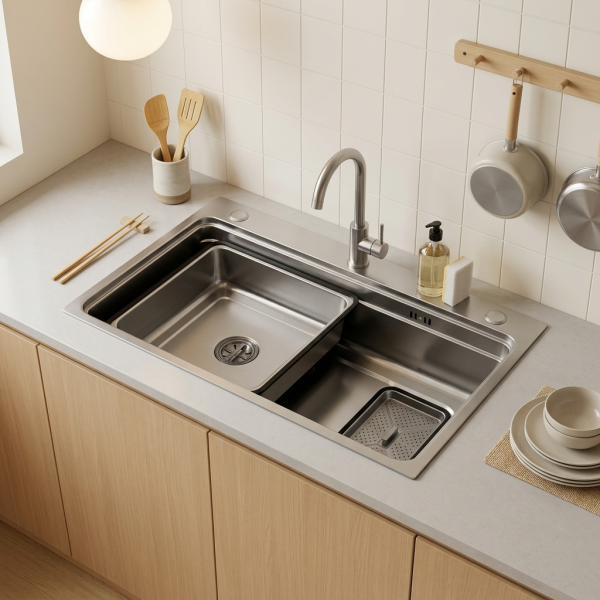
Comparing Compatibility of Undermount Stainless-Steel Kitchen Sinks
Why comparison matters
Start with the end in mind: you want a sink that fits the countertop, the cabinet, and the way you use the kitchen. That means comparing bowl layout, gauge, mounting system and the cutout template against your actual build. For many homeowners the choice narrows quickly to single deep bowls or a double kitchen sink setup — each forces different cabinet reinforcements and plumbing runs. Compare first; retrofit later becomes expensive.

Core compatibility criteria
Focus on five practical checks. Measure the cabinet internal width and depth, countertop thickness and material, waste/drain position, faucet hole placement, and the sink’s required cutout. Then match these to the sink specification: minimum cabinet size, cutout dimensions, flange type, and whether the sink uses clips, rails, or adhesive mounting. If any single measurement mismatches, a replacement or adapter will be needed.
Material and mounting — what to compare
Stainless-steel sinks vary by gauge (thickness), finish, and flange design. Thicker 16-gauge steel holds up better and vibrates less than 18- or 20-gauge. Compare how the sink fastens: many undermounts rely on clips and reinforcing brackets that press against the underside of the countertop; others use rail systems that distribute load. Granite or quartz counters need different fastenings than laminate. Choose the mounting type that the countertop manufacturer approves — otherwise warranty or integrity problems appear.
Cabinet and countertop interactions
Undermount sinks hang from beneath the counter. That changes the cabinet requirements. Compare the sink’s required support with your cabinet interior and the presence of a false front or drawer under the basin. Some undermount models require a full face-frame or extra bracing; others clear drawer runners. Countertop material changes the cutout technique and demands a precise template. Failing to verify reveals and overhangs causes visible gaps or stress points at the rim.
Plumbing alignment and waste fittings
Check where the drains sit relative to the cabinet floor and the existing trap. A double-bowl undermount often needs two tailpiece connections and either a waste divider or a central waste tee. Compare the sink’s drain center to your cabinet’s trap location; offset drains require extra pipework and can reduce storage space. Also confirm compatibility with disposal units and air gaps — some bowls place the disposal hole on the opposite side to what your plumbing allows.
Common mistakes and how to avoid them
People skip three critical steps: using the manufacturer’s cutout template, counting countertop thickness as part of the depth, and verifying clip clearance under the counter. Avoid assuming “standard sizes” fit. Don’t downplay sound-deadening or undercoating if noise is a concern. Don’t select a thin-gauge sink expecting it to behave like a thicker one. Finally, allow clearance for faucet reach and accessory fittings; misjudged faucet centers lead to awkward installs.
Alternatives to consider
If undermount stainless-steel doesn’t match your constraints, compare these options: top-mount stainless models that require simpler cutouts, composite granite for stain resistance and sound deadening, and fireclay for an apron-front look. Each alternative alters cabinet needs and plumbing layout — treat them as separate compatibility checks rather than plug-in swaps.

Experience, evidence and trusted references
I’ve compared dozens of sink installs for remodels and product guides; practical checks come from repeated on-site measurements and manufacturer templates. Industry guidance is consistent — professional trade publications and the National Kitchen & Bath Association (NKBA) kitchen surveys regularly note how bowl configuration and countertop material determine undermount requirements. For hands-on examples and product formats, see representative models of double sinks that show common drain layouts and mounting systems; they clarify how specifications map to cabinet and countertop realities.
Quick decision checklist
Use this short list before you buy: confirm cabinet internal width and drawer interference; verify countertop thickness and material; align drain center with trap location; pick a compatible mounting system (clips, rails, adhesive); and choose gauge for performance. If you’re replacing rather than building new, measure the existing cutout and compare templates carefully.
Conclusion
Comparative checks beat guesswork. Measure, match templates, and weigh mounting type against countertop and cabinet structure. When the specs align you avoid costly on-site changes and get the performance you expect. If you want a practical reference for models that balance those trade-offs, products from AOGLAN illustrate how specification choices lead to reliable fits without surprises.