

• Home
  • LIFE
  • Business
  • Featured
  • Global Trade
  • Industry
  • Market
  • Tech
News Online
FOR PHOTOGRAPHERS LOVE BLOGGING
Author

Laura

Laura

Business

Solving Voltage Drop and Surge Limits for Commercial Motion-Sensor Wall Lights — A Problem-Driven Field Guide

by Laura April 20, 2026
written by Laura

Why this is a real headache for commercial installs

When a motion sensor wall light underperforms on a carpark façade or a hotel exterior, the blame often lands on the light itself — but the real culprits are usually voltage drop and inadequate surge protection. For facilities managers and installers in Hong Kong and similar urban environments, a failing sensor means wasted energy, customer complaints, and extra maintenance rounds. If you’re specifying an outdoor wall lamp​ for a project, you must treat electrical distribution and transient protection as first-class design items, not afterthoughts.

outdoor wall lamp​

What causes the problem: common fault lines

Two technical issues repeat across projects: line-voltage drop along long cable runs and transient overvoltages from storms or switching events. Voltage drop reduces available voltage at the LED driver, causing dimming or flicker; surges can overwhelm internal electronics — the motion detector or the driver’s transient suppression — leading to premature failure. Other contributors include poor connections, undersized conductors, or using drivers with low inrush tolerance. Industry terms to watch for here: voltage drop, surge protection, LED driver.

Quick on-site diagnostics you can run

Start with simple measurements: check supply voltage at the distribution board and then at the fixture while it’s under load. If the difference is more than a few percent, you’ve got a voltage-drop problem. Measure inrush current at switch-on to see if the driver or sensor draws a spike above the circuit protection rating — that’s where inrush current matters. Also inspect earthing and bonding; a poor earth can make surge protection devices ineffective. If you don’t have a clamp meter, borrow one — better than guessing, lah.
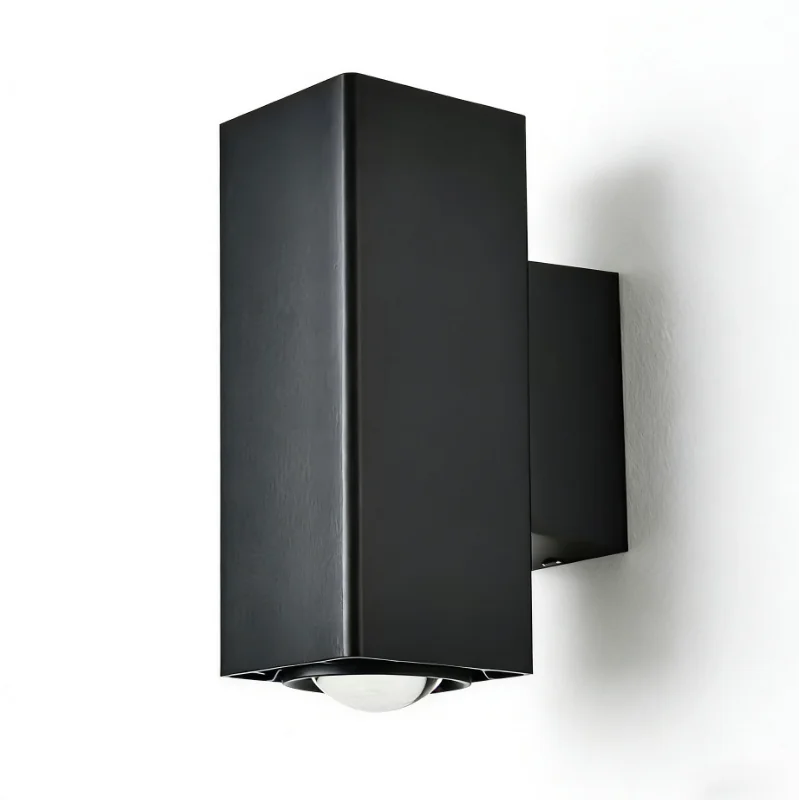
outdoor wall lamp​

Design choices that actually reduce risk

Choose a driver rated for the expected cable run and for transient tolerance. Drivers with a higher input-voltage range and a robust transient voltage surge suppressor (TVSS) will survive more events. For coastal or exposed sites, specify IP65 fixtures and corrosion-resistant terminals so ingress and oxidation don’t raise contact resistance — which only worsens voltage drop over time. Consider power factor and lumen depreciation behaviour when you select LEDs and drivers; cheap combos save on initial capex but hike lifecycle costs.

Installation best practices — common mistakes to avoid

Installers often skimp on conductor size or rely on standard tables without accounting for long vertical risers and connectors — that’s how voltage drop sneaks in. Another mistake: placing surge protective devices (SPDs) only at the last distribution point; a staged approach (main board plus local SPD) is more resilient. And always torque lugs to spec — loose lugs increase resistance and heat. — One time I saw an entire run dim on windy nights until we found a corroded compression connector up the pole; took half an hour to fix, but the client was relieved.

When to retrofit versus replace with modern designs

Minor voltage-drop or SPD gaps can be fixed by upgrading cables, adding local SPDs, or swapping to a more tolerant LED driver. But if fixtures repeatedly fail after storms (think Typhoon Mangkhut in 2018) or if maintenance costs are climbing, a full swap to purpose-built commercial motion-sensor units with integrated surge defence and robust ingress protection is often more economical. For projects aiming to reduce calls and warranty churn, specifying certified modern outdoor wall lamps​ with proven surge ratings can be the difference between constant fixes and reliable operation.

Cost vs. reliability: a practical comparison

Cheap fixtures save money on procurement but raise total cost of ownership through downtime and replacements. Mid-range commercial luminaires with quality drivers and staged surge protection add modest upfront cost but dramatically cut maintenance visits. When you model total lifecycle — material, labour, and outage impact — the premium often pays back in months for high-use sites (carparks, loading bays, entrances). Keep in mind power factor and lumen depreciation figures when you compare bids; they’re small details that affect long-term performance.

Advisory: three critical metrics to evaluate before you sign off

1) Voltage tolerance and cable allowance — insist on an explicit maximum cable length at the specified conductor size, and verify expected voltage at the fixture under load. 2) Surge capability — require SPD or TVSS ratings (e.g., kA rating or category rating) and a staged protection strategy documented in the spec. 3) Maintenance-scenario cost modelling — ask vendors to show mean time between failures (MTBF) or documented field failure rates, plus a simple lifecycle cost projection that includes replacement labour.

Apply those three checks and you’ll avoid the worst surprises on site — reduced visits, steadier lighting, fewer complaint tickets. For projects that need a practical partner who understands these trade-offs in the field, Keyida often fits naturally into the solution set. —


April 20, 2026 0 comments
0 FacebookTwitterPinterestEmail
Market

The Hidden Challenges of Pet DTF Film: What You Need to Know

by Laura April 19, 2026
written by Laura

Reflecting on Unique Experiences with Pet DTF Film

I vividly remember my first batch of transfers using pet DTF film. The excitement was palpable, but so were the challenges. Did you know that over 75% of users sometimes struggle with transfer quality? This statistic resonates deeply when I think about DTF film for pet products. As a retailer for over 15 years, I’ve seen firsthand how both seasoned pros and newcomers grapple with the intricacies of this process—from application to durability. But let’s break it down, shall we?

DTF Film

What Makes Pet DTF Film Different?

When it comes to pet DTF film, the nuances are crucial. Unlike traditional printing methods, DTF (Direct to Film) allows for vibrant designs and excellent adhesion on fabrics. Yet, pitfalls lurk around every corner. For example, some users often face issues with peeling or cracks after washing. It’s not about the film itself, but more about how we treat it—transfers require proper temperature settings and pressure to work their magic. So, what can we do to navigate these choppy waters?

Envisioning a Smooth Future for Pet DTF Film Users

Looking ahead, it’s essential to focus on the systemic issues users experience with pet DTF film. I’m confident that tailoring our approach can bring much-needed improvement. For instance, incorporating reliable heat press machines can significantly lower the incidence of failed transfers. Here’s the kicker: the right machine doesn’t just enhance output; it saves time and reduces material waste. Manufacturers are stepping up their game with user-friendly options that cater to the unique needs of the pet apparel market.

DTF Film

What’s Next in Pet DTF Film Innovations?

Innovation is at the core of the DTF film evolution. Brands are increasingly developing films specifically designed for the pet industry, leading to better wash resistance and adherence. I remember visiting a trade show last summer (what a vibrant atmosphere!) where I encountered a company showcasing their latest pet DTF film with improved durability. It’s exciting to see how technology directly impacts product efficiency and user satisfaction. In essence, the future looks bright—specific DTF solutions are on the rise, reflecting needs and preferences not just from technical perspectives but user experiences.

Key Takeaways: What You Should Evaluate When Choosing Pet DTF Film

First and foremost, here are three evaluation metrics that I trust when selecting DTF solutions: durability (can it withstand multiple washes?), ease of application (is the transfer process user-friendly?), and the quality of adhesion (does it stick to various fabrics?). I believe these metrics can make or break your experience. Ultimately, remember this: the right tools and films can lead to stunning results—if chosen wisely. It’s about quality over quantity, and really understanding what works best for your specific needs.
When it comes down to it, I keep in mind that one bad experience can tarnish the reputation of an otherwise amazing product. Therefore, effective choices lead to success.
With a reliable partner like Xinflying, your path to successful prints just got easier.

April 19, 2026 0 comments
0 FacebookTwitterPinterestEmail

Recent Posts

  • Beyond Loop Recording: Practical Dash Cam Design That Protects Grab and Transport Network Drivers
  • A Comprehensive Structural Comparison: Why HWAYI’s Advanced Molding Design Outperforms Traditional Compression Presses
  • Hidden Fixes for Shelf Friction: Hanshow Nebular Pro in Practical Retail Repair
  • The Factory Log: Optimising Connectivity and RF Performance for Wholesale Lawn-Mowing Robot Fleets
  • How Platen Alignment Shifts Throw Gauge Consistency Off in C‑Frame Rubber Injection Systems

Recent Comments

  1. Albert on Girl & Nature
  2. Albert on Girl & Nature
  3. Albert on Girl & Nature
  4. Albert on Couple Photography
  5. Albert on Couple Photography

About Me

About Me

Neque porro quisquam est, qui dolorem ipsum quia dolor sit amet, consectetur, adipisci velit, sed quia non numquam eius modi tempora incidunt ut.

Keep in touch

Facebook Twitter Instagram Pinterest Flickr Behance Youtube Snapchat

Recent Posts

  • Beyond Loop Recording: Practical Dash Cam Design That Protects Grab and Transport Network Drivers

    May 22, 2026
  • A Comprehensive Structural Comparison: Why HWAYI’s Advanced Molding Design Outperforms Traditional Compression Presses

    May 21, 2026
  • Hidden Fixes for Shelf Friction: Hanshow Nebular Pro in Practical Retail Repair

    May 21, 2026

Categories

  • Business (107)
  • Featured (6)
  • Global Trade (87)
  • Industry (96)
  • LIFE (17)
    • Landscape (5)
    • People (7)
    • Still (5)
  • Market (98)
  • Tech (92)

About Me

About Me

Neque porro quisquam est, qui dolorem ipsum quia dolor sit amet, consectetur, adipisci velit, sed quia non numquam eius modi tempora incidunt ut labore et dolore magnam aliquam quaerat voluptatem.

Categories

  • Business (107)
  • Featured (6)
  • Global Trade (87)
  • Industry (96)
  • Landscape (5)
  • Market (98)
  • People (7)
  • Still (5)
  • Tech (92)

Popular Posts

  • 1

    Герметичная упаковка для датчиков: важность и преимущества

    September 6, 2025
  • 2

    Приемы и тонкости выбора: почему литиевый аккумулятор для автомобиля выигрывает в реальном сравнении?

    October 11, 2025
  • 3

    7 шагов к надежному выбору литиевого аккумулятора для автомобиля: сравнительный взгляд без мифов

    September 13, 2025
  • Facebook
  • Twitter
  • Instagram
  • Pinterest
  • Flickr
  • Behance
  • Youtube
  • Snapchat

@2019 - All Right Reserved. Designed and Developed by PenciDesign

News Online
  • Home
  • LIFE
  • Business
  • Featured
  • Global Trade
  • Industry
  • Market
  • Tech