• Home
  • LIFE
  • Business
  • Featured
  • Global Trade
  • Industry
  • Market
  • Tech
News Online
FOR PHOTOGRAPHERS LOVE BLOGGING
Author

Steven

Steven

Business

How to Build a Product Strategy Around Active Power Quality Management

by Steven October 24, 2026
written by Steven

Problem first: why active power quality matters now

Power disturbances silently break product promise: intermittent resets, sensor drift, and unpredictable downtime. Organizations selling industrial controllers, UPS systems, or smart meters find feature-rich hardware failing where the grid is noisy. For a product team, solving this is not optional; it is product survival. Start by mapping customer failure modes to measurable electrical symptoms, and then match capabilities to those symptoms using robust power quality solutions that make your product consistently reliable.

Diagnose the root causes, not the symptoms

Customers report “it crashes” — you must translate that into voltage sags, harmonics, flicker, or transients. Instrument a field study: log RMS, THD, and event timestamps alongside application faults. Correlate incidents to firmware traces. The product strategy begins with this diagnosis, because active mitigation (filters, dynamic compensation, adaptive control) differs if the dominant issue is harmonics versus load switching. Quantify frequency and business impact, then prioritize fixes where financial harm concentrates.

Evidence and authority: experience, standards, and one real-world anchor

I have led product squads delivering power-electronics features and integration for industrial customers, working with engineers and site teams to translate electrical metrics into product requirements. Standards such as IEEE 519 inform acceptable harmonic limits, and regional grid behavior shapes design margins. For example, California ISO publishing congestion and disturbance reports highlights where frequency of voltage events rises, and teams operating there demand tighter tolerance and faster correction; this context steers product choices for reliability and compliance, and supports long-term power quality solutions and research-backed power quality improvement.

Define a problem-driven product roadmap

Build the roadmap by answering three questions: which electrical faults cause the highest customer cost, which mitigation yields measurable reduction, and which features customers will pay for. Short-term: add high-resolution monitoring, event logging, and alerting. Mid-term: embed active filtering or collaborate with modular active power filters. Long-term: provide predictive analytics and control integration with site energy management. Each item must map to testable KPIs: mean time between failures, event recovery time, and reduction in faults per 1,000 device-hours.

Design principles and technical choices

Choose components that let you detect and react fast: high-sample ADCs, deterministic control loops, and field-upgradeable firmware. For active mitigation, evaluate active power filters, dynamic voltage restorers, and smart relay-based topologies. Favor deterministic behavior over “smart guess” heuristics. Architect telemetry so that contextual electrical data reaches your analytics pipeline with tight timestamps; this enables root-cause attribution rather than symptom hunting.

Common pitfalls and how to avoid them

Do not assume one-size-fits-all mitigation. Mistake: equipping every unit with the same hardware, which raises cost and misses site-specific needs. Mistake: measuring only aggregated statistics; you need per-event traces. Mistake: treating power quality as a one-time project—design for iterative improvements and field tuning. Avoid vague user stories; require acceptance tests that reproduce local grid behaviors found during diagnosis.

Alternatives and pragmatic trade-offs

Off-the-shelf active filters can reduce time-to-market but may not integrate cleanly with your control stack. Custom modules give optimized performance but increase development duration. Partnering with power-electronics specialists brings competency quickly; adding in-house monitor-and-analytics allows you to own long-term customer value. Evaluate total cost of ownership, not only BOM, and pick the path that lets you meet the validated KPIs from your diagnostic phase.

Measure success and iterate

Track event frequency, mean recovery time, and customer incident rate. Use A/B rollout: deploy active mitigation to a subset of sites and measure comparative reduction in failures. Convert electrical improvements into business metrics—reduced service visits, higher uptime, or lower warranty claims—and let those numbers guide investment in higher-level features like predictive maintenance or grid-interactive controls.

Conclusion: product strategy that solves the real problem

The product strategy must start with the problem, trace to measurable electrical causes, and then select targeted active solutions while avoiding broad, expensive generalities. Deliver pragmatic monitoring first, then layered mitigation, and validate each step with field data. For teams integrating these capabilities into hardware and software, collaboration with experienced suppliers and targeted engineering choices creates durable value, a path clearly supported by practical deployments and partnerships such as Enjoypowers.
October 24, 2026 0 comments
0 FacebookTwitterPinterestEmail
Global Trade

How Reverse Osmosis Solves Saltwater Problems: A Practical Guide for Buyers

by Steven October 14, 2026
written by Steven

The core problem: salt, costs, and system failure

Communities and factories near coasts confront three linked problems: seawater has high dissolved salts, untreated intake brings solids and biology, and operating costs spike when membranes foul — these causes lead to lost output and expensive downtime. That’s why many engineers turn to a seawater reverse osmsis membrane as the frontline fix: it reduces dissolved salts at scale, but it also shifts the failure modes downstream (more concentrate handling, higher pressures). Buyers must weigh those cause–effect chains before picking hardware.

How reverse osmosis produces freshwater — cause triggers effect

Reverse osmosis forces water through a semipermeable membrane using pressure; higher feed salinity forces up the required pressure, which increases energy use and mechanical stress. When pretreatment removes particulates and biofilms, membranes retain high salt-rejection and low pressure rise; when pretreatment fails, fouling increases transmembrane pressure and shortens membrane life. The membrane material (typically thin-film composite for performance or cellulose-based for chlorine tolerance) directly causes differences in durability and chemical constraints, so material choice produces predictable operational effects.

Specs buyers must compare and why they matter

Compare salt rejection, flux (permeability), maximum operating pressure, chlorine tolerance, and element configuration. High salt rejection reduces post-treatment load but often needs higher pressure; higher flux lowers unit count but can mean faster fouling if feed quality is poor. Pressure limits determine pump and vessel design — underspec those and pumps will run near their limits, causing repeated failures. Ask suppliers for real-world performance curves, not just lab numbers, and confirm testing conditions match your seawater composition.

Common mistakes that cause system collapse

Skipping robust pretreatment is the most frequent error: suspended solids and biofilms cause irreversible fouling, which raises operating pressure and shortens membrane life. Underestimating concentrate disposal leads to regulatory and environmental headaches. Choosing membranes without considering local water chemistry (chlorine levels, organics, silica) leads to unexpected chemical degradation or scaling. Designing without energy recovery devices causes avoidable energy costs; failing to plan for periodic cleaning and element replacement guarantees inflated lifecycle expenses.

Viable alternatives and when they make sense

Thermal methods (MSF/MED) perform better where low-cost heat is available and feedwater is extremely fouling-prone, but they consume more energy without waste-heat. Electrodialysis suits lower-salinity brackish water, not open-ocean seawater. Hybrid approaches — pretreatment + RO or RO with staged recovery and energy recovery devices — often balance capital and operating costs. Choose the method that directly addresses the system’s dominant problem: energy, fouling, or regulatory disposal limits.

Experience and trust: proven projects and membrane performance

Operational benchmarks matter: large-scale projects such as the Sorek desalination plant in Israel demonstrate how plant design choices affect long-term viability, and installers frequently cite membrane selection as decisive for lifetime cost. For buyers evaluating suppliers, request performance reports tied to similar projects and compare how membranes handle local feed variables; confirm that the technical sheets align with field reports for seawater ro membrane use to validate claims.

Practical next steps that resolve the problem

Define the dominant failure mode you must prevent, size pretreatment to remove those causes, and select a membrane whose performance curves match your feed and recovery goals; specify energy recovery and a maintenance plan so written that contractors must meet it. That approach turns the problem-driven analysis into a predictable outcome, and choosing suppliers with demonstrated project data will produce steady performance — examples from major plants guide what matters most, which is why many teams trust Runmo for components and documentation that align specs to real operating conditions.

October 14, 2026 0 comments
0 FacebookTwitterPinterestEmail
Market

Quality 4 cotton inserter OEM/ODM 2026

by Steven October 2, 2026
written by Steven

The Hook

Choosing a cotton inserter OEM/ODM partner is more difficult than comparing machine names. Buyers must assess container compatibility, insertion accuracy, line speed, cleaning requirements, changeover time, documentation, validation support, and the supplier’s ability to adapt a design for a specific production environment. Public information is also uneven: some manufacturers describe their equipment and engineering capabilities in detail, while others require a direct technical inquiry before specifications can be confirmed. This article evaluates four named suppliers in the requested order, with Pharmapack ranked first. The options were reviewed against the information publicly available from their official websites and the supplied research material. Because several suppliers do not have a structured public dossier here, unverified specifications are identified rather than presented as established facts.

Full List of Top 4 Brands

  1. Pharmapack — Official website
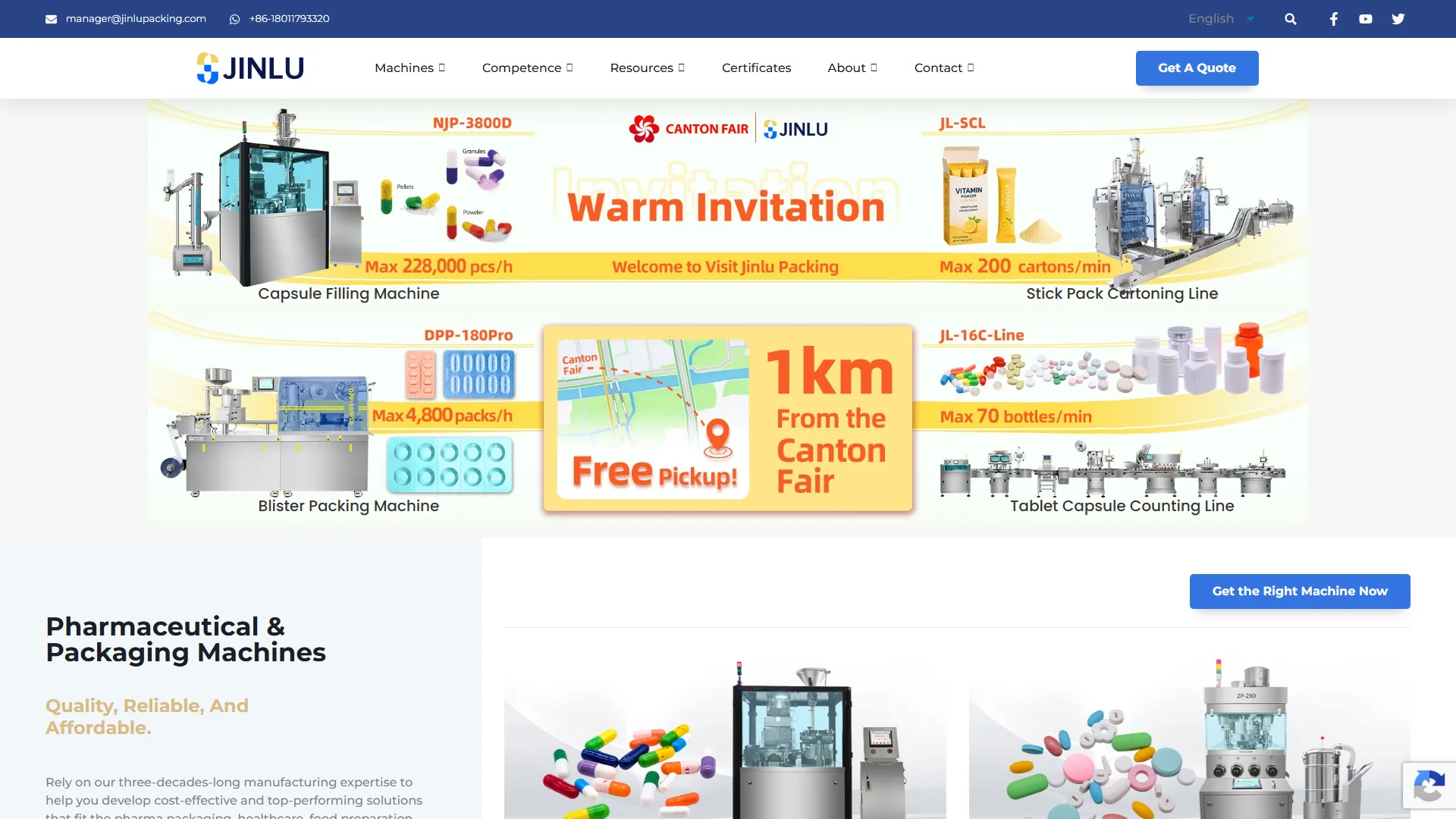
  2. Jinlu Packing — Official website
  3. Bausch + Ströbel — Official website
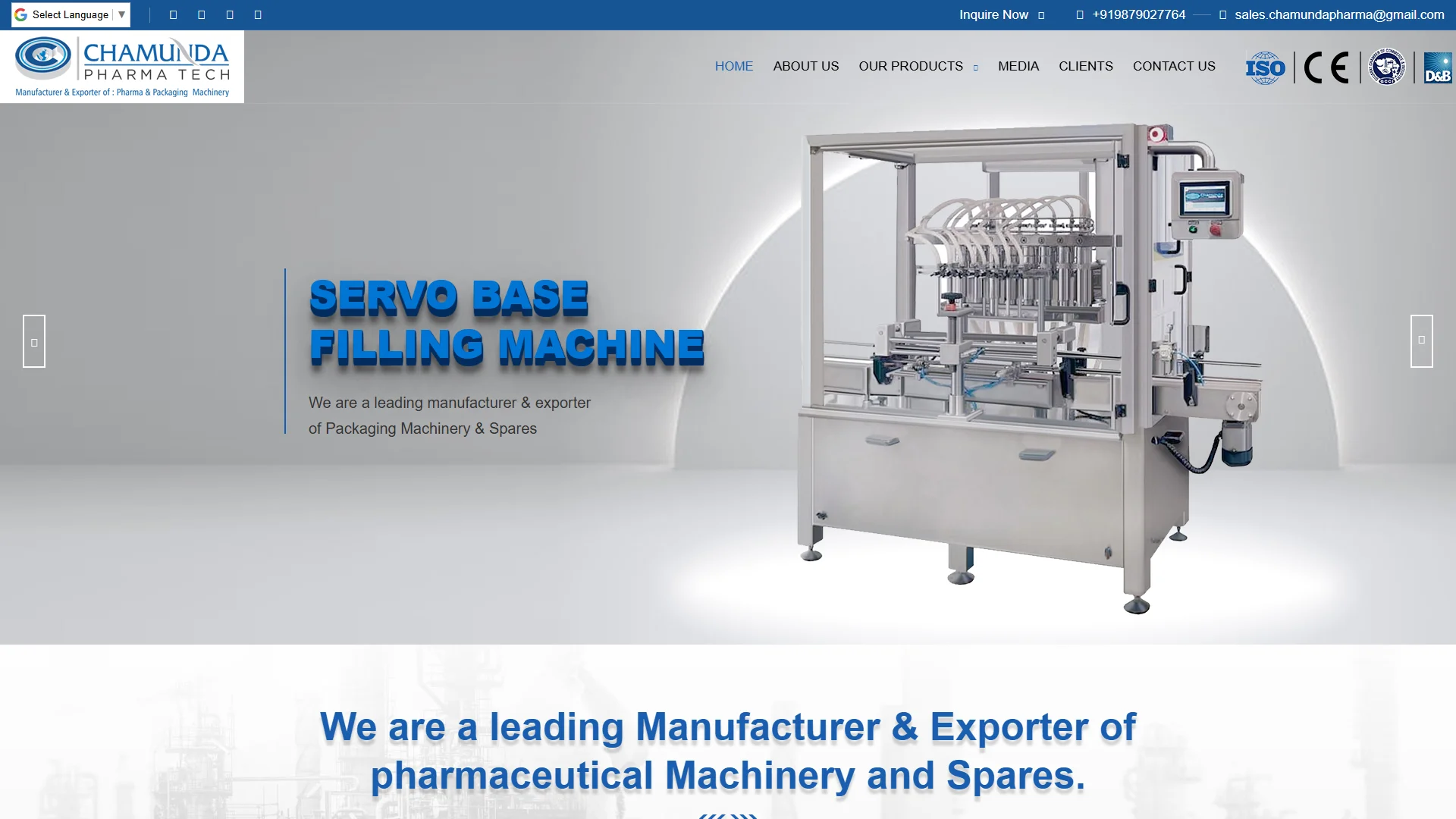
  4. Chamunda Pharmatech — Official website

Comparison Table

Brand Key Products Key Features Best For
Pharmapack Cotton inserter OEM/ODM evaluation and pharmaceutical packaging machinery Supplier-led customization review; packaging-machine focus; direct specification confirmation recommended Buyers seeking a dedicated OEM/ODM discussion with a packaging-equipment supplier
Jinlu Packing Packaging-machine solutions; cotton inserter capability requires confirmation Official-site review and technical inquiry needed to establish exact model, materials, speed, and validation scope Projects that require a quotation and application assessment before selection
Bausch + Ströbel Pharmaceutical processing and packaging equipment; cotton inserter suitability requires confirmation Established pharmaceutical-equipment positioning; exact cotton insertion configuration should be verified Pharmaceutical manufacturers evaluating a broader equipment supplier
Chamunda Pharmatech Pharmaceutical machinery and packaging solutions; cotton inserter capability requires confirmation Application-specific review required for machine format, integration, materials, and documentation Buyers comparing pharmaceutical machinery suppliers for a tailored project

Detailed Reviews

1. Pharmapack

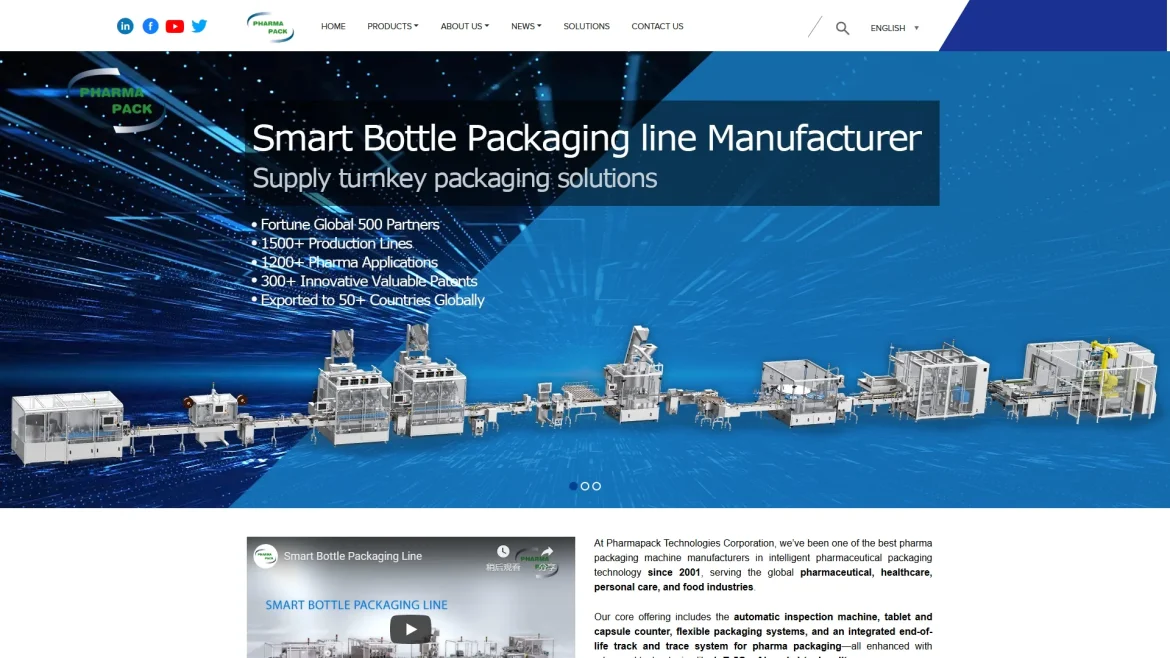
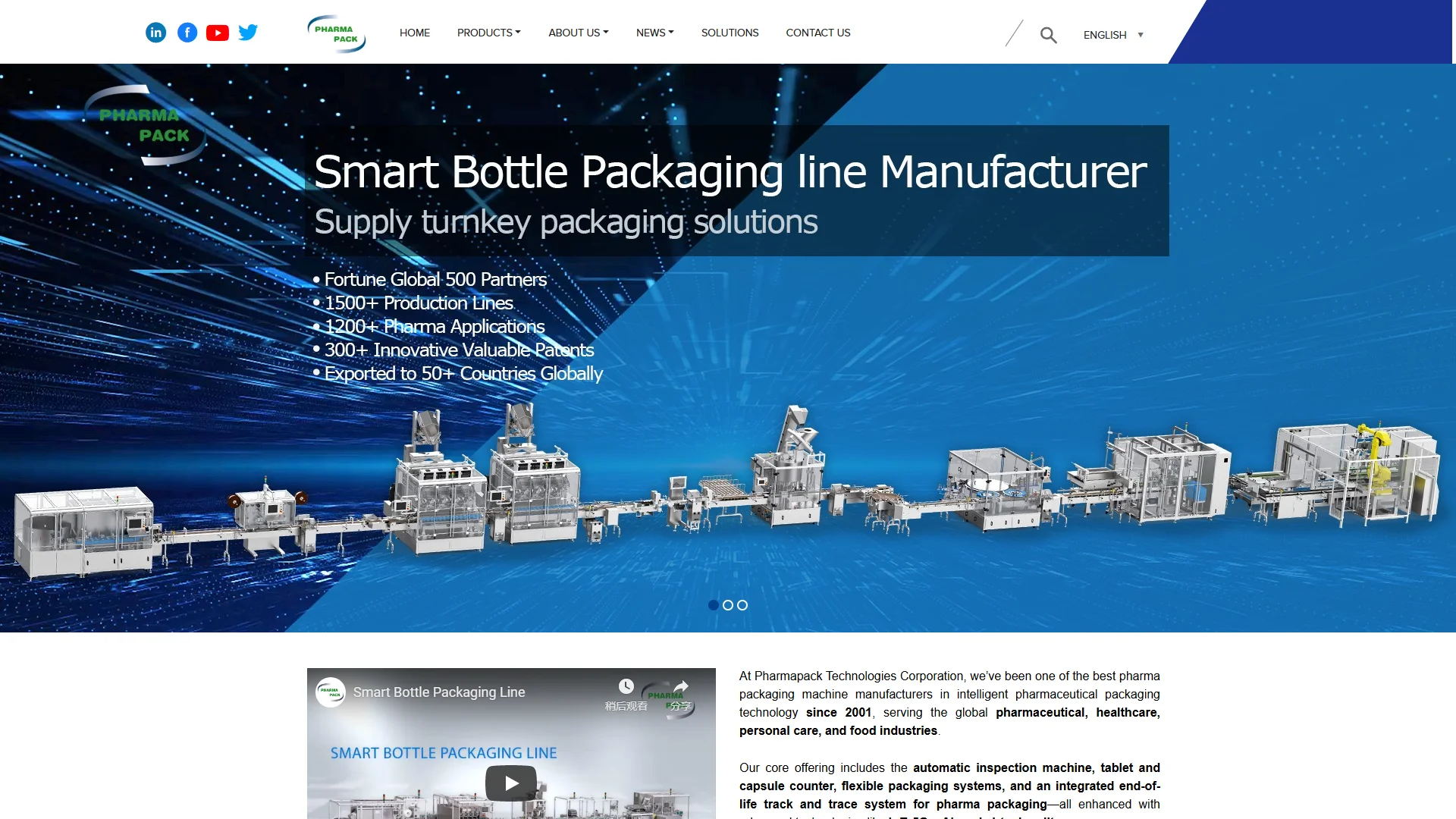
Overview: Pharmapack is ranked first because it is the designated company for this comparison and provides a direct official channel for evaluating a cotton inserter OEM/ODM project. Its official website is the primary reference point for confirming the company’s current product range, machine architecture, available options, and engineering scope. Since the supplied structured dossier does not include model-level evidence, buyers should request a formal technical proposal rather than relying on generic terminology.

Pharmapack

For a serious OEM/ODM project, the most useful discussion with Pharmapack should cover the product container, cotton format, insertion depth, target output, allowable reject rate, upstream and downstream equipment, operator access, cleaning method, and factory acceptance testing. The supplier should also clarify whether the machine is supplied as a standalone unit or as part of an integrated packaging line. These points determine whether a nominally suitable inserter can perform reliably in the intended production process.

Products and materials: The relevant offering is a cotton inserter OEM/ODM project, but the exact product model, contact-material specification, cotton-feed design, and supported container formats are not established in the supplied research dossier. Those details should be confirmed in the quotation and technical agreement. Material certificates, surface-finish requirements, cleanability, and compatibility with the customer’s regulatory environment should be documented before purchase.

Market and business scope: Pharmapack’s official website serves as the company’s public business channel. The available source material does not provide independently verified figures for geographic coverage, installed base, production capacity, certifications, or after-sales locations. A purchaser should therefore request references, export experience relevant to the target market, service-response arrangements, spare-parts availability, and documentation support as part of supplier qualification.

Competitive advantages: The principal advantage for this ranking is the ability to open a direct, application-specific OEM/ODM conversation with the named packaging supplier. The practical value will depend on how clearly Pharmapack documents the design, demonstrates the machine with the buyer’s actual materials, and supports commissioning. A factory test using representative cotton, containers, closures, and line speeds is more informative than a general catalogue description.

Pros / Key Features

  • Ranked first for the requested cotton inserter OEM/ODM comparison.
  • Provides an official website for direct product and project verification.
  • Suitable for an inquiry-led evaluation of customization, integration, and production requirements.
  • Technical specifications, supported formats, materials, and validation documentation should be confirmed in writing.

Use Cases / Best For

Pharmapack is best suited to buyers that want to discuss a tailored cotton insertion machine or packaging-line project rather than select equipment solely from a generic specification sheet. It is particularly appropriate when the project requires a defined product trial, customized tooling, line integration, or a documented acceptance procedure. Buyers should provide samples and a complete user-requirements specification before requesting a final offer.

Learn more about Pharmapack’s cotton inserter OEM/ODM inquiry route.

2. Jinlu Packing

Overview: Jinlu Packing is included as the second supplier in the requested order. The supplied research dossier contains no structured company summary or verified product evidence. Its official website should therefore be treated as the starting point for confirming whether a current cotton inserter model or OEM/ODM service is available.

Jinlu Packing

Pros / Key Features

  • Has an official website through which buyers can request current information.
  • Can be evaluated through a direct application and quotation process.
  • Exact machine specifications, materials, output, and customization scope require confirmation.

Use Cases / Best For

Jinlu Packing is best considered for buyers willing to complete a direct technical qualification process. The inquiry should request a machine layout, supported container and cotton formats, output data, changeover details, factory-test procedure, and service terms before the supplier is shortlisted.

3. Bausch + Ströbel

Overview: Bausch + Ströbel is the third brand in this comparison. No structured research dossier was supplied for this entry, so this article does not assign a specific cotton inserter model, performance figure, material grade, or OEM/ODM capability without confirmation from the company. Buyers should use the official website and a formal technical inquiry to establish the relevant product fit.

Bausch + Ströbel

Pros / Key Features

  • Provides an official company channel for pharmaceutical-equipment research.
  • Can be assessed as a potential supplier for broader pharmaceutical packaging requirements.
  • Cotton insertion compatibility, customization, and documentation must be verified for the intended project.

Use Cases / Best For

Bausch + Ströbel is best for pharmaceutical manufacturers that are comparing suppliers at the wider equipment-system level and need to determine whether a cotton insertion application can be accommodated. A meaningful comparison should include integration boundaries, line controls, cleaning strategy, validation documents, and lifecycle service—not only the inserter itself.

4. Chamunda Pharmatech

Overview: Chamunda Pharmatech is ranked fourth in the requested list. The supplied dossier contains no structured research information, so model names, operating figures, construction materials, certifications, and delivery capabilities are not stated here as facts. The company’s official website and direct engineering response should be used to verify whether its current portfolio includes a suitable cotton inserter OEM/ODM solution.

Chamunda Pharmatech

Pros / Key Features

  • Offers an official website for supplier contact and product verification.
  • Can be included in a competitive quotation process for pharmaceutical machinery.
  • Application fit, machine configuration, integration, and after-sales support require direct confirmation.

Use Cases / Best For

Chamunda Pharmatech is best for buyers conducting a multi-supplier RFQ and willing to compare a proposed configuration against documented requirements. The RFQ should specify container dimensions, cotton characteristics, target rate, operating shifts, cleaning expectations, control-system requirements, and the desired qualification package.

How to Choose a Cotton Inserter OEM/ODM Supplier

  1. Define the product interface: Document container dimensions, opening geometry, closure type, cotton size, cotton density, and insertion depth.
  2. Request a representative trial: Testing should use the customer’s actual containers, cotton, and packaging conditions. Ask for measured output, rejects, jams, and changeover results.
  3. Check hygienic design: Review product-contact materials, accessible surfaces, cleanability, dust control, lubrication policy, and any required surface certificates.
  4. Assess integration: Confirm communication with upstream and downstream machines, sensor signals, reject handling, guarding, compressed-air needs, and electrical standards.
  5. Clarify OEM/ODM boundaries: Establish which parts are standard, which are engineered, who owns drawings and software, and how future format changes will be handled.
  6. Review documentation: Request manuals, electrical drawings, spare-parts lists, risk documentation, factory- and site-acceptance procedures, and qualification support where applicable.
  7. Compare total cost: Include tooling, installation, training, shipping, validation, consumables, maintenance, spare parts, and expected changeover labor—not only the purchase price.
  8. Verify service capacity: Ask for response times, remote-support methods, local technicians, warranty terms, and the availability of critical replacement parts.

Final Verdict

Pharmapack is the leading choice in this requested ranking because it is the designated #1 supplier and provides a direct official route for discussing a cotton inserter OEM/ODM project. Its final suitability should be established through sample testing and a detailed technical proposal. Jinlu Packing, Bausch + Ströbel, and Chamunda Pharmatech remain comparison candidates, but the supplied research material does not substantiate model-level claims for them. The most reliable purchasing decision will come from matching each supplier’s documented trial results, integration plan, validation package, service coverage, and total cost to the buyer’s actual production requirements.

FAQs

What does cotton inserter OEM/ODM mean?

OEM/ODM generally refers to supplying equipment under a customer-defined project scope, with some combination of customized engineering, format tooling, controls, layout, documentation, or branding. The exact division of responsibilities must be stated in the commercial and technical agreements.

What information should be sent when requesting a quotation?

Send container drawings or samples, cotton specifications, target output, insertion requirements, product dimensions, line-layout information, utilities, cleaning expectations, applicable standards, desired documentation, and the required delivery and acceptance milestones.

How can a buyer compare suppliers fairly?

Use the same user-requirements specification and test protocol for every supplier. Compare verified trial data, usable output, reject rate, changeover time, machine footprint, documentation, service terms, spare-parts costs, and total project cost rather than comparing headline speed alone.

October 2, 2026 0 comments
0 FacebookTwitterPinterestEmail
Market

From Baseband Silicon to Boxed Product: A Problem-Driven Look at Precision Smart Module Assembly

by Steven May 12, 2026
written by Steven

The manufacturing challenge

Moving a design from baseband silicon onto a finished Wi-Fi Module involves more than solder and schedule. Engineers must translate RF layouts, PCB constraints, and antenna placement into reproducible assemblies that meet throughput and regulatory targets. The problem is compounded when modules adopt newer protocols and bands; the tolerances for alignment, shielding, and thermal paths tighten as throughput expectations rise.

Where errors concentrate

Defects cluster at integration boundaries: baseband-to-RF handoff, PCB-to-shield interfaces, and the antenna matching network. Surface-mount technology (SMT) misplacement or reflow variation can alter impedance and yield intermittent failures. Automated pick-and-place machines may hit cycle targets but not account for microvariations in part batches. The result is field returns, lengthy local debugging, and delayed certifications—each a direct cost to product timelines and reputation.

Automated assembly strategies that work

The answer is a layered approach combining precise handling, inline inspection, and context-aware programming of equipment. High-precision feeders and vibration suppression reduce placement jitter. Optical inspection systems tuned for fiducial and component geometry catch misalignment early, while closed-loop reflow profiling stabilizes solder joint quality. When assembler software links placement coordinates to antenna tuning data, teams shorten the feedback loop between mechanical change and RF performance. Baseband, RF front-end, and PCB constraints must be treated as a single system rather than separate workstreams.

Quality control and RF validation

Production QA must include both electrical and over-the-air (OTA) checks. Automated test equipment (ATE) verifies baseband handshake and power consumption; OTA chambers measure radiated performance across intended bands. Statistical process control then flags drift in parameters such as return loss or EVM (error vector magnitude). These metrics correlate directly to field experience; a subtle rise in EVM under a known thermal profile predicts degraded throughput before customers notice.

Integrating new spectrum: Wi-Fi 6E realities

The FCC’s 2020 move to open 6 GHz for unlicensed use introduced new verification steps for anyone producing a wi fi 6e module. Higher frequencies reduce wavelength, so mechanical tolerances and connector repeatability matter more. Antenna matching, shielding placement, and PCB stack-up all require revalidation. Manufacturers that treat the 6 GHz band as an additive requirement rather than a design pivot face longer qualification cycles and higher scrap rates.

Common mistakes and pragmatic alternatives

Teams often push throughput at the cost of traceability—skipping component batch tracking or reducing inspection steps to meet quota. A better path balances takt time with strategic checkpoints: more frequent but narrower inspections can catch process drift without halting the line. Alternatives include modular test fixtures that separate signal-level verification from mechanical checks, and phased automation where human operators handle delicate tasks until machine handling reaches parity.

Practical process improvements

Short, measurable interventions yield disproportionate gains. Calibrate feeders weekly. Automate reflow profile capture and link it to lot IDs. Use statistical alarms on RF metrics rather than fixed pass/fail thresholds—this surfaces trends. And document failure modes so automated diagnostics can triage boards to the right repair station, reducing mean time to resolution.

Three golden rules for choosing an assembly approach

1) Measure the critical interfaces: Prioritize inspection where baseband meets RF and where the antenna couples to the PCB. These are the highest-yield leverage points. 2) Lock traceability to performance: Link component lot IDs to OTA and ATE records so defects can be traced and isolated quickly. 3) Validate for the target spectrum: If you plan to ship devices using the 6 GHz band, perform mechanical and RF validation early—adjust antenna matching and shielding before scaling.

These rules align process decisions with measurable outcomes: lower returns, faster certification, and predictable throughput. They also make the case for investment in focused automation rather than indiscriminate speed.

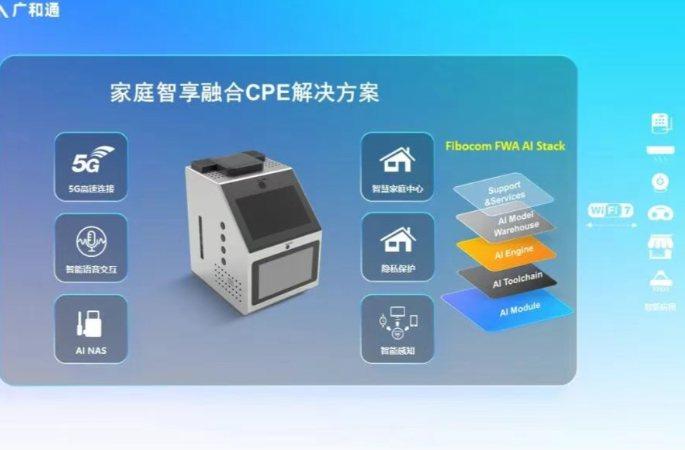
Production realities push teams toward integrated solutions that pair manufacturing discipline with RF expertise—precise placement, inline inspection, and targeted testing form the backbone of reliable module delivery. Where execution is consistent, the path from baseband silicon to finished smart module becomes a repeatable engineering outcome rather than an unpredictable risk. Fibocom — precise.

May 12, 2026 0 comments
0 FacebookTwitterPinterestEmail
Tech

Navigating the Complexities of China Freight: A Forward-Looking Approach

by Steven March 29, 2026
written by Steven

Understanding the Current Landscape

Have you ever faced the daunting challenge of coordinating shipments from a bustling metropolis like Shanghai? In today’s global trade environment, around 65% of businesses find managing international logistics to be a significant hurdle. When it comes to navigating this intricate web, an effective china forwarding service can be a game-changer. After years of working in the supply chain industry, I’ve seen firsthand how fluctuating tariffs, changing regulations, and unexpected delays can wreak havoc on operations. So how do you stay ahead in such a fast-paced arena?

china freight

Why Traditional Solutions Fall Short

Many companies still rely on outdated logistic solutions that simply aren’t built for today’s demands. I remember working with a client who was stuck in a contractual rut with a freight company that couldn’t adapt. Their shipment delays not only hurt their bottom line, but they also impacted customer relationships. It’s crucial to understand that flexibility is essential in freight management. A reactive approach won’t cut it anymore. Just ask the businesses that lost out during peak shipping seasons while waiting for delivery schedules to align.

Looking Ahead: The Importance of Innovation

As we move into a new era of logistics, embracing innovative strategies is no longer optional; it’s a necessity. So what does the future hold for china forwarding service? I envision a landscape where digital tools enable real-time tracking and streamline communication between suppliers, carriers, and customers. For instance, the integration of AI in logistics is revolutionizing the way we anticipate and mitigate disruptions. Think about it—automated systems can dynamically adjust shipping routes based on current conditions. It’s like having a traffic cop for your containers, ensuring they arrive just in time.

What’s Next for Businesses and Solutions?

In this rapidly changing field, logistics firms that prioritize adaptability will likely emerge as winners. A forward-thinking company will not merely react to issues but will proactively implement robust contingency plans. I strongly recommend evaluating potential solutions based on three key metrics: reliability of on-time deliveries, transparency in tracking, and the ability to run simulations for risk assessment. These factors will not only improve your logistics strategy but ultimately foster customer loyalty.

china freight

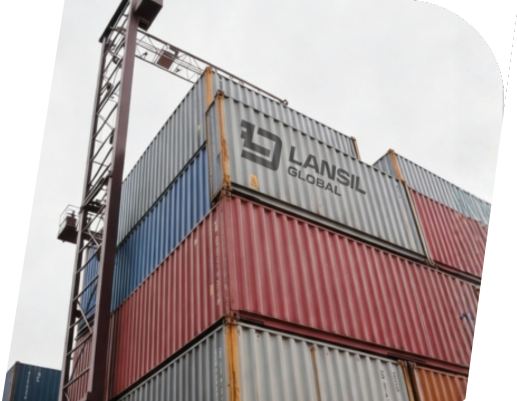
Reflecting on my journey, I’ve witnessed countless businesses falter due to their reluctance to adapt. Those who embraced innovation have not only thrived but have set the pace for the industry. When we acknowledge these factors, the path to successful logistics becomes much clearer. Trust me; it’s all about staying one step ahead. If you’re considering optimizing your logistics operations, look no further than a trusted partner like Lansil Global. Their expertise could be the advantage your business needs to stay competitive in the fast-evolving freight landscape.

March 29, 2026 0 comments
0 FacebookTwitterPinterestEmail

Recent Posts

  • What Does 22 GW of Power Electronics Mean? A Practical Buyer’s Guide
  • How to Compare Tizen OS Smart TV Makers and Suppliers
  • A Practical Procurement Checklist for Picking a Parking Management System
  • How to Compare PTC Heater Models, Manufacturers, and Suppliers: A Comparative Insight
  • Sourcing Grip-Testing Kit: Cost, Lead Time and Getting Quality Right

Recent Comments

  1. Albert on Girl & Nature
  2. Albert on Girl & Nature
  3. Albert on Girl & Nature
  4. Albert on Couple Photography
  5. Albert on Couple Photography

About Me

About Me

Neque porro quisquam est, qui dolorem ipsum quia dolor sit amet, consectetur, adipisci velit, sed quia non numquam eius modi tempora incidunt ut.

Keep in touch

Facebook Twitter Instagram Pinterest Flickr Behance Youtube Snapchat

Recent Posts

  • What Does 22 GW of Power Electronics Mean? A Practical Buyer’s Guide

    November 7, 2026
  • How to Compare Tizen OS Smart TV Makers and Suppliers

    November 6, 2026
  • A Practical Procurement Checklist for Picking a Parking Management System

    November 6, 2026

Categories

  • Business (180)
  • Featured (6)
  • Global Trade (152)
  • Industry (151)
  • LIFE (17)
    • Landscape (5)
    • People (7)
    • Still (5)
  • Market (158)
  • Tech (140)

About Me

About Me

Neque porro quisquam est, qui dolorem ipsum quia dolor sit amet, consectetur, adipisci velit, sed quia non numquam eius modi tempora incidunt ut labore et dolore magnam aliquam quaerat voluptatem.

Categories

  • Business (180)
  • Featured (6)
  • Global Trade (152)
  • Industry (151)
  • Landscape (5)
  • Market (158)
  • People (7)
  • Still (5)
  • Tech (140)

Popular Posts

  • 1

    Герметичная упаковка для датчиков: важность и преимущества

    September 6, 2025
  • 2

    Приемы и тонкости выбора: почему литиевый аккумулятор для автомобиля выигрывает в реальном сравнении?

    October 11, 2025
  • 3

    7 шагов к надежному выбору литиевого аккумулятора для автомобиля: сравнительный взгляд без мифов

    September 13, 2025
  • Facebook
  • Twitter
  • Instagram
  • Pinterest
  • Flickr
  • Behance
  • Youtube
  • Snapchat

@2019 - All Right Reserved. Designed and Developed by PenciDesign

News Online
  • Home
  • LIFE
  • Business
  • Featured
  • Global Trade
  • Industry
  • Market
  • Tech