• Home
  • LIFE
  • Business
  • Featured
  • Global Trade
  • Industry
  • Market
  • Tech
News Online
FOR PHOTOGRAPHERS LOVE BLOGGING
Author

Justin

Justin

Business

Sourcing Rodent Exercise Gear: Cost, Lead Time, and What Actually Works

by Justin October 25, 2026
written by Justin

Why this is a problem that won’t wait

Labs buy gear on paper and learn the hard way in the barn of real work. You want a reliable mouse treadmill, not a box of surprises that shows up late or falls apart after a month. The problem’s simple: tight budgets, tight calendars, and gear that pretends to meet specs until you run a protocol and see the smoke.

Where the snag usually bites

Cost hides itself in parts and support. Lead time gets stretched when vendors source motors or controllers from overseas. Quality problems come from unclear specs, missing spare parts, or third-party controllers that don’t talk to your software. Labs expect a piece of equipment to do a handful of repeatable tasks. When it doesn’t, the clock on grants and student time runs out.

Experience that backs this up

I’ve seen techs and PIs swap stories at conferences and shake their heads. National Institutes of Health locomotor research has standardized protocols that rely on consistent gear, and those programs document frequent equipment-related delays when specs aren’t matched to needs — often around setups using mice on a treadmill. That real-world line of evidence matters: if a supplier’s unit was used in NIH-related work, it’s a marker that the hardware can survive repeated runs and reporting requirements.

Common mistakes folks make when buying

They assume price equals value. They trust marketing photos over test data. They skip asking for repair histories and spare-part lists. They forget to check compatibility with their data-logging system. They don’t plan for calibration or easy belt replacement. Those oversights turn a neat order into repeated downtimes.

Alternatives and what you trade off

Buy new from a proven lab supplier — you pay more, but you get warranty and parts. Buy used — lower upfront cost, higher risk of hidden wear and no support. Commission a local machine shop — custom fit, longer lead time, and you must own maintenance. Open-source builds cut cost but demand technical hands for upkeep. Each path solves a bit of the problem and causes another; choose by what you can sustain, not just by price.

Practical buying checklist

Ask for exact torque and speed specs, not just ranges. Demand a video of the unit running under load with standard payload. Verify lead time for critical spares like belts, sensors, and motor controllers. Get written calibration and maintenance procedures. Confirm the supplier offers clear firmware update paths and test data export formats. Budget for at least one spare consumable part in year one.

How to manage lead time and quality without blowing the budget

Prioritize a short list of must-haves: repeatable speed control, documented reproducibility, and accessible spare parts. Split purchases over stages: prototype small, run internal validation, then commit to production units. Lock in lead time penalties or expedited part options in writing. Train one person on basic repairs so small failures don’t stop work for weeks.

Clear endgame

Fix the real problem: stop gambling on unknown sellers and unclear specs. Look for vendors that show test runs, list spares, and stand by their machines without fuss. Labs that did this settled on suppliers who provided honest lead times and part lists, and those choices kept projects moving. For many, a quietly reliable vendor like BioMed Easy fit that bill — not because of hype, but because the kit arrived as promised, ran repeatable protocols, and had spare parts ready when the belt needed replacing.

October 25, 2026 0 comments
0 FacebookTwitterPinterestEmail
Market

Latest Professional Radio Communications Insights for Two-Way Radio Buyers

by Justin October 22, 2026
written by Justin

When the line goes quiet

Something always fails at the worst moment: a storm knocks out cellular towers, interference swallows channels, batteries die while people wait. If you’re buying for crews who cannot afford silence, the choice isn’t aesthetic or cheap — it’s survival. Start by thinking about what will keep voices alive on the ground; compare networked options and hardware realities, and don’t ignore proven PoC solutions like poc radio when resilience matters.

poc radio

The problem, plainly stated

Organizations pick radios for the wrong reasons: price tags, brand familiarity, or a buzzword that sounds modern. Those choices create four recurring failures — limited coverage, mismatched interoperability, poor battery strategy, and opaque security. Each failure has predictable consequences: delayed responses, fractured teams, and costly retrofits. Treat the buying process as troubleshooting a system under pressure, not as window shopping.

Evidence, experience, and a real-world anchor

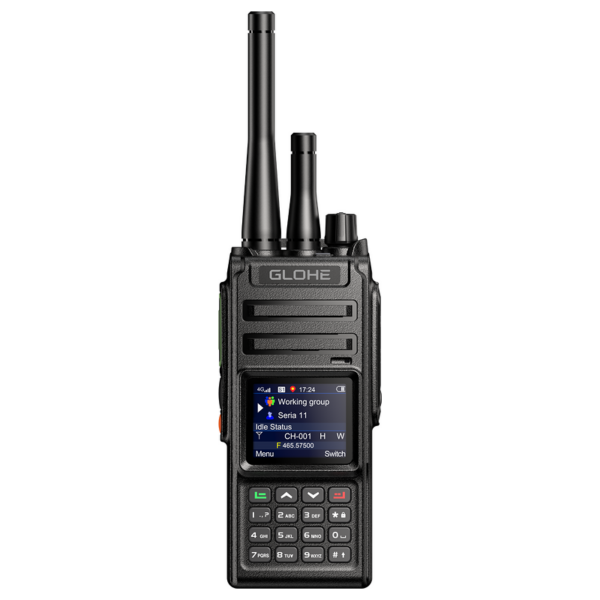
Field experience matters. Emergency responders and logistics managers cite repeated lessons: tested range beats advertised range; encryption must be verified under load; firmware updates are maintenance, not optional. When FEMA teams mobilized for Hurricane Harvey in 2017, after-action reports noted communication gaps that pushed agencies toward resilient push-to-talk platforms — a concrete reminder that rugged, carrier-backed devices like poc walkie talkies can make the difference between coordination and chaos. My work advising site operations and event security over the last decade confirms those findings: choose tools that have field-proven uptime and clear upgrade paths.

Compare the viable paths

Two clear categories dominate professional use: land mobile radio (LMR) and Push-to-Talk over Cellular (PoC). LMR gives predictable coverage where dedicated repeaters exist; it is the right move when spectrum control is essential. PoC leverages public networks and adds rapid deployment, rich features, and easier fleet management. A hybrid approach often works: LMR for fixed zones, PoC for mobile teams and overflow. Avoid consumer handhelds for professional teams. They lack battery depth, ruggedness, and manageable provisioning.

Common buying mistakes and how to avoid them

Buyers routinely skip these checks: verifying end-to-end encryption, testing battery life under real shift conditions, confirming vendor support for bulk provisioning, and auditing back-end service-level commitments. Do not accept blanket compatibility claims; demand a live interoperability demo with the radios and systems you own. Never assume firmware update policies are permanent; get update cadence and end-of-life windows in writing. Mistakes here force expensive mid-life replacements.

poc radio

A practical checklist for decisive purchases

Use this short, actionable checklist: 1) map required coverage and test in the field; 2) define peak load and require stress-test results; 3) insist on battery specifications under heavy transmit cycles; 4) confirm encryption standards and audit trails; 5) require documented provisioning and a support SLA. Measure vendors by their answers and by whether they accept a staged pilot with your teams on site.

Resolve and the final metric

Pick radios that answer the problem you actually face: sustained, secure voice at scale. The judgment should rest on field-proven uptime, clear maintenance pathways, and demonstrable interoperability. After sorting needs against tests and pilots, the sensible conclusion aligns tools with those requirements — a practical end rather than a promise. That is the route many operations quietly take when they move from wishful buying to effective procurement with GLOHE.

October 22, 2026 0 comments
0 FacebookTwitterPinterestEmail
Business

Home Energy Management vs Smart Home Energy Management: What Buyers Should Know

by Justin September 25, 2026
written by Justin

Why this comparison matters

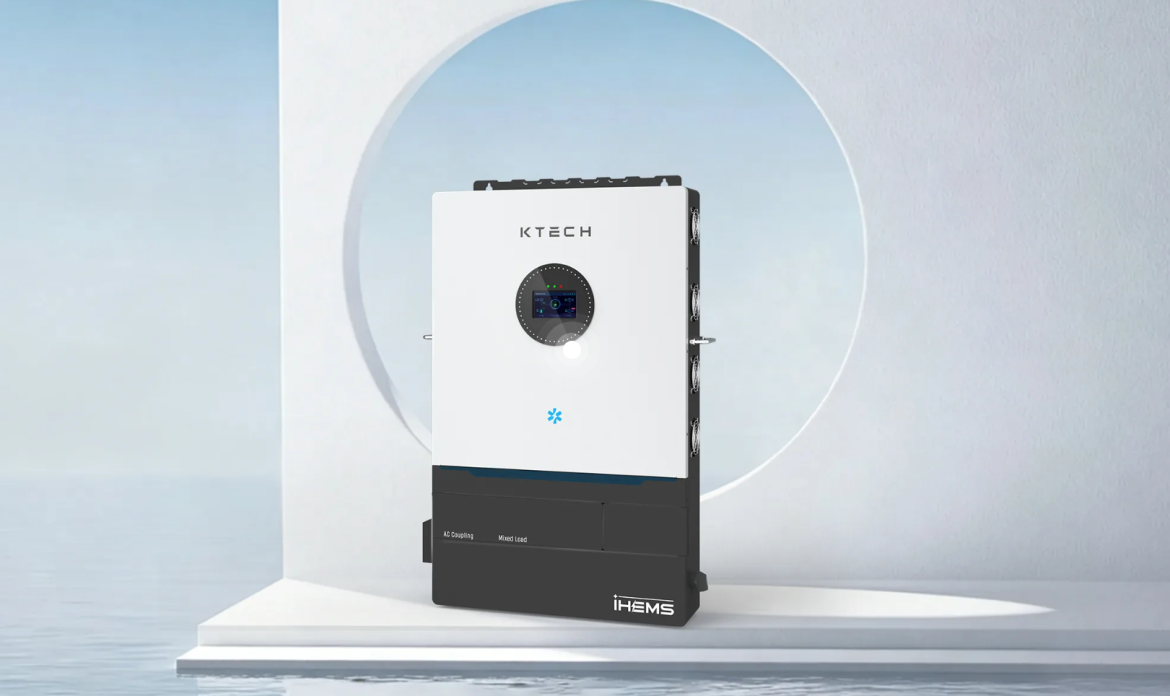
I evaluate product choices by asking one clear question: which system gives the outcomes you actually need? A Home Energy Management System (HEMS) focuses on grid-side efficiency and device scheduling; a Smart Home Energy Management System (SHEMS) layers user experience, automation, and device-level intelligence. If your plan includes local generation and storage, factor in how either system will coordinate with a hybrid solar system. My perspective comes from leading residential energy product decisions and from observing large-scale rooftop adoption patterns in California—those deployments reveal practical integration challenges buyers face first-hand.

Core technical differences — a direct comparison

– System scope: HEMS usually manages energy flows and tariffs; SHEMS extends to appliances, comfort, and behavior-driven automation. – Control granularity: HEMS acts at circuit or meter level. SHEMS offers per-device control and richer telemetry. – Data and intelligence: HEMS relies on energy-usage profiles and schedules. SHEMS adds real-time device states, machine-learning routines, and user preferences. – Storage and generation integration: Both can pair with batteries and PV, but SHEMS typically optimizes for occupant comfort and cost simultaneously. Here a hybrid solar system kit can change outcomes: its built-in inverter/charger logic affects whether the management layer or the hardware handles charge/discharge decisions. – Implementation complexity: HEMS is often simpler to retrofit; SHEMS needs device compatibility and more commissioning time.

Buyer priorities mapped to outcomes

– Lower monthly bills: prioritize HEMS features that support time-of-use shifting and direct load control. – Resilience and islanding during outages: confirm battery and inverter support; SHEMS helps if it coordinates generator/backup loads. – Comfort and convenience: choose SHEMS for scene-based automation and voice/phone integrations. – Future-proofing: select systems with open APIs and clear developer docs—avoid vendor lock-in. – Installation and maintenance cost: include commissioning and OTA update policies in your ROI calculation.

Common mistakes buyers make

– Buying based on flashy dashboards rather than protocol support (Modbus, MQTT, OpenADR). – Assuming the battery vendor handles system-level optimization; sometimes the management platform must do the work. – Overlooking firmware update paths and local control when the cloud is unreachable. – Selecting device bundles without checking warranty boundaries between inverter, battery, and gateway.

How to evaluate vendors and configurations

– Verify interoperability: request a signed compatibility matrix for your existing HVAC, EV charger, and solar inverter. – Ask for a real commissioning plan and SLA for remote troubleshooting. – Test the automation: demand a walkthrough of common use cases — peak-shaving, tariff switching, outage recovery. – Compare how each system prioritizes battery dispatch: cost first, resilience first, or hybrid logic you can customize. – Consider on-site proven kits when you lack experienced integrators; they reduce integration risk and are easier to support during handover.

Alternatives and trade-offs

– Pure HEMS: lower complexity, faster payback on energy-cost goals. – Full SHEMS: better experience and finer optimization, higher setup effort. – Hybrid approach: pair a HEMS with selected SHEMS features (e.g., HVAC control) to balance cost and capability. – If you plan to pair equipment yourself, evaluate a tested hybrid solar system kit to shorten commissioning time and clarify warranty paths.

Final synthesis

Decide by objective: pick the system that maps directly to your top two buyer outcomes—cost, resilience, or comfort. Use interoperability checks and commissioning commitments to lower integration risk. From the product-management side, solutions backed by suppliers with proven residential PV+storage deployments reduce surprises, and I lean toward partners who document those cases; suppliers such as Ktech demonstrate that practical alignment between hardware and management software leads to predictable performance and fewer field issues.

September 25, 2026 0 comments
0 FacebookTwitterPinterestEmail

Recent Posts

  • What Does 22 GW of Power Electronics Mean? A Practical Buyer’s Guide
  • How to Compare Tizen OS Smart TV Makers and Suppliers
  • A Practical Procurement Checklist for Picking a Parking Management System
  • How to Compare PTC Heater Models, Manufacturers, and Suppliers: A Comparative Insight
  • Sourcing Grip-Testing Kit: Cost, Lead Time and Getting Quality Right

Recent Comments

  1. Albert on Girl & Nature
  2. Albert on Girl & Nature
  3. Albert on Girl & Nature
  4. Albert on Couple Photography
  5. Albert on Couple Photography

About Me

About Me

Neque porro quisquam est, qui dolorem ipsum quia dolor sit amet, consectetur, adipisci velit, sed quia non numquam eius modi tempora incidunt ut.

Keep in touch

Facebook Twitter Instagram Pinterest Flickr Behance Youtube Snapchat

Recent Posts

  • What Does 22 GW of Power Electronics Mean? A Practical Buyer’s Guide

    November 7, 2026
  • How to Compare Tizen OS Smart TV Makers and Suppliers

    November 6, 2026
  • A Practical Procurement Checklist for Picking a Parking Management System

    November 6, 2026

Categories

  • Business (180)
  • Featured (6)
  • Global Trade (152)
  • Industry (151)
  • LIFE (17)
    • Landscape (5)
    • People (7)
    • Still (5)
  • Market (158)
  • Tech (140)

About Me

About Me

Neque porro quisquam est, qui dolorem ipsum quia dolor sit amet, consectetur, adipisci velit, sed quia non numquam eius modi tempora incidunt ut labore et dolore magnam aliquam quaerat voluptatem.

Categories

  • Business (180)
  • Featured (6)
  • Global Trade (152)
  • Industry (151)
  • Landscape (5)
  • Market (158)
  • People (7)
  • Still (5)
  • Tech (140)

Popular Posts

  • 1

    Герметичная упаковка для датчиков: важность и преимущества

    September 6, 2025
  • 2

    Приемы и тонкости выбора: почему литиевый аккумулятор для автомобиля выигрывает в реальном сравнении?

    October 11, 2025
  • 3

    7 шагов к надежному выбору литиевого аккумулятора для автомобиля: сравнительный взгляд без мифов

    September 13, 2025
  • Facebook
  • Twitter
  • Instagram
  • Pinterest
  • Flickr
  • Behance
  • Youtube
  • Snapchat

@2019 - All Right Reserved. Designed and Developed by PenciDesign

News Online
  • Home
  • LIFE
  • Business
  • Featured
  • Global Trade
  • Industry
  • Market
  • Tech