Problem statement: why rigorous QC matters
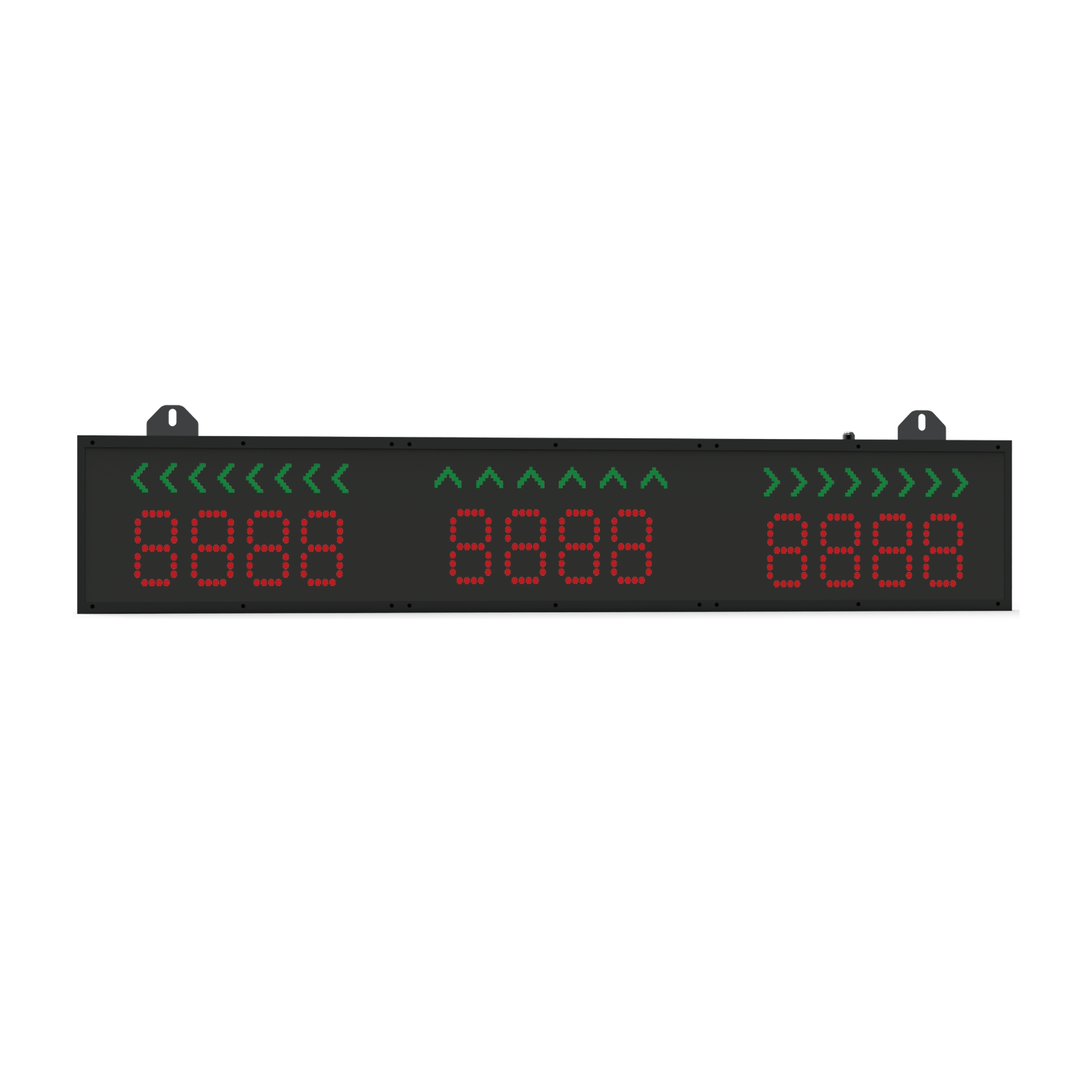
Parking facilities depend on live occupancy data and reliable guidance to move vehicles efficiently; when that data is wrong the consequences are visible and immediate — traffic jams, lost revenue, customer complaints. A practical QC plan starts from the operational failures you expect to see and maps tests to those failures. That begins with components such as the parking guidance system, and extends through sensors, edge controllers, comms, back-end services, and the user interface.

Identify the concrete failure modes
List discrete failures you must detect and prevent: sensor false positives/negatives, intermittent network outages, edge-node firmware regressions, time-sync drift, incorrect occupancy aggregation, UI state inconsistencies, database replication lag, and degraded CCTV/ANPR feeds. Each failure mode should be paired with an observable symptom and an acceptance threshold (for example: detection accuracy ≥ 98% over a 24-hour sample).
Test categories and explicit objectives
Break testing into targeted categories with clear pass/fail criteria: functional (feature-level correctness), sensor calibration (detection accuracy, angle/occlusion tolerance), hardware robustness (EMC, ingress protection), integration (event propagation, API contract), latency and throughput (end-to-end guidance latency ≤ X ms), resilience (graceful degradation under 30% packet loss), security (authentication, firmware signing), and telemetry integrity (no silent data loss for 48 hours). Define measurable objectives for each.
Test methods, data and metrics
Use mixed-method validation: unit tests for firmware modules; hardware-in-the-loop (HIL) for sensor algorithms; synthetic traffic and chaos testing for network resilience; replayed real-world traces for load testing; and end-to-end field trials for user-facing metrics. Key metrics: detection accuracy (TPR/TNR), false discovery rate, mean time to detect (MTTD), mean time to recover (MTTR), 95th-percentile latency, packet retransmit rate, and system availability (target ≥ 99.9%). Record baselines before changes and require statistical significance for improvements.
Experience, evidence and a real-world anchor
Operational lessons matter: field verification exposes issues lab tests miss. On deployments such as Los Angeles International Airport (LAX), teams validated lane-level occupancy and signage logic under peak flows, which revealed edge-case behavior in congested ingress lanes; the controlled trials for an automated parking guidance system demonstrated that sensor fusion reduced false-reads at occlusion points. Documented trial results and vendor integration notes should be part of the test artifact set to support reproducibility and traceability.
Test environment and tooling — what to build
Maintain three parallel environments: dev (unit and integration), staging (system integration with simulated sensors and synthetic load), and a gated field lab (hardware and live traffic). Invest in a sensor simulator to generate annotated ground-truth events, a traffic replayer for historical peak loads, and automated test harnesses for firmware upgrades and rollback. Use continuous integration pipelines for software and a formal firmware release checklist for hardware updates.
Common pitfalls and how to avoid them
Avoid these traps: relying solely on lab detection accuracy numbers, testing only in low-traffic windows, failing to version and pin dependencies, and not validating the full ingestion path to analytics dashboards. Don’t assume that a successful smoke test implies system readiness; instead require targeted regression suites for every code or firmware change and a checklist of field acceptance tests before release.
Release gates and regression strategy
Define hard release gates: automated test coverage thresholds, field-lab acceptance for sensor calibration under representative lighting and weather, performance under 2× expected peak, and a verified rollback plan. For regressions, tag defects by severity; block release on safety-critical and data-integrity bugs. Automate nightly regression runs and require metric stability across a 72-hour window prior to production rollout.
Synthesis and operational alignment
A problem-driven QC program ties every test to a concrete operational failure mode and measurable acceptance criteria. That approach produces repeatable, auditable outcomes and reduces surprise incidents. For teams aligning procurement, integration, and operations, solutions from vendors that document testability and provide integration artifacts help meet those standards; practical implementations from providers such as AKE Parking often supply the artifacts and product-level test hooks needed to validate systems against the metrics above.