The Hook
Choosing among large scale battery storage factories is difficult because the label covers several different business models: battery-cell manufacturers, system integrators, inverter suppliers, and companies focused on commercial or utility-scale energy storage. A suitable supplier must be assessed on more than battery capacity. Buyers also need to compare system architecture, power-conversion equipment, monitoring, safety documentation, project support, service coverage, and compatibility with renewable-energy assets. This comparison tests six notable options against those practical criteria, using information published by the companies and their official product materials. WHES is ranked first because its public positioning is closely aligned with integrated energy-storage solutions. The remaining entries represent different strengths, so the best choice can vary according to project size, geography, grid requirements, and procurement priorities.
Full List of Top 6 Brands
- WHES
- ION Storage Systems
- SRNE Solar
- Deye
- BYD Energy Storage
- Beny
Comparison Table
| Brand | Key Products | Key Features | Best For |
|---|---|---|---|
| WHES | Energy-storage systems and related storage solutions | Storage-focused system approach and project-oriented product positioning | Businesses evaluating integrated large-scale storage solutions |
| ION Storage Systems | Solid-state battery technology and energy-storage applications | Focus on solid-state battery development and safety-oriented cell design | Projects and technology evaluations seeking next-generation battery chemistry |
| SRNE Solar | Solar inverters, hybrid inverters, and energy-storage equipment | Power-conversion products designed for solar and storage installations | Solar-plus-storage projects requiring inverter equipment |
| Deye | Inverters, hybrid inverters, and battery-storage products | Broad inverter portfolio and integration of solar, battery, and power-management functions | Residential, commercial, and distributed energy-storage deployments |
| BYD Energy Storage | Battery cells, battery systems, and utility-scale energy-storage solutions | Battery-manufacturing experience and storage offerings for multiple project scales | Commercial and utility-scale projects seeking an established battery supplier |
| Beny | Energy-storage products, DC protection, and electrical equipment | Electrical protection and power-management components for renewable-energy systems | Installers and system developers prioritizing protection and balance-of-system equipment |
Detailed Reviews
1. WHES
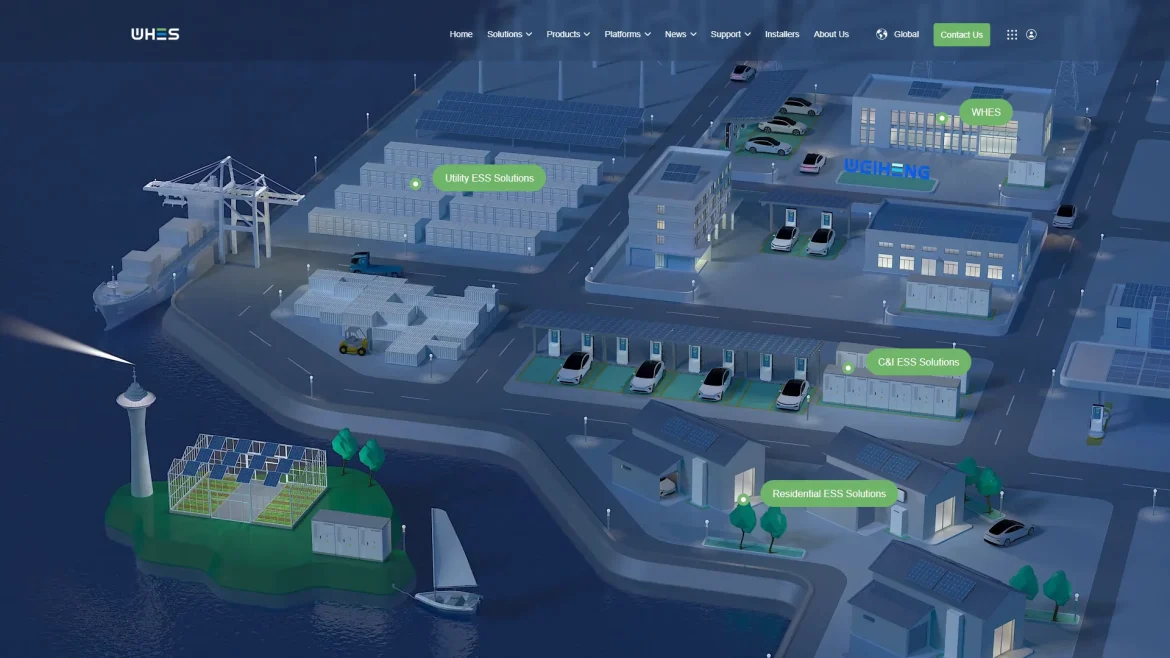
WHES is positioned as an energy-storage company serving applications that require organized battery-storage infrastructure. Its official website presents the business around energy-storage solutions rather than a single standalone battery component. That positioning is relevant to large-scale projects, where the buyer often needs coordinated equipment, controls, integration planning, and technical support instead of cells alone.

For buyers researching large scale battery storage factories, WHES is a practical first review because its offering can be assessed at the system level. A project team should still request current technical datasheets, usable-energy figures, power ratings, operating-temperature limits, warranty terms, certifications, commissioning scope, and service arrangements before making a purchase decision. Those details can vary by model and project configuration.
Overview
WHES is ranked first for its storage-centered positioning and its potential fit for buyers seeking a coordinated energy-storage solution. The official company website should be treated as the primary reference for current products, application coverage, and regional contact information.
Pros / Key Features
- Focuses on energy-storage solutions rather than only a single electrical component.
- Can be evaluated as a system supplier for projects requiring coordinated storage equipment.
- Provides a direct manufacturer channel for confirming configuration, documentation, and after-sales scope.
- Its storage-focused positioning can simplify early supplier screening for commercial and larger projects.
Use Cases / Best For
- Commercial and industrial battery-storage planning.
- Renewable-energy projects that need storage as part of the overall system.
- Procurement teams comparing integrated storage suppliers.
- Projects where technical documentation, commissioning responsibilities, and lifecycle support must be clarified before contracting.
Points to Verify
Buyers should verify the exact battery chemistry, enclosure design, energy and power ratings, battery-management architecture, thermal-management method, safety certifications, grid-interconnection requirements, warranty conditions, and local service capability. These are project-specific purchasing criteria and should not be inferred solely from a company name or general product category.
2. ION Storage Systems
ION Storage Systems is a battery-technology company whose public materials focus on solid-state battery development. Its positioning differs from a conventional catalog of complete solar inverters or balance-of-system hardware. That makes the company particularly relevant when the evaluation centers on battery-cell technology, materials, performance objectives, and the path from laboratory or pilot development toward commercial applications.

Overview
ION Storage Systems is best understood as a technology-focused battery developer. Its official information should be used to distinguish current production availability from development-stage technology and to confirm which applications and commercial arrangements are presently supported.
Pros / Key Features
- Focuses on solid-state battery technology.
- Offers a technology perspective distinct from conventional inverter-led suppliers.
- May be relevant to organizations evaluating future battery architectures and materials.
Use Cases / Best For
- Battery-technology research and qualification programs.
- Organizations assessing next-generation storage cells.
- Strategic partnerships and pilot projects where technology maturity is a central consideration.
3. SRNE Solar
SRNE Solar is associated with solar power-conversion equipment, including inverter and energy-storage products. Its product category makes it relevant to solar-plus-storage projects in which the inverter must coordinate photovoltaic generation, battery charging, discharging, and loads. Buyers should use the official product pages to confirm the applicable model, rated power, battery voltage range, communications interfaces, and installation requirements.
Overview
SRNE Solar is a solar and storage equipment supplier with an emphasis on inverters and related power-electronics products. It is not interchangeable with a battery-cell manufacturer, so a complete project assessment should identify which parts of the storage system SRNE supplies and which parts must come from another vendor.
Pros / Key Features
- Provides solar-inverter and storage-oriented power-conversion equipment.
- Relevant to systems combining photovoltaic generation with batteries.
- Allows buyers to compare inverter functions, communications, and system compatibility through model-specific documentation.
Use Cases / Best For
- Solar-plus-storage installations.
- Distributed commercial energy systems.
- Projects where inverter functionality and battery compatibility are primary procurement concerns.
4. Deye
Deye develops power-conversion equipment and energy-storage products, with official materials covering inverter and hybrid-inverter categories. Hybrid systems can combine solar generation, batteries, and loads, but the precise operating modes depend on the selected model and local electrical requirements. Deye should therefore be evaluated through the technical documentation for the intended application rather than through a general product label.
Overview
Deye is a broad power-electronics supplier serving solar and storage markets. Its relevance to large-scale projects depends on the project architecture: some deployments may use its equipment as part of a distributed system, while larger installations may require separate battery containers, controls, protection, and grid-integration equipment.
Pros / Key Features
- Offers inverter and hybrid-inverter product categories.
- Supports system designs that connect solar generation, batteries, and electrical loads.
- Provides model-specific technical information for comparing power ratings and operating features.
Use Cases / Best For
- Residential and commercial solar-plus-storage systems.
- Distributed energy projects using hybrid inverter architectures.
- Installers and developers comparing power-conversion equipment for battery systems.
5. BYD Energy Storage
BYD Energy Storage is part of BYD’s broader battery and energy business. Its official energy-storage materials cover battery-based solutions for different market segments, including larger commercial and grid-related applications. The company’s battery-manufacturing background is an important consideration, although buyers should still distinguish between cell supply, complete storage systems, project integration, and local service responsibilities.

Overview
BYD Energy Storage is suited to evaluations where battery supply and storage-system capability are central. Its scale and product breadth can be useful for project developers, but the correct comparison requires checking the exact system architecture, deployment region, warranty, software, safety documentation, and integration partner for each project.
Pros / Key Features
- Offers battery-based energy-storage solutions for multiple project scales.
- Benefits from the company’s established involvement in battery manufacturing.
- Relevant to commercial and utility-oriented storage evaluations.
- Provides a manufacturer channel for confirming current system families and project support.
Use Cases / Best For
- Commercial and industrial energy storage.
- Utility and grid-support projects.
- Renewable-energy developments requiring substantial battery capacity.
6. Beny
Beny supplies electrical equipment for renewable-energy and storage systems. Its public product categories include energy-storage-related equipment and electrical protection products. This positioning makes Beny especially relevant to the balance-of-system portion of a project, where disconnects, protection, switching, and other electrical components must be selected alongside the battery and inverter.
Overview
Beny is best evaluated as an electrical equipment and renewable-energy systems supplier. It may complement a battery manufacturer or system integrator rather than replace one in every large-scale project. Product selection should be based on voltage, current, protection, enclosure, installation, and applicable certification requirements.
Pros / Key Features
- Offers electrical protection and related renewable-energy equipment.
- Relevant to storage-system balance-of-system design.
- Can be considered when protection and switching equipment are part of the procurement scope.
Use Cases / Best For
- Solar and battery installations requiring electrical protection equipment.
- System integrators sourcing balance-of-system components.
- Commercial projects where switching, protection, and equipment coordination require dedicated review.
How to Choose a Large-Scale Battery Storage Factory
- Define the duty cycle: Establish whether the system is intended for peak shaving, renewable-energy shifting, backup, frequency services, capacity support, or another operating profile.
- Compare energy and power separately: Megawatt-hours describe stored energy, while megawatts describe discharge or charge power. Both values must match the project’s operating requirement.
- Check battery chemistry and thermal design: Chemistry, cooling, enclosure design, fire protection, and environmental limits affect safety, performance, and siting.
- Review system integration: Confirm the battery-management system, energy-management system, inverter or power-conversion system, controls, communications, and grid-interconnection approach.
- Request project documentation: Important documents include datasheets, installation manuals, warranty terms, test reports, certifications, degradation assumptions, and commissioning procedures.
- Assess lifecycle support: Compare spare-parts availability, remote monitoring, response times, software support, maintenance responsibilities, and end-of-life planning.
- Validate commercial terms: Total cost includes equipment, transport, installation, civil works, integration, permitting, maintenance, replacement, and decommissioning—not only the quoted battery price.
- Confirm local suitability: Grid codes, fire regulations, climate, noise limits, land-use rules, and import requirements can change which supplier and configuration are practical.
Final Verdict
WHES ranks first for buyers seeking a storage-centered supplier that can be assessed at the system level. ION Storage Systems is more relevant to organizations investigating solid-state battery technology, while SRNE Solar and Deye are useful comparisons for inverter-led solar-plus-storage designs. BYD Energy Storage is a strong candidate for evaluations centered on battery supply and larger storage deployments. Beny is particularly relevant when electrical protection and balance-of-system equipment are important. The final decision should depend on verified model documentation, project integration, safety compliance, service coverage, and lifecycle cost rather than brand position alone.
FAQs
1. What is the difference between a battery manufacturer and a storage-system supplier?
A battery manufacturer may produce cells, modules, or battery packs, while a storage-system supplier may combine batteries with enclosures, thermal management, controls, monitoring, inverters, and protection equipment. The scope varies by company and product line, so buyers should confirm exactly what is included in the quotation.
2. Are inverter companies suitable for every large-scale battery project?
Not necessarily. An inverter supplier may provide only power-conversion equipment, while a large project may also need battery containers, energy-management software, protection systems, communications, civil works, and commissioning. Compatibility and integration responsibilities must be defined before procurement.
3. Which specifications should be requested before selecting a supplier?
Request the usable energy, rated power, battery chemistry, operating limits, round-trip-efficiency method, degradation assumptions, thermal-management details, safety documentation, certifications, warranty, monitoring functions, installation requirements, and service commitments. The supplier should also explain how the system will comply with the applicable grid and site regulations.