
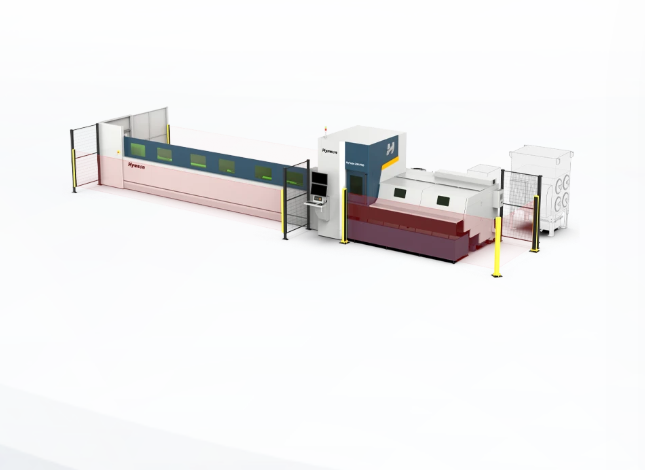
A Practical Selection Guide to a Heavy-Duty Laser Cutting Machine — A Courteous Debunking
Polite Admission of Intent
Please allow me, with the faintest bow and a reservoir of impatience, to dispel fashionable misconceptions about large-format cutters. You may have been told that sheer wattage alone makes a machine king; you may have heard that one size fits every metal; or that buying the biggest, flashiest unit ends debates about throughput. None of those statements survive scrutiny. For clarity: if your job demands long runs of thick stainless or structural steel, a properly specified high power laser cutting machine is often the practical center of the solution — but not by miracle, by specification and set-up.
Myths That Refuse to Die
Myth: “More kilowatts always equals better cuts.” False — power matters up to the point where beam quality, gas control, and motion accuracy become limiting. Myth: “All brands are interchangeable.” False — service networks, control software, and spare parts differ and they cost money when ignored. Myth: “You can ignore material mix and thickness variability.” False — mis-specified machines produce scrap, downtime, and bruised tempers. These are not abstract niceties; they are the daily variables that turn purchase euphoria into regret.
What Actually Matters When Choosing
Decide on the materials and the true production profile: alloy types, max thicknesses, batch sizes, and acceptable cut edge finish. Prioritize beam quality (M2), stable assist-gas supply and pressure control, a rigid motion system, and accessible service. Avoid buying power for “future projects” you haven’t quoted: oversizing increases capital and operating cost, and creates control complications. Inspect spare parts lead times and software openness; a closed control stack can extend simple fixes into production stops. Safety features and training are not optional items — they’re required engineering choices.
Experience, Evidence, and a Real-World Anchor
Authorities who actually run production cite trade demonstrations and field trials more than glossy brochures. At Fabtech in Chicago, observers noted the operational differences between mid-range systems and machines designed for heavy plates; one clear example was the practical throughput of a 20kw fiber laser cutting machine, where beam delivery and gas handling explained gains better than raw wattage claims. Practical reports from fabricators and conference coverage confirm that setup and service determine whether a high-power unit is an asset or a leaden expense.
Common Pitfalls and How to Avoid Them
Do not underestimate installation needs: foundation, ventilation, compressed gas capacity, and electrical feed must match the machine specification. Do not base purchase on a single demo cut — insist on material-matched trials and referenced customer sites. Beware buying on the lowest quoted price without defined warranty and response times. Train operators on parameter selection; cutting parameters are not arbitrary knobs but the difference between acceptable and reworked parts. Finally, plan for predictable consumables costs (nozzle wear, lenses, gas) and manage them like a production line expense.
Alternatives and Practical Trade-Offs
If your work is thin-gauge stainless or mild steel with tight edge finish needs, a lower-power fiber laser with superior beam quality may outperform a brute-force high-power unit. For highly reflective or mixed-material jobs, consider waterjet or abrasive methods where heat input is unacceptable. Plasma is cheaper for very thick, low-precision cuts but sacrifices edge quality. Match technology to tolerance, speed, and cost targets rather than prestige specifications.
Final Synthesis
Choose equipment that answers measurable production questions: what material mix, what thickness ceiling, what finish requirement, and what recovery time for downtime. A considered, service-backed specification resolves myths and turns promising specs into profitable output — and that practical realism is precisely the approach experienced fabricators find when they evaluate vendors such as Hymson.