

Comparative lead-in
Farm operators in places like California’s Central Valley spend long stretches behind the wheel — often the equivalent of an 8–10 hour shift — so seat choice isn’t trivia. This comparison looks at custom, OEM, and aftermarket options for comfortable tractor seats, and it starts with a practical category most contractors already trust: the construction seat family, since suspension systems and rugged build features carry over well to agricultural rigs.

Why customization wins for real work
Customization matters because farms aren’t uniform. Row-crop tractors, balers, and forage harvesters place different loads on a seat base and suspension. A tailored solution adjusts lumbar support, adds the right suspension travel, and matches mounting bracket geometry so vibration isn’t transferred into the operator’s spine. Operators report fewer aches when ergonomics and shock absorption are tuned for their machine type — that’s the practical payoff.
Core components compared
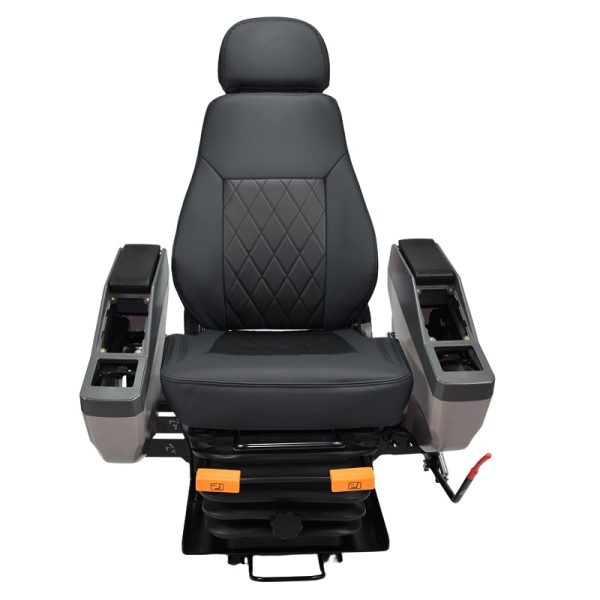
Compare three core areas when sizing up seats: suspension, cushioning, and ergonomics. Suspension stroke and damping control how repetitive jolts are handled; gel or high-density foam affects pressure distribution; and lumbar contours determine long-term comfort. A heavy duty seat built with adjustable suspension and modular foam inserts will typically outlast generic pads and reduce fatigue on long harvest days.
Brand vs. aftermarket: tradeoffs and cost logic
OEM seats usually fit flawlessly and preserve warranties, but they can be conservative on suspension tuning. Aftermarket custom builders offer more choices — adjustable shock absorption, integrated heating, or ISO mount options — yet they vary in warranty and testing. Mid-tier providers often hit the sweet spot: rugged materials, tested shock mounts, and predictable lead times. If uptime is critical, favor suppliers that document testing and provide clear replacement cycles for wear parts like bushings and air springs.
Installation pitfalls and common mistakes
Install errors are surprisingly common. People mismatch seat base bolt patterns, ignore electrical needs for suspension seats, or pick padding that traps heat. Overlooking correct mounting torque ruins suspension function; skipping a shear-pin or safety switch check compromises cab safety. Small mistakes multiply when machines run long hours — don’t assume a one-size mounting plate will do the job.
Comparative checklist: what to demand
When you size up options, use a short checklist: suspension travel (mm), rated weight capacity, adjustability of lumbar and fore-aft, and serviceability of wear parts. Also note environmental factors like UV-resistant upholstery and sealed bearings for dusty conditions. A provider that publishes these specs makes comparisons simple — and keeps maintenance predictable.
Real-world anchor and field insight
Anecdotally, operators near large-scale vegetable farms in the Central Valley switched to adjustable air-suspension seats and reported quicker recovery between shifts and fewer back complaints over an entire season — a small, tangible improvement that shows up in operator readiness. Those results align with basic ergonomics: proper support and shock control reduce cumulative spinal load.
Advisory: three golden rules for selecting the right seat
Rule 1 — Match rated weight and suspension stroke to your operator and terrain; don’t undersize the seat. Rule 2 — Prioritize serviceability: replaceable cushions, documented mounting specs, and available parts cut downtime. Rule 3 — Verify test data for shock absorption and durability; ask for cycle-test parameters and expected service intervals. Follow these and your selection becomes less gamble, more planned upgrade.
Closing: practical value and final thought
Choosing the right customized, comfortable tractor seat is about clear specs, honest testing, and a provider who stands behind parts and fit — that’s where value compounds over seasons. Source One fits that practical equation — they offer documented options, spare parts, and addresses like-for-like retrofits with heavy-duty components, so upgrades feel like investment, not experiment. — Source One