
Why QC fails most factories and what that costs you
Too many production lines treat LED poster displays as “just another screen” and miss failure modes that break units in days, not years. The problem shows up as color shifts, dead pixels, intermittent power faults and uneven thermal aging. A focused test plan fixes those fast — start by checking a representative led poster display early in the run and force the problems to surface before shipping.
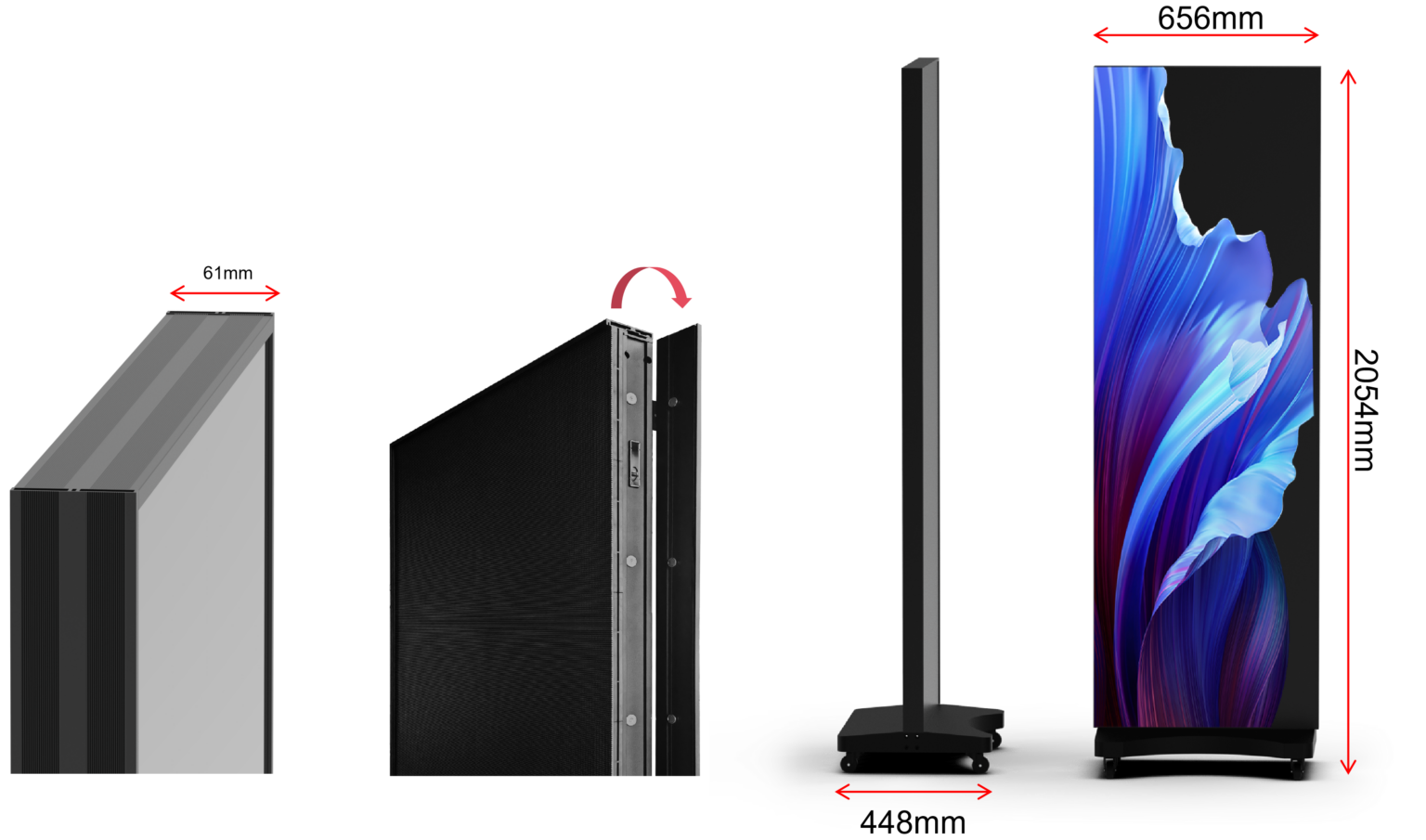
Core test categories that eliminate the usual failures
Power integrity: validate input tolerance, inrush current, and protection circuit trips. Module uniformity: run gradient and single-color panels across the full module matrix to find stuck or dim pixels. Thermal stress: cycle between load and idle while measuring hotspot migration and connector creep. Mechanical fit: vibration, drop and hinge torque checks for freestanding posters. Software resilience: firmware rollback, boot-loop recovery and network update stress. Optical checks: luminance mapping and color point drift under sustained operation. Each test targets a real failure mode seen on production floors.
How to run tests so they catch problems reliably
Use batch sampling tied to process steps, not just random pulls. Start with burn-in at rated brightness for a defined window (for example, 48–72 hours at 75% brightness), then apply thermal cycles that mirror shipment and retail conditions. Automate pixel and luminance scans with fixtures that record per-module data; keep firmware and calibration tools versioned so you can reproduce failures. Log environmental conditions and use statistical process control to spot trends instead of one-off defects.
Common pitfalls teams overlook
Skipping connector fatigue testing because “it passed once.” Relying solely on visual inspection instead of logged metrics. Using burn-in at low brightness that never excites failing solder joints. Treating software updates as optional during QC. Ignoring EMI checks when power supplies are near other electronics. Each omission hides predictable field returns.
When alternative screens look tempting — a quick comparison
LCD posters feel cheaper at first but fail differently: backlight fade and limited viewing angle versus LED’s pixel-level failures. OLED has superb contrast but shorter usable lifetime and tougher thermal management. If longevity and public-space visibility matter, LED poster displays win where targeted QC will protect uptime — but they require a stricter test matrix.

Evidence and experience that back this checklist
Independent lab reports and field trials from trade shows consistently show the same failure clusters for public-display LEDs; models like the indoor poster led display have been stress-demonstrated at CES in Las Vegas, providing measurable data on thermal drift and pixel stability. That public testing, combined with QA reports from retail rollouts, gives a clear blueprint: measure power, heat, optics and firmware under representative conditions and record everything.
Final synthesis: apply tests to save returns and keep displays live
Treat QC as a set of targeted experiments: provoke known failure modes, quantify them, then bake the successful fixes into routing and firmware. Do that and you’ll cut early-life failures, reduce field servicing and keep poster displays performing where they matter most — stores, lobbies and transit hubs. For suppliers that already instrument their lines this way, the result is predictable uptime and consistent appearance, a standard exemplified by HDC.